☰
Stress has become a part of modern life. Whether it's work pressure, financial concerns, family responsibilities, or health issues, everyone experiences stress at some point. While a small amount of stress can motivate you, chronic stress can negatively affect both your physical and mental health.
The good news is that stress can be managed with healthy lifestyle habits and simple daily practices. In this article, you'll learn what stress is, its causes, symptoms, and the best ways to manage it effectively.
Stress is your body's natural response to challenges or demanding situations. When you feel threatened or under pressure, your body releases stress hormones like cortisol and adrenaline. These hormones help you react quickly, but when stress becomes long-term, it can harm your overall health.
Stress can result from many situations, including:
Stress affects people differently, but common symptoms include:
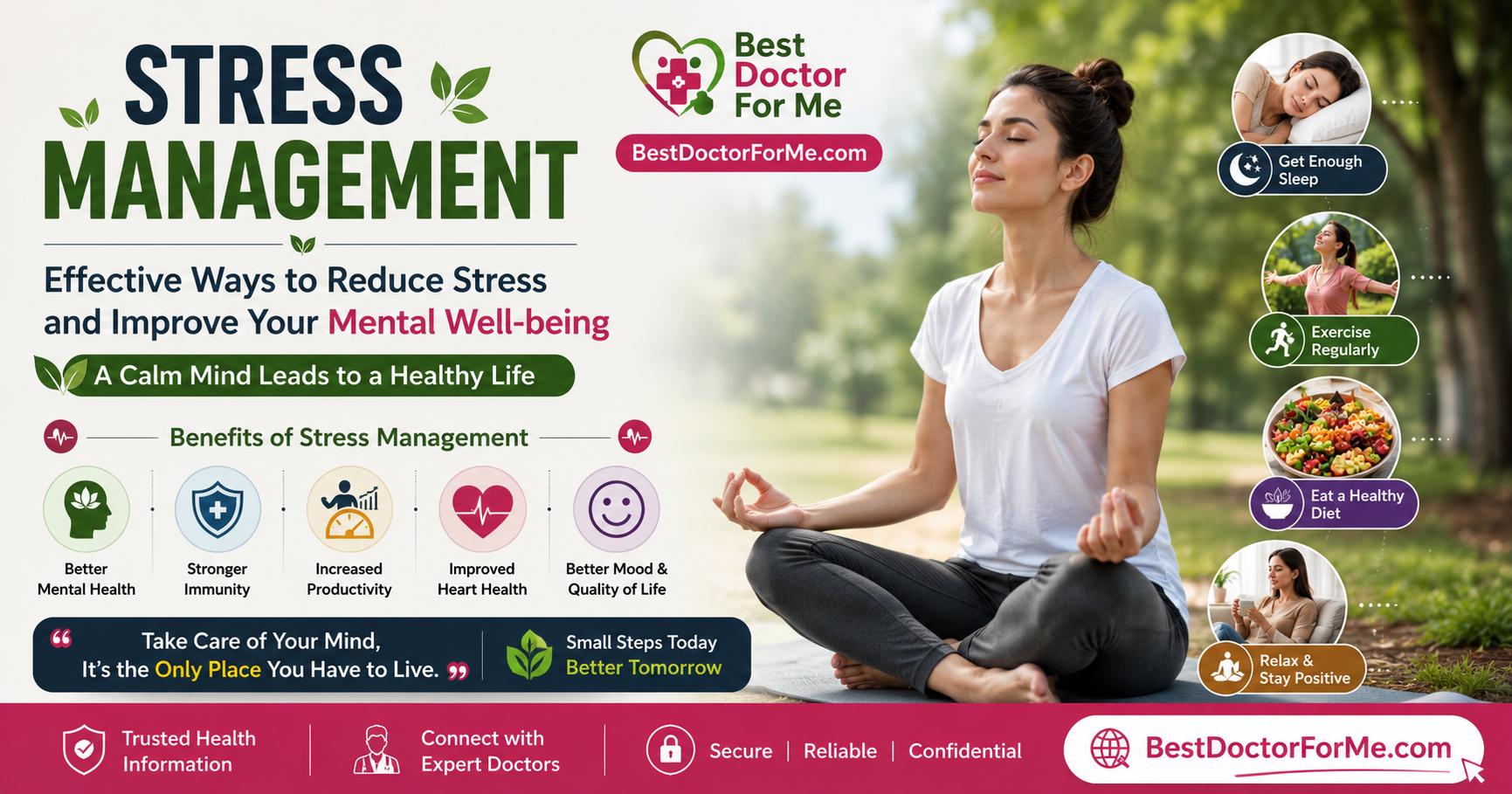
Physical activity releases endorphins, the body's natural mood boosters. Aim for at least 30 minutes of exercise five days a week.
Simple breathing exercises and meditation can calm your mind and reduce stress within minutes.
Adults should aim for 7–9 hours of quality sleep every night to help the body recover and maintain emotional balance.
Choose foods rich in:
Limit caffeine, sugary drinks, and processed foods.
Talking to family or friends can provide emotional support and reduce feelings of loneliness.
Create a daily schedule, prioritize important tasks, and avoid multitasking whenever possible.
Short breaks during work or study improve focus and reduce mental fatigue.
Reduce unnecessary time on social media and digital devices, especially before bedtime.
Reading, gardening, painting, listening to music, or spending time in nature can significantly lower stress levels.
If stress becomes overwhelming or interferes with your daily life, consult a mental health professional for guidance and support.
Include these foods in your diet:
Managing stress effectively can help you:
Consult a healthcare professional if you experience:
Early support can make a significant difference.
Stress is a normal part of life, but it doesn't have to control your life. By adopting healthy habits such as regular exercise, proper sleep, balanced nutrition, mindfulness, and effective time management, you can reduce stress and improve your overall well-being. Remember, taking care of your mental health is just as important as taking care of your physical health.
For trusted health information and to connect with experienced doctors, visit https://www.bestdoctorforme.com.
Subscribe to keep yourself updated with latest articles and health news.
Copyright © 2024, BestDoctorForMe.com. All rights reserved.