☰

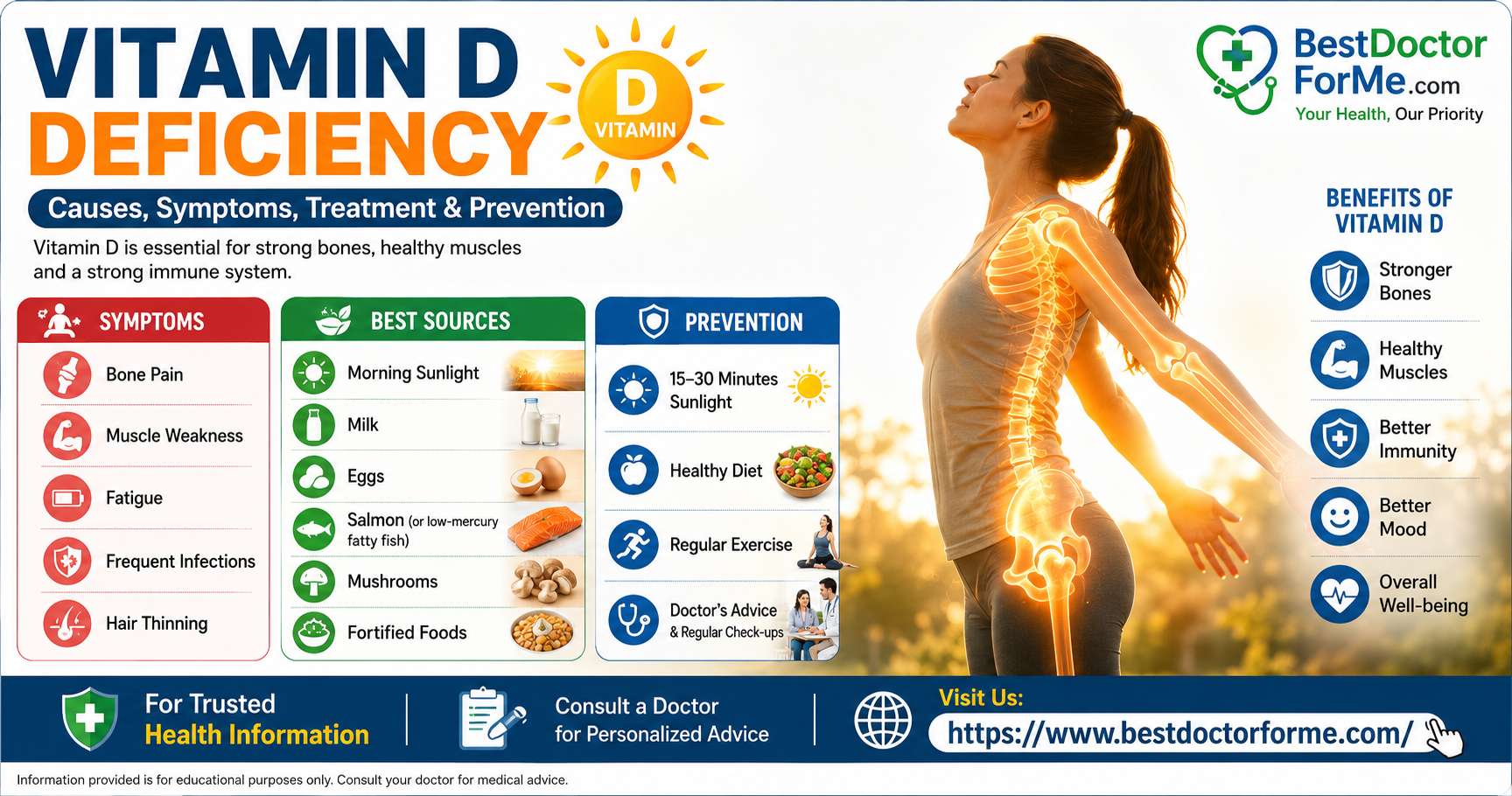
Vitamin D deficiency occurs when your body does not have enough vitamin D to maintain healthy bones, muscles, and immune function. Vitamin D helps your body absorb calcium and phosphorus, which are essential for strong bones and teeth.
Because many people do not get enough sunlight or vitamin D-rich foods, deficiency has become a common health concern across all age groups.
Vitamin D plays several important roles in the body.
It helps:
Several factors may contribute to low vitamin D levels, including:
People who spend little time outdoors or regularly cover most of their skin may produce less vitamin D.
A diet lacking vitamin D-rich foods may increase the risk of deficiency.
Older adults produce less vitamin D through the skin.
Higher melanin levels reduce the skin's ability to produce vitamin D from sunlight.
Vitamin D can become stored in body fat, making less of it available for the body to use.
Some digestive, liver, or kidney diseases can affect vitamin D absorption or activation.
Many people have no symptoms initially. When symptoms occur, they may include:
Children with severe vitamin D deficiency may develop bone problems such as rickets.
The risk may be higher in:
If untreated, vitamin D deficiency may contribute to:
Symptoms suggesting vitamin D deficiency or if you are at high risk
If your doctor suspects vitamin D deficiency based on your symptoms or medical history, they may recommend certain tests.
The most common test is the 25-Hydroxy Vitamin D [25(OH)D] blood test, which measures the level of vitamin D in your body.
Your doctor may also recommend:
The interpretation of these test results should always be done by a qualified healthcare professional.
Treatment depends on:
Treatment may include:
Doctors may prescribe vitamin D supplements in different doses depending on the severity of the deficiency. Do not start high-dose supplements without medical advice, as excessive vitamin D can be harmful.
If calcium intake is low or your doctor identifies a need, calcium supplements may also be recommended.
Increasing foods naturally rich in vitamin D and calcium supports overall bone health.
Regular sunlight exposure can help the body produce vitamin D. The ideal duration varies depending on skin type, location, season, weather, and time of day.
Although few foods naturally contain vitamin D, including these foods may help improve your intake.
Vitamin D works together with calcium to maintain healthy bones.
Sunlight helps your skin produce vitamin D.
Some general tips include:
Yes, in many cases it can be reduced by healthy lifestyle habits.
✔ Maintain a healthy weight.
✔ Exercise regularly.
✔ Avoid smoking.
✔ Limit alcohol consumption.
✔ Attend routine health check-ups.
✔ Discuss any long-term medications with your doctor if they may affect bone health.
Fatigue can occur with vitamin D deficiency, but it can also have many other causes. A medical evaluation is important.
Most fruits are not significant sources of vitamin D. A balanced diet and safe sunlight exposure are more important sources.
For some people, sunlight may be enough, while others may need dietary sources or supplements depending on individual circumstances.
Yes. Children, adults, and older people can all develop vitamin D deficiency.
Yes. Women, especially during pregnancy, breastfeeding, or after menopause, may be at increased risk depending on diet, lifestyle, and other factors.
Vitamin D is essential for healthy bones, muscles, and immune function. Deficiency is common but can often be managed through a combination of a balanced diet, safe sunlight exposure, and medical treatment when needed. If you experience persistent bone pain, muscle weakness, or unexplained fatigue, consult your healthcare provider rather than self-medicating.
Early diagnosis and proper treatment can help protect your long-term bone health and overall well-being.
Looking for expert medical advice? Visit BestDoctorForMe.com to connect with experienced doctors and access reliable health information for you and your family.
Subscribe to keep yourself updated with latest articles and health news.
Copyright © 2024, BestDoctorForMe.com. All rights reserved.