☰

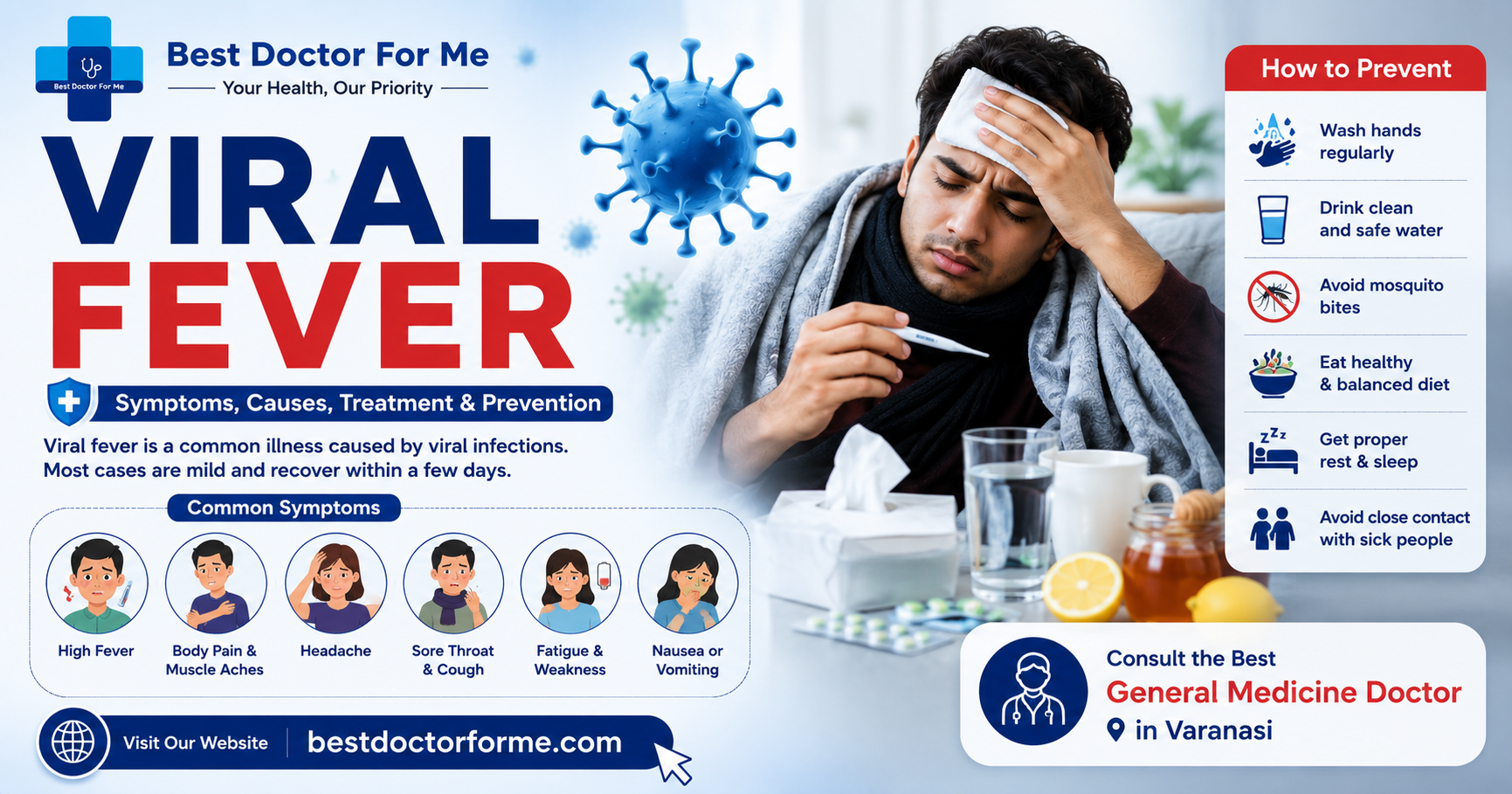
Viral fever is one of the most common illnesses, especially during seasonal changes and the rainy season. It is caused by viral infections that can affect people of all ages. While most cases are mild and recover within a few days, some viral infections may require medical attention if symptoms become severe.
Viral fever refers to a rise in body temperature caused by a viral infection. Viruses can enter the body through contaminated food, water, air, insect bites, or close contact with infected individuals.
The body responds to the infection by increasing its temperature to fight the virus.
Symptoms may vary depending on the type of virus, but common signs include:
High fever, Body pain and muscle aches
Headache, Fatigue and weakness
Sore throat, Runny or blocked nose
Cough, Chills
Loss of appetite
Nausea or vomiting in some cases
Causes of Viral Fever
1. Seasonal Viral Infections
Common cold and flu viruses spread easily during weather changes.
2. Mosquito-Borne Viral Diseases
Diseases like dengue and chikungunya are more common during the rainy season.
3. Contaminated Food and Water
Eating unhygienic food or drinking unsafe water can cause viral infections.
4. Weak Immunity
People with low immunity are more likely to catch viral infections.
Doctors usually diagnose viral fever based on symptoms and physical examination. In some cases, blood tests may be recommended to rule out conditions such as dengue, malaria, or bacterial infections.
There is no specific cure for most viral fevers, but treatment helps relieve symptoms and supports recovery.
Common Treatment Includes:
Proper rest
Drinking plenty of fluids
Fever-reducing medicines prescribed by a doctor
Nutritious and light meals
Avoiding dehydration
Important: Do not take antibiotics without medical advice, as antibiotics do not work against viruses.
Some simple home care tips may help:
Drink warm water and herbal tea
Eat fruits rich in vitamin C
Gargle with warm salt water for sore throat
Use a cool compress to reduce fever
Take adequate sleep and rest
When Should You See a Doctor?
Consult a doctor immediately if you experience:
Fever lasting more than 3–4 days
Difficulty breathing
Severe weakness
Persistent vomiting
Chest pain
Confusion or dizziness
Very high fever
How to Prevent Viral Fever
1. Maintain Good Hygiene
2. Drink Safe Water
3. Eat Healthy Food
4. Avoid Mosquito Bites
5. Avoid Close Contact With Infected People
6. Get Proper Rest
Khichdi, Soup
Coconut water, Fresh fruits
ORS and fluids
Light homemade meals
Avoid oily, spicy, and junk food during recovery.
If you face any of these issues, you can find doctor near you on
BestDoctorForMe.com
Subscribe to keep yourself updated with latest articles and health news.
Copyright © 2024, BestDoctorForMe.com. All rights reserved.