☰

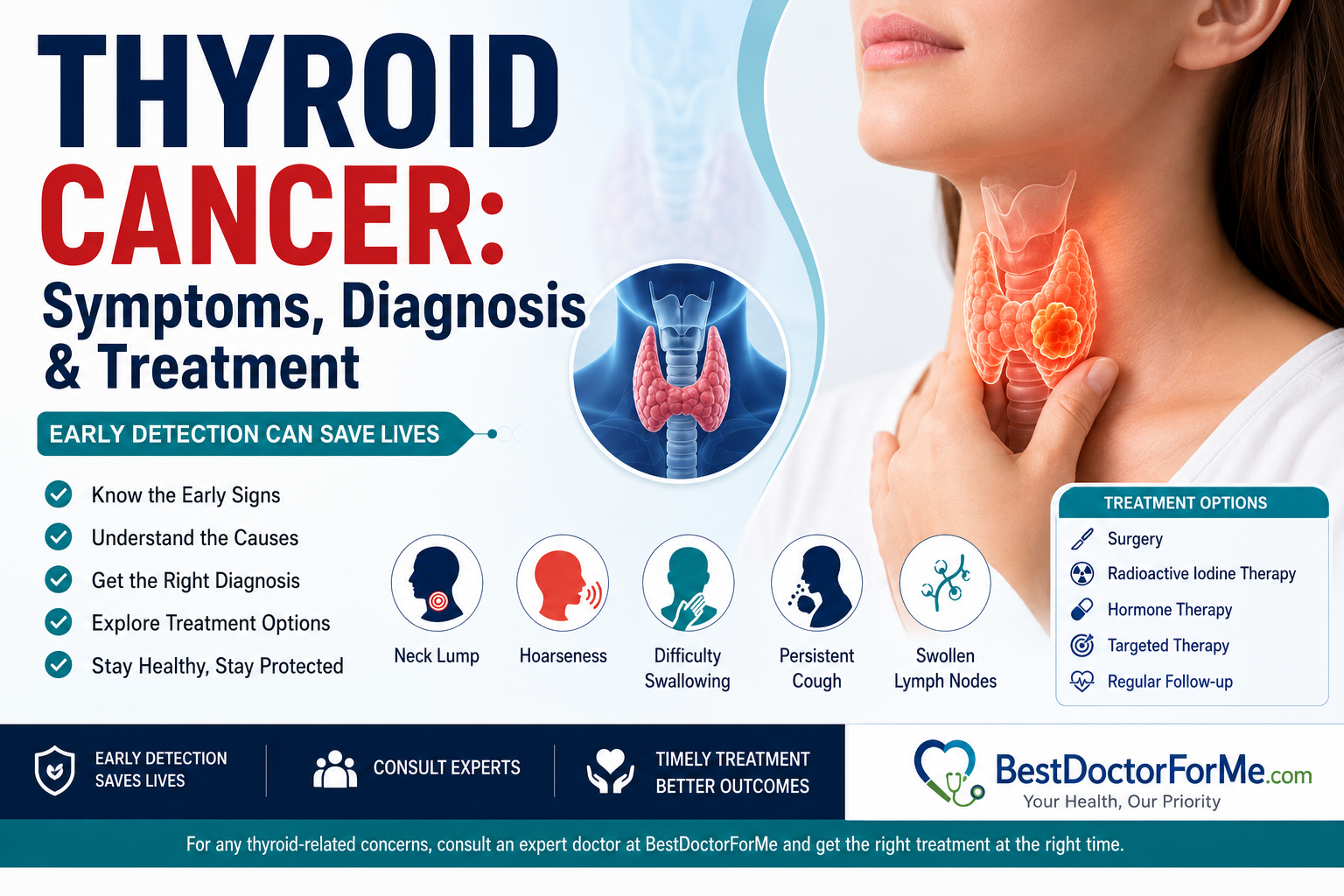
Thyroid cancer is a type of cancer that develops in the thyroid gland, a small butterfly-shaped gland located at the base of the neck. The thyroid produces hormones that regulate metabolism, heart rate, body temperature, and energy levels. Although thyroid cancer is less common than many other cancers, it is one of the most treatable cancers when detected early.
Many people with thyroid cancer have no symptoms in the early stages. In many cases, it is discovered during a routine physical examination or imaging tests performed for another reason. Recognizing the warning signs and seeking medical attention early can significantly improve treatment outcomes.
Thyroid cancer occurs when abnormal cells in the thyroid gland grow uncontrollably. Most thyroid cancers grow slowly, but some types can spread to nearby lymph nodes or other organs if left untreated.
Papillary Thyroid Cancer – The most common type, accounting for about 80% of cases. It usually grows slowly and has an excellent prognosis.
Follicular Thyroid Cancer – Less common but generally highly treatable.
Medullary Thyroid Cancer – May be associated with inherited genetic conditions.
Anaplastic Thyroid Cancer – A rare but aggressive form of thyroid cancer.
Early thyroid cancer often causes no symptoms. As the disease progresses, you may notice:
A painless lump in the front of the neck is one of the most common signs.
Persistent hoarseness lasting more than two weeks should be evaluated.
A growing thyroid tumor may press on the esophagus, making swallowing uncomfortable.
Large tumors may put pressure on the windpipe.
Pain may spread from the neck to the jaw or ears.
A cough that is not caused by a cold or infection can occasionally be associated with thyroid cancer.
Enlarged lymph nodes in the neck may be an early indication that cancer has spread locally.
The exact cause is not always known, but several factors increase the risk:
You may have a higher risk if you:
Doctors may recommend:
Checking for lumps or enlarged lymph nodes.
Helps determine the size and appearance of thyroid nodules.
A small sample of cells is removed to determine whether a nodule is cancerous.
Thyroid function tests help evaluate hormone levels, although they do not confirm thyroid cancer.
Used when cancer is suspected to have spread.
Recommended for some patients, particularly those with medullary thyroid cancer.
Stage I: Cancer is confined to the thyroid gland.
Stage II: Slightly larger tumor or limited spread.
Stage III: Spread to nearby tissues or lymph nodes.
Stage IV: Spread to distant organs such as the lungs or bones.
Treatment depends on the type and stage of thyroid cancer.
Most patients require removal of part or all of the thyroid gland (thyroidectomy).
Often used after surgery to destroy remaining thyroid tissue or cancer cells.
Replaces thyroid hormones after surgery and helps reduce the risk of recurrence.
Used for advanced thyroid cancers with specific genetic changes.
Recommended in selected cases when surgery is not sufficient.
Rarely needed but may be used for aggressive thyroid cancers such as anaplastic thyroid cancer.
Seek medical advice if you experience:
Yes. Most thyroid cancers, particularly papillary and follicular thyroid cancers, have an excellent prognosis when detected and treated early.
No. Most thyroid nodules are benign (non-cancerous). However, every persistent thyroid lump should be evaluated by a healthcare professional.
Yes. Some thyroid cancers can spread to nearby lymph nodes and, less commonly, to the lungs or bones if not treated.
Some types, especially medullary thyroid cancer, can run in families. Genetic counseling and testing may be recommended for affected families.
Thyroid cancer is often highly treatable, especially when diagnosed early. If you notice a neck lump, persistent hoarseness, difficulty swallowing, or swollen lymph nodes, don't delay seeking medical evaluation. Early diagnosis, appropriate treatment, and regular follow-up can significantly improve outcomes and quality of life.
For any thyroid-related concerns or health problems, consult an expert doctor at BestDoctorForMe and receive the right diagnosis and treatment at the right time.
Subscribe to keep yourself updated with latest articles and health news.
Copyright © 2024, BestDoctorForMe.com. All rights reserved.