☰

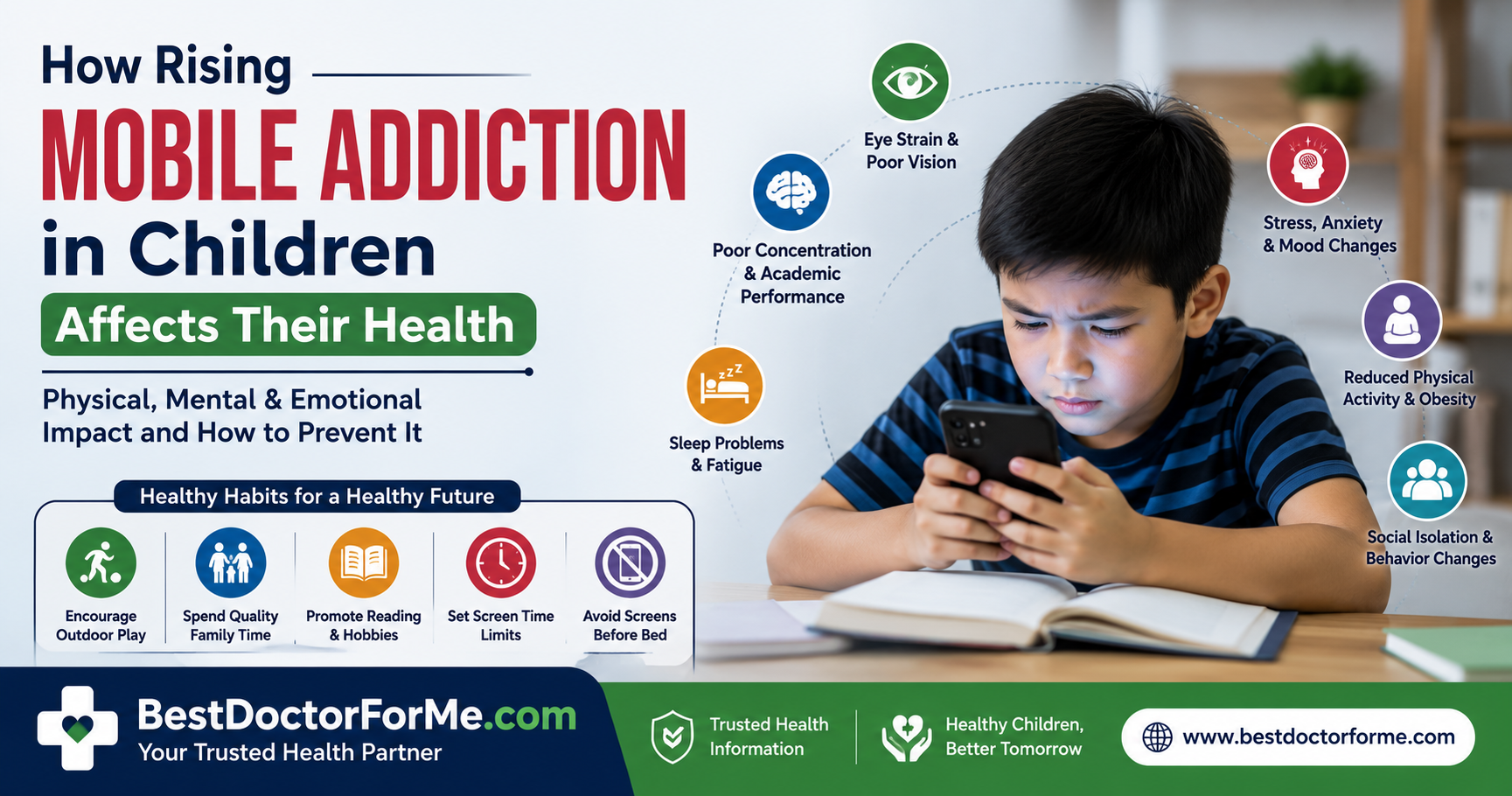
In today's digital world, smartphones and tablets have become an essential part of everyday life. While technology offers many educational and entertainment benefits, excessive screen time can lead to mobile addiction, especially among children. Spending long hours on mobile devices may negatively affect a child's physical, mental, emotional, and social well-being.
Parents, teachers, and caregivers should understand the risks of excessive mobile use and encourage healthy digital habits from an early age.
Mobile addiction refers to the excessive and uncontrolled use of smartphones or tablets, where children find it difficult to limit their screen time even when it interferes with daily activities, studies, sleep, or relationships.
Several factors contribute to the growing problem:
Parents should watch for these warning signs:
Continuous screen exposure can cause:
Using mobile phones before bedtime suppresses melatonin production, making it difficult for children to fall asleep. Poor sleep can lead to fatigue, poor concentration, and mood changes.
Children who spend more time on screens often spend less time playing outdoors, increasing the risk of:
Excessive mobile use may contribute to:
Frequent gaming, social media, and entertainment apps can distract children from studying, resulting in:
Children may spend less time interacting with family and friends, affecting their communication skills and emotional development.
Long periods of poor posture while using mobile devices may cause:
Many children snack while watching videos or playing games, increasing the risk of unhealthy eating and weight gain.
If left unmanaged, excessive screen use may increase the risk of:
Follow age-appropriate screen-time recommendations and establish clear rules.
Promote sports, cycling, walking, and other physical activities.
Keep mobile phones away during:
Children often imitate adults. Limiting your own screen time encourages healthy habits.
Motivate children to engage in:
Use parental controls and ensure children access age-appropriate educational content.
Turn off screens at least one hour before sleep to improve sleep quality.
Follow a daily routine.
Consult a pediatrician or mental health professional if your child:
Early intervention can help prevent long-term health and behavioral problems.
The appropriate amount depends on the child's age. Parents should follow pediatric guidance and prioritize quality educational content over entertainment.
Excessive screen use may interfere with attention, learning, emotional regulation, and healthy development, particularly in younger children.
Prolonged screen use can cause digital eye strain, dryness, and temporary blurred vision, though it does not necessarily cause permanent vision loss.
Set clear limits, encourage outdoor activities, establish screen-free routines, and model healthy digital habits.
Technology is a valuable part of modern life, but balance is essential. Excessive mobile phone use can affect children's physical health, mental well-being, sleep, learning, and social development. By setting healthy boundaries, encouraging active lifestyles, and spending quality time together, parents can help children develop a positive and balanced relationship with technology.
Healthy digital habits today can support healthier, happier, and more confident children tomorrow.
Subscribe to keep yourself updated with latest articles and health news.
Copyright © 2024, BestDoctorForMe.com. All rights reserved.