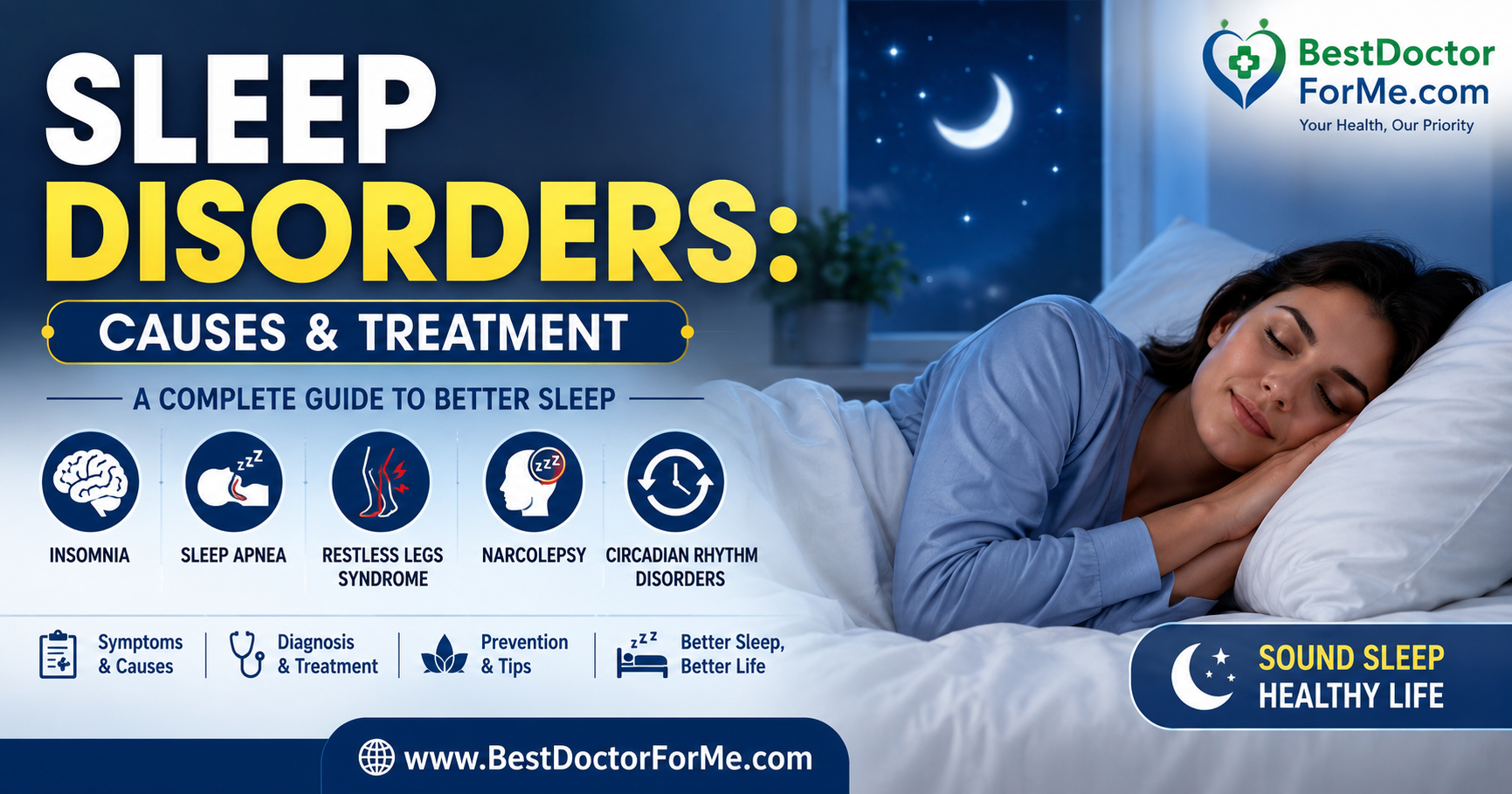
Sleep is essential for maintaining physical health, mental well-being, and overall quality of life. However, millions of people struggle with sleep disorders, which can affect their daily routine, mood, concentration, and long-term health.
In this article, we'll discuss the causes, symptoms, types, diagnosis, treatment, and prevention of sleep disorders.
What Are Sleep Disorders?
Sleep disorders are conditions that affect the quality, timing, or duration of sleep. They may cause difficulty falling asleep, staying asleep, or getting restful sleep.
Untreated sleep disorders may increase the risk of:
- Heart disease
- High blood pressure
- Diabetes
- Depression
- Obesity
- Memory problems
- Reduced immunity
Types of Sleep Disorders
1. Insomnia
The most common sleep disorder where a person has difficulty falling asleep or staying asleep.
Symptoms
- Difficulty sleeping
- Waking up frequently
- Early morning awakening
- Daytime tiredness
2. Sleep Apnea
A serious condition in which breathing repeatedly stops and starts during sleep.
Symptoms
- Loud snoring
- Gasping for air during sleep
- Morning headaches
- Excessive daytime sleepiness
3. Restless Legs Syndrome (RLS)
An uncontrollable urge to move the legs, especially at night.
Symptoms
- Tingling sensation
- Leg discomfort
- Difficulty sleeping
4. Narcolepsy
A neurological disorder causing sudden sleep attacks during the day.
Symptoms
- Excessive daytime sleepiness
- Sudden muscle weakness
- Sleep paralysis
5. Circadian Rhythm Sleep Disorders
Occurs when the body's internal clock becomes disrupted.
Examples include:
- Jet lag
- Shift work disorder
- Delayed sleep phase syndrome
Causes of Sleep Disorders
Many factors can contribute to sleep disorders.
Lifestyle Factors
- Stress
- Anxiety
- Depression
- Excessive screen time
- Irregular sleep schedule
- Night shift work
Medical Conditions
- Thyroid disorders
- Asthma
- Heart disease
- Chronic pain
- Parkinson's disease
- Gastroesophageal reflux disease (GERD)
Other Causes
- Excess caffeine
- Alcohol consumption
- Smoking
- Certain medications
Symptoms of Sleep Disorders
Common symptoms include:
- Difficulty falling asleep
- Frequent awakening
- Daytime fatigue
- Loud snoring
- Breathing pauses during sleep
- Poor concentration
- Irritability
- Mood changes
- Morning headaches
- Reduced work performance
Risk Factors
You are more likely to develop sleep disorders if you:
- Are over 60 years old
- Are overweight
- Smoke
- Consume alcohol regularly
- Have anxiety or depression
- Work night shifts
- Have a family history of sleep disorders
Diagnosis
A doctor may recommend:
Medical History
- Review of symptoms and sleep habits.
Sleep Diary
- Recording sleep patterns for 1–2 weeks.
Physical Examination
- Checking for underlying medical conditions.
Polysomnography (Sleep Study)
Monitors:
- Brain activity
- Heart rate
- Breathing
- Oxygen levels
- Eye movement
- Muscle activity
Home Sleep Apnea Test
Used in suspected sleep apnea cases.
Treatment of Sleep Disorders
Treatment depends on the underlying cause.
Lifestyle Changes
Maintain a regular sleep schedule.
- Sleep for 7–9 hours daily.
- Avoid caffeine after evening.
- Limit alcohol intake.
- Reduce screen time before bed.
- Exercise regularly.
- Practice relaxation techniques.
Medications
Doctors may prescribe:
- Sleeping pills (short-term)
- Melatonin supplements
- Anti-anxiety medications
- Medicines for restless legs syndrome
Do not take sleep medications without medical advice.
CPAP Therapy
For sleep apnea, Continuous Positive Airway Pressure (CPAP) keeps the airway open during sleep.
Cognitive Behavioral Therapy (CBT-I)
CBT for insomnia is one of the most effective long-term treatments for chronic insomnia.
Surgery
Rarely required, mainly for severe obstructive sleep apnea.
Home Remedies
- Drink warm milk before bed.
- Practice meditation.
- Read a book.
- Keep the bedroom dark and quiet.
- Maintain a comfortable room temperature.
- Avoid heavy meals before bedtime.
- Avoid daytime naps longer than 30 minutes
Untreated sleep disorders may lead to:
- High blood pressure
- Stroke
- Heart attack
- Diabetes
- Depression
- Anxiety
- Poor immunity
- Workplace accidents
- Road traffic accidents
- Memory impairment
Prevention
You can reduce your risk by:
- Going to bed at the same time every day.
- Waking up at the same time daily.
- Limiting caffeine and nicotine.
- Exercising regularly.
- Maintaining a healthy weight.
- Managing stress.
- Avoiding mobile phones before sleep.
- Creating a comfortable sleeping environment.
When Should You See a Doctor?
Consult a healthcare provider if you have:
- Insomnia lasting more than three weeks
- Loud snoring with breathing pauses
- Excessive daytime sleepiness
- Frequent nighttime awakenings
- Difficulty concentrating due to poor sleep
- Sleepwalking or unusual sleep behaviors
Frequently Asked Questions (FAQs)
Can sleep disorders be cured?
Many sleep disorders can be effectively managed with lifestyle changes, therapy, medication, or treatment of the underlying cause.
How many hours should adults sleep?
Most adults need 7–9 hours of quality sleep each night.
Is insomnia a sleep disorder?
Yes. Insomnia is the most common sleep disorder worldwide.
Can stress cause sleep disorders?
Yes. Stress and anxiety are among the leading causes of insomnia and poor sleep quality.
Is sleep apnea dangerous?
Yes. Untreated sleep apnea can increase the risk of heart disease, stroke, and high blood pressure.
Sleep disorders are common but should never be ignored. Poor sleep affects your physical health, mental well-being, productivity, and overall quality of life. Early diagnosis, healthy sleep habits, and appropriate treatment can significantly improve sleep quality and reduce the risk of serious health complications.