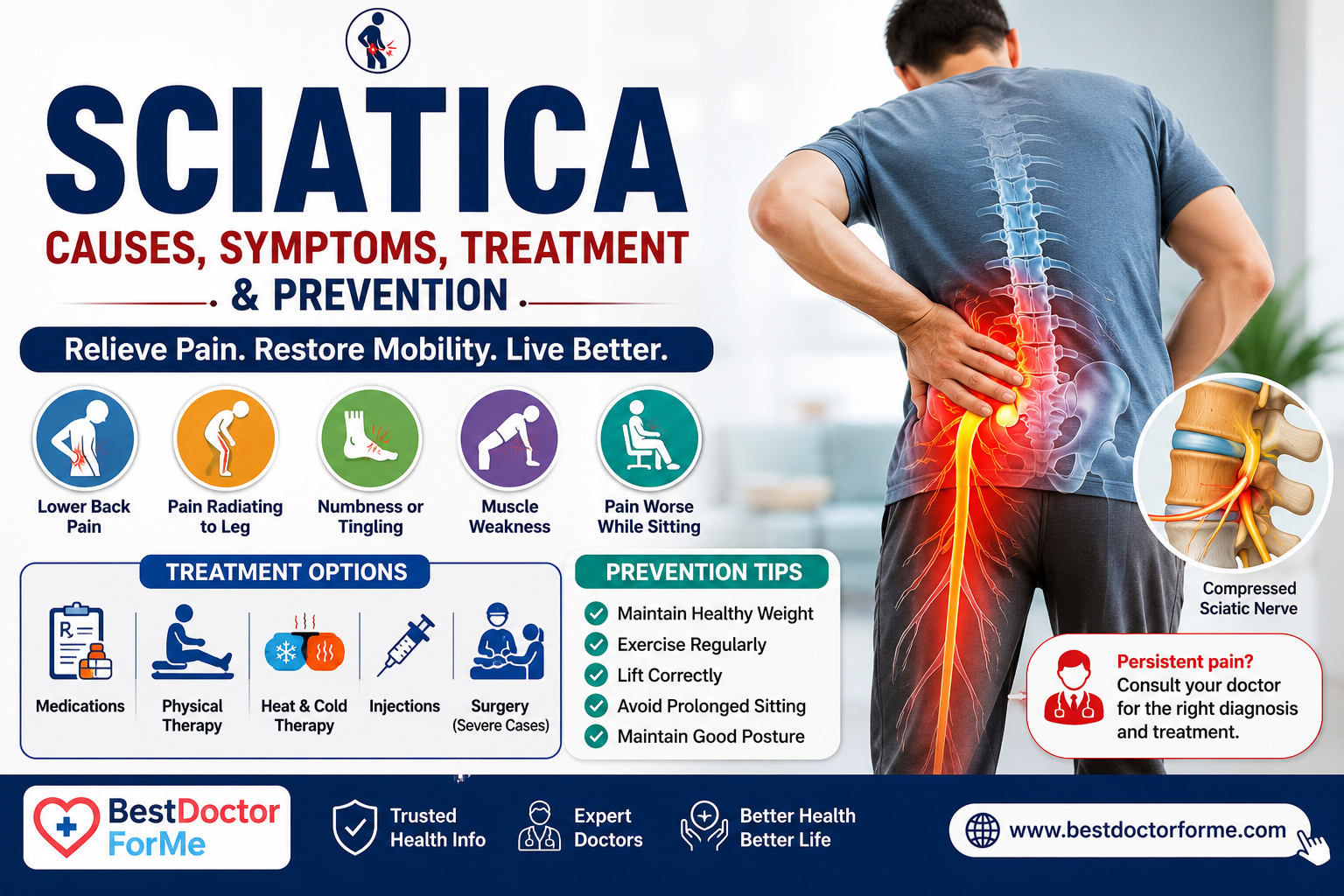
Sciatica is a condition caused by irritation or compression of the sciatic nerve, the longest nerve in the human body. It typically causes pain that starts in the lower back and radiates through the buttock, down the back of the thigh, and sometimes into the calf or foot.
While many cases improve with conservative treatment, severe or persistent symptoms require medical evaluation.
What Is Sciatica?
The sciatic nerve originates from the lower spine (lumbar and sacral nerve roots) and travels through the hips, buttocks, and down each leg. When this nerve is compressed or irritated, it can lead to sciatica, also known as sciatic nerve pain.
Causes of Sciatica
Common causes include:
- Herniated (slipped) disc
- Degenerative disc disease
- Spinal stenosis
- Piriformis syndrome
- Spondylolisthesis
- Bone spurs
- Spinal injury or trauma
- Pregnancy (due to pressure on the sciatic nerve)
- Obesity
- Prolonged sitting
Risk Factors
You may be at higher risk if you:
- Are between 30–50 years old
- Lift heavy weights incorrectly
- Sit for long periods
- Have diabetes
- Are overweight or obese
- Have poor posture
- Smoke
Symptoms of Sciatica
Common symptoms include:
- Pain radiating from the lower back to one leg
- Sharp, burning, or shooting pain
- Numbness or tingling in the leg or foot
- Muscle weakness
- Pain that worsens while sitting
- Difficulty standing or walking
- Pain while coughing or sneezing
When to See a Doctor
Seek medical care immediately if you experience:
- Severe or worsening pain
- Weakness in the leg
- Loss of bladder or bowel control
- Numbness in the groin or saddle area
- Pain after a serious injury
- Fever with back pain
- Unexplained weight loss
How Is Sciatica Diagnosed?
Your doctor may recommend:
- Physical examination
- Neurological examination
- X-ray
- MRI scan
- CT scan
- Electromyography (EMG)
Treatment Options
Treatment depends on the cause and severity.
- Medications
- Acetaminophen (Paracetamol)
- NSAIDs (if appropriate)
- Muscle relaxants
- Prescription medications (if needed)
Physical Therapy
A physiotherapist may recommend exercises to:
- Improve flexibility
- Strengthen the back and core muscles
- Reduce nerve pressure
- Improve posture
Other Treatments
- Heat and cold therapy
- Epidural steroid injections (selected cases)
- Surgery (for severe nerve compression or persistent symptoms)
Home Remedies
- Apply cold packs for the first 48 hours
- Use heat therapy afterward
- Walk for short periods
- Avoid prolonged bed rest
- Maintain proper posture
- Sleep on a supportive mattress
- Perform doctor-approved stretching exercises
Exercises That May Help
- Knee-to-chest stretch
- Piriformis stretch
- Cat-Cow stretch
- Pelvic tilt
- Hamstring stretch
- Gentle walking
Always consult a healthcare professional before starting exercises, especially if your pain is severe.
Prevention Tips
- Maintain a healthy weight
- Exercise regularly
- Strengthen your core muscles
- Lift heavy objects correctly
- Avoid sitting for long hours
- Use ergonomic chairs
- Maintain good posture
- Stop smoking
Possible Complications
If left untreated, severe sciatica may lead to:
- Chronic pain
- Persistent numbness
- Muscle weakness
- Difficulty walking
- Permanent nerve damage (rare)
Frequently Asked Questions (FAQs)
Is walking good for sciatica?
Yes, gentle walking can help many people, but avoid activities that increase pain.
Can sciatica heal on its own?
Many mild cases improve within a few weeks with rest, activity modification, and conservative treatment.
Is bed rest recommended?
No. Prolonged bed rest is generally not recommended because it may delay recovery.
Can pregnancy cause sciatica?
Yes. As the uterus grows, pressure on the sciatic nerve may cause sciatic pain in some pregnant women.
Sciatica is a common condition that causes pain along the sciatic nerve, often affecting one side of the body. Early diagnosis, appropriate treatment, regular exercise, and healthy lifestyle habits can help relieve symptoms and reduce the risk of recurrence. Seek medical attention promptly if you develop severe pain, significant weakness, or changes in bladder or bowel control.