
best doctor for me

Prostate Enlargement (BPH): Symptoms, Causes, Diagnosis & Treatment

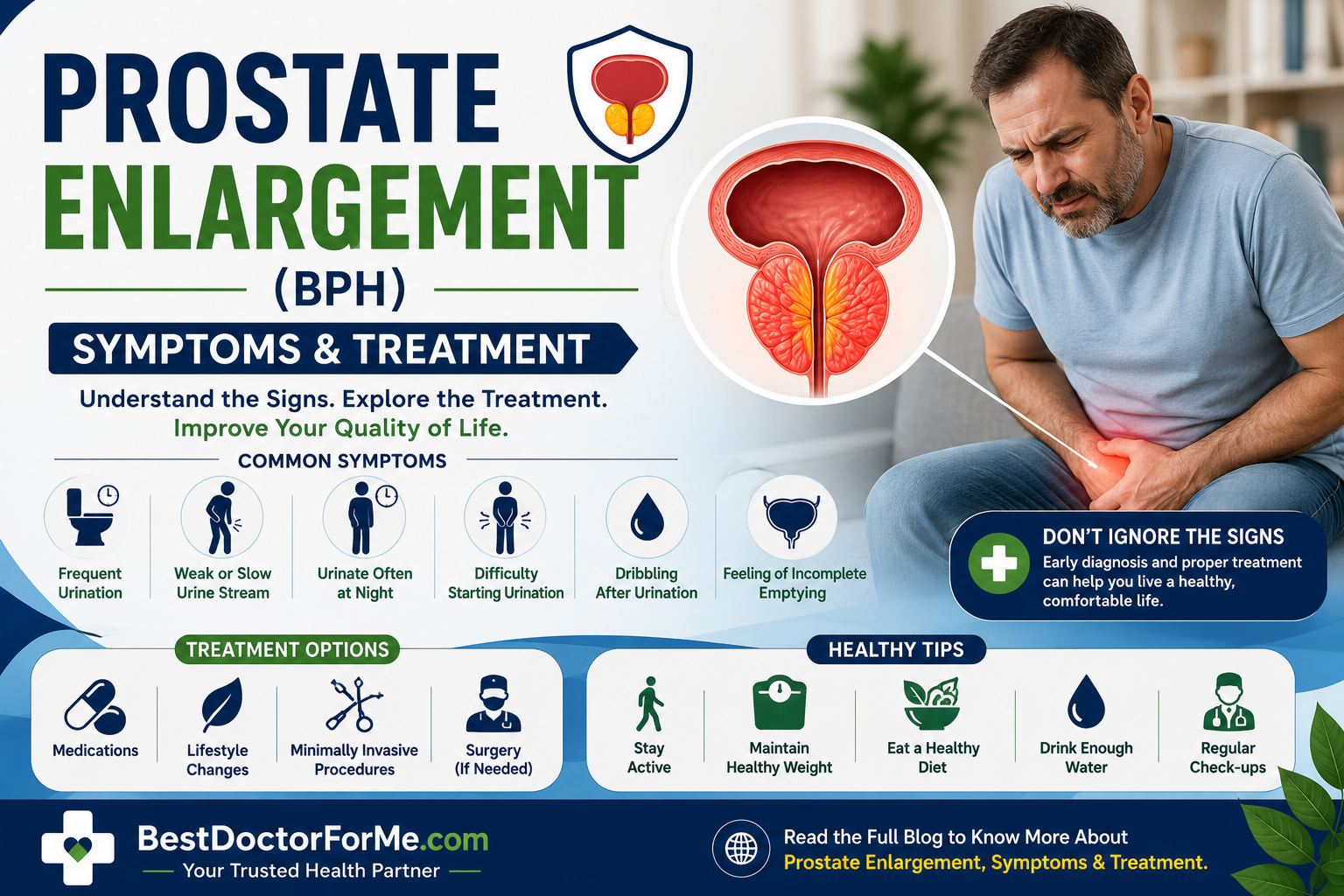
As men age, changes in the prostate gland become increasingly common. One of the most frequent conditions is Benign Prostatic Hyperplasia (BPH), also known as prostate enlargement. Although it is not cancer, an enlarged prostate can press against the urethra and cause bothersome urinary symptoms that may affect daily life and sleep.

The good news is that BPH is treatable, and early diagnosis can help prevent complications.

What Is Prostate Enlargement?

The prostate is a small gland located below the bladder and in front of the rectum. It surrounds the urethra, the tube that carries urine out of the body.

With age, the prostate may gradually increase in size. This condition is called Benign Prostatic Hyperplasia (BPH). As the gland enlarges, it can narrow the urethra, making urination difficult.

Symptoms of an Enlarged Prostate

Common symptoms include:

  • Frequent urination, especially at night (Nocturia)
  • Difficulty starting urination
  • Weak or slow urine stream
  • Feeling that the bladder is not completely empty
  • Sudden, urgent need to urinate
  • Dribbling of urine after urination
  • Stopping and starting while urinating
  • Straining during urination

Severe Symptoms

Seek medical attention immediately if you experience:

  • Inability to urinate
  • Blood in the urine
  • Severe pain while urinating
  • Fever with urinary symptoms
  • Persistent lower abdominal pain

Causes of Prostate Enlargement

The exact cause is not fully understood, but several factors are associated with BPH.

Age

The risk increases significantly after the age of 50.

Hormonal Changes

Changes in male hormones, including testosterone and dihydrotestosterone (DHT), may contribute to prostate growth.

Family History

Having a close relative with BPH may increase your risk.

  • Lifestyle Factors
  • Obesity
  • Physical inactivity
  • Unhealthy diet
  • Diabetes
  • Heart disease

Risk Factors

You are more likely to develop BPH if you:

  • Are over 50 years old
  • Have diabetes
  • Are overweight
  • Have high blood pressure
  • Have a family history of prostate enlargement
  • Do not exercise regularly

How Is Prostate Enlargement Diagnosed?

Your doctor may recommend:

Medical History

  • Discussion of urinary symptoms and overall health.

Physical Examination

  • A Digital Rectal Examination (DRE) helps assess the size of the prostate.

Urine Test

  • Checks for infection or blood in the urine.

Blood Test (PSA)

  • A Prostate-Specific Antigen (PSA) test may help evaluate prostate health. Elevated PSA levels do not necessarily mean cancer, but further evaluation may be needed.

Ultrasound

  • Helps determine prostate size and evaluate the bladder.

Uroflowmetry

  • Measures the speed and strength of urine flow.

Post-Void Residual Test

  • Measures the amount of urine left in the bladder after urination.

Treatment for Prostate Enlargement

Treatment depends on symptom severity, prostate size, and overall health.

1. Watchful Waiting

Men with mild symptoms may only need regular monitoring and lifestyle changes.

2. Medications

Doctors may prescribe medications to:

  • Relax the muscles around the prostate and bladder neck
  • Reduce the size of the prostate over time
  • Take medications only as prescribed by your healthcare provider.

3. Minimally Invasive Procedures

  • If medications are not effective, procedures that reduce prostate tissue may be recommended. These often involve less recovery time than surgery.

4. Surgery

For severe cases or complications, surgery may be necessary.

A common procedure is Transurethral Resection of the Prostate (TURP), in which excess prostate tissue is removed to improve urine flow.

Lifestyle Changes That May Help

Simple daily habits can reduce symptoms:

  • Limit fluids before bedtime.
  • Reduce caffeine and alcohol intake if they worsen symptoms.
  • Maintain a healthy weight.
  • Exercise regularly.
  • Avoid delaying urination.
  • Eat a balanced diet rich in fruits and vegetables.

These measures may improve comfort but do not replace medical treatment when needed.

Best Foods for Prostate Health

Include:

  • Tomatoes
  • Broccoli
  • Green leafy vegetables
  • Pumpkin seeds
  • Walnuts
  • Salmon
  • Berries
  • Green tea
  • Soy products
  • Whole grains

A balanced diet supports overall health and may benefit prostate health.

Possible Complications

Untreated BPH may lead to:

  • Urinary retention
  • Recurrent urinary tract infections (UTIs)
  • Bladder stones
  • Bladder damage
  • Kidney damage (in severe cases)

Prompt evaluation can help reduce these risks.

Can Prostate Enlargement Be Prevented?

Although BPH cannot always be prevented, you can lower your risk of complications by:

  • Exercising regularly
  • Maintaining a healthy weight
  • Managing diabetes and blood pressure
  • Eating a balanced diet
  • Avoiding smoking
  • Having regular medical check-ups

When Should You See a Doctor?

Consult a healthcare professional if you:

  • Urinate frequently, especially at night
  • Have difficulty passing urine
  • Notice blood in your urine
  • Experience pain during urination
  • Cannot empty your bladder completely
  • Suddenly cannot urinate

Early treatment can improve symptoms and reduce complications.

Frequently Asked Questions (FAQs)

Is an enlarged prostate the same as prostate cancer?

No. BPH is a non-cancerous enlargement of the prostate. However, both conditions can cause urinary symptoms, so proper evaluation is important.

At what age does BPH usually occur?

It becomes more common after the age of 50, and the risk increases with age.

Can lifestyle changes cure BPH?

Lifestyle changes may reduce symptoms, but they usually do not reverse prostate enlargement. Medical treatment may be needed depending on symptom severity.

Is surgery always necessary?

No. Many men improve with lifestyle changes or medication. Surgery is generally reserved for severe symptoms or complications.

Prostate enlargement (BPH) is a common condition in aging men that can significantly affect urinary health and quality of life. Recognizing symptoms early, seeking medical evaluation, and following an appropriate treatment plan can help manage the condition effectively. Regular check-ups and a healthy lifestyle also play an important role in long-term prostate health.

Subscribe to Health Feed

Subscribe to keep yourself updated with latest articles and health news.

Disclaimer - The content on this site is for informational purposes only.

Copyright © 2024, BestDoctorForMe.com. All rights reserved.