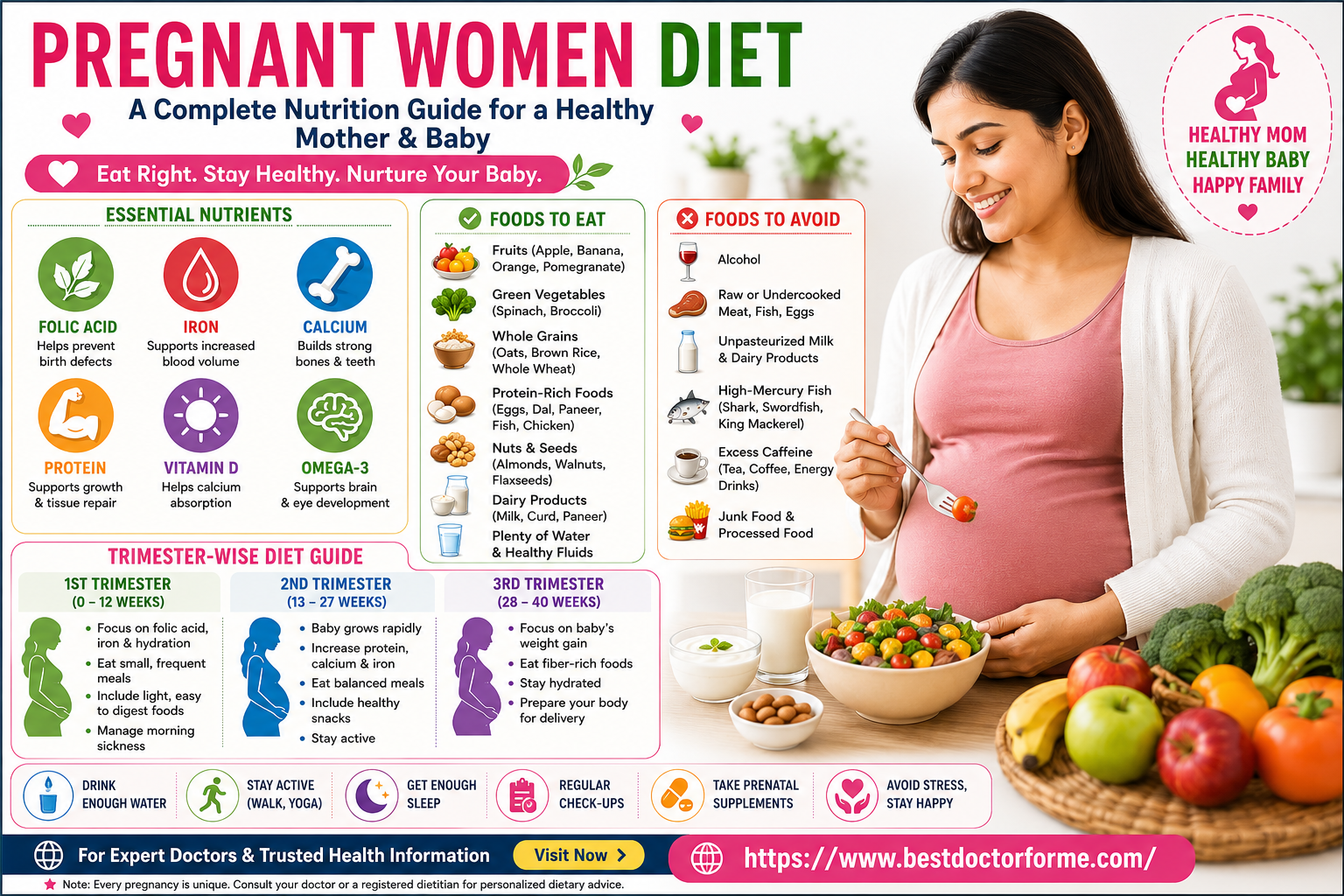
Pregnancy is one of the most exciting and life-changing journeys in a woman's life. During these nine months, your body works continuously to support the growth and development of your baby. Every meal you eat provides nutrients that help build your baby's brain, bones, organs, muscles, and immune system.
A healthy pregnancy diet is not about "eating for two." Instead, it is about choosing nutritious, balanced foods that meet your increased nutritional needs while supporting your own health.
Good nutrition during pregnancy can help reduce the risk of complications, maintain healthy weight gain, support fetal development, and improve your overall well-being.
Why Is a Healthy Pregnancy Diet Important?
The food you eat directly affects your baby's growth and your own health. A balanced pregnancy diet provides energy, essential vitamins, minerals, healthy fats, and proteins needed throughout pregnancy.
A healthy pregnancy diet may help:
- Support healthy brain development
- Build strong bones and teeth
- Reduce the risk of anemia
- Support healthy birth weight
- Improve the baby's immune system
- Help maintain healthy blood pressure
- Lower the risk of certain pregnancy complications
- Improve the mother's energy levels
Essential Nutrients During Pregnancy
1. Folic Acid
Folic acid plays an important role in the development of your baby's brain and spinal cord, especially in early pregnancy.
- Food Sources
- Spinach
- Broccoli
- Lentils
- Oranges
- Fortified cereals
- Green leafy vegetables
2. Iron
Iron helps your body produce more blood to supply oxygen to both mother and baby.
Best Sources
- Spinach
- Beetroot
- Chickpeas
- Lentils
- Eggs
- Lean meat
- Dry fruits
Taking vitamin C-rich foods along with iron-rich meals may improve iron absorption.
3. Calcium
Calcium is essential for the baby's bones and teeth while also helping protect the mother's bone health.
- Rich Sources
- Milk
- Curd (Yogurt)
- Paneer
- Cheese
- Ragi
- Sesame seeds
4. Protein
Protein supports the growth of the baby's muscles, organs, skin, and tissues.
- Protein-Rich Foods
- Eggs
- Paneer
- Soybeans
- Lentils
- Fish (low-mercury varieties)
- Chicken
- Milk
- Greek yogurt
5. Vitamin D
Vitamin D helps your body absorb calcium and supports healthy bone development.
Sources
- Morning sunlight
- Eggs
- Fortified dairy products
- Fatty fish (where appropriate)
6. Omega-3 Fatty Acids
Omega-3 fatty acids contribute to your baby's brain and eye development.
Good Sources
- Walnuts
- Flaxseeds
- Chia seeds
- Low-mercury oily fish (if recommended by your doctor)
7. Fiber
Fiber helps reduce constipation, a common problem during pregnancy.
Fiber-Rich Foods
- Oats
- Brown rice
- Apples
- Pears
- Whole grains
- Beans
- Fresh vegetables
First Trimester Diet (Weeks 1–12)
The first trimester is one of the most important stages of pregnancy because the baby's major organs begin to develop.
Many women experience nausea, vomiting, food aversions, and morning sickness during this period.
Recommended Foods
- Whole grains
- Fresh fruits
- Green vegetables
- Milk and yogurt
- Lentils
- Eggs (well-cooked)
- Nuts
- Seeds
Morning Sickness Tips
- Eat small meals every 2–3 hours.
- Avoid long gaps between meals.
- Drink water regularly throughout the day.
- Plain crackers or dry toast may help some people manage nausea.
- Avoid foods that trigger nausea or discomfort.
Sample First Trimester Meal Plan
Breakfast
- Vegetable oats with milk Or
- Two boiled eggs with whole-wheat toast
Mid-Morning Snack
- Banana
- Apple
- Handful of almonds
Lunch
- 2 Chapatis
- Dal
- Seasonal vegetable
- Salad
- Curd
Evening Snack
- Coconut water
- Roasted chana
- Fruit bowl
Dinner
- Brown rice
- Mixed vegetables
- Paneer or grilled chicken
- Soup
Before Bed
Healthy Pregnancy Tips
- Eat fresh, home-cooked meals whenever possible.
- Stay hydrated throughout the day.
- Wash fruits and vegetables thoroughly.
- Take prenatal vitamins only as prescribed.
- Get regular prenatal check-ups.
- Avoid smoking and alcohol.
- Get enough sleep and light physical activity if approved by your doctor.
Key Takeaways
- A balanced pregnancy diet supports both mother and baby.
- Include iron, calcium, protein, folic acid, vitamin D, fiber, and healthy fats.
- Eat small, nutritious meals throughout the day.
- Stay hydrated and follow your doctor's advice regarding supplements.
- Regular prenatal care is an important part of a healthy pregnancy.
The second trimester is often called the most comfortable stage of pregnancy. Morning sickness usually improves, appetite increases, and the baby begins to grow rapidly. During this phase, your body requires more protein, calcium, iron, and healthy fats to support your baby's development.
Nutritional Goals
- Support rapid fetal growth
- Strengthen bones and muscles
- Maintain healthy blood levels
- Improve energy
- Prevent constipation
Foods to Include
- Protein-Rich Foods
- Eggs
- Paneer
- Chicken
- Fish (low-mercury varieties)
- Lentils
- Rajma
- Chickpeas
- Soy products
- Calcium-Rich Foods
- Milk
- Yogurt
- Paneer
- Cheese (pasteurized)
- Ragi
- Sesame seeds
- Iron-Rich Foods
- Spinach
- Beetroot
- Dates
- Black gram
- Green vegetables
- Lean meat
- Healthy Fats
- Walnuts
- Almonds
- Flaxseeds
- Chia seeds
- Avocado
Sample Second Trimester Meal Plan
Breakfast
- Vegetable poha with curd OR
- Stuffed vegetable paratha with yogurt
Mid-Morning Snack
- Seasonal fruits
- Handful of mixed nuts
Lunch
- 2 Chapatis
- Dal
- Seasonal vegetables
- Salad
- Curd
Evening Snack
- Sprouts chaat OR
- Roasted makhana
Dinner
- Brown rice
- Paneer curry
- Vegetable soup
- Mixed salad
Bedtime
Third Trimester Diet (Week 28–40)
During the last trimester, your baby's weight increases rapidly. Good nutrition helps prepare your body for childbirth and breastfeeding.
Eat More
- Protein-rich foods
- Calcium-rich foods
- Iron-rich foods
- Fiber-rich foods
- Fresh fruits
- Healthy fats
Manage Common Problems
Heartburn
- Eat smaller meals.
- Avoid spicy and oily foods.
- Do not lie down immediately after eating.
Constipation
- Increase fiber intake.
- Drink plenty of water.
- Include fruits like papaya (ripe), pears, apples, and prunes if suitable for you.
Swelling
- Reduce excess salt.
- Stay hydrated.
- Walk regularly if your healthcare provider advises it.
Best Foods During Pregnancy
Fruits
- Apples
- Bananas
- Oranges
- Guava
- Pomegranate
- Mango (in moderation)
- Kiwi
- Pears
Vegetables
- Spinach
- Carrots
- Broccoli
- Sweet potatoes
- Pumpkin
- Beetroot
- Cauliflower
Whole Grains
- Oats
- Brown rice
- Whole wheat
- Quinoa
- Millets
Dairy
- Milk
- Curd
- Paneer
- Cheese (pasteurized)
Protein
- Eggs
- Chicken
- Fish (low-mercury)
- Paneer
- Soybean
- Lentils
- Rajma
Foods to Avoid During Pregnancy
For food safety, avoid or limit foods that may increase the risk of infection or other complications.
Avoid
- Alcohol
- Raw or undercooked meat
- Raw fish and shellfish
- Raw or undercooked eggs
- Unpasteurized milk and dairy products
- High-mercury fish
- Excess caffeine (follow your doctor's advice)
- Unwashed fruits and vegetables
Pregnancy Superfoods
- Eggs
- Greek yogurt
- Spinach
- Walnuts
- Almonds
- Chia seeds
- Oats
- Sweet potatoes
- Berries
- Lentils
- Healthy Drinks
- Water
- Coconut water
- Lemon water
- Fresh fruit smoothies (without excess sugar)
- Milk
- Buttermilk
Avoid sugary soft drinks and energy drinks.
Tips for Healthy Eating During Pregnancy
- Eat every 3–4 hours.
- Never skip breakfast.
- Drink enough water.
- Wash fruits and vegetables properly.
- Choose freshly prepared food.
- Take prenatal supplements only as prescribed.
- Avoid self-medication.
Healthy Snacks During Pregnancy
- Mixed nuts
- Fresh fruits
- Roasted chana
- Greek yogurt
- Vegetable sandwiches
- Sprouts
- Boiled corn
- Homemade smoothies (low sugar)
Healthy Weight Gain During Pregnancy
Weight gain differs from person to person and depends on pre-pregnancy BMI and your doctor's advice.
General recommendations include:
- Eat balanced meals instead of overeating.
- Include protein in every meal.
- Avoid frequent sugary snacks and ultra-processed foods.
- Attend regular prenatal check-ups to monitor healthy weight gain.
Hydration During Pregnancy
Water supports digestion, circulation, temperature regulation, and amniotic fluid.
Tips:
- Drink water regularly throughout the day.
- Include coconut water or buttermilk if suitable.
- Increase fluids during hot weather or after activity.
- Seek medical advice if vomiting or diarrhea causes dehydration.
Physical Activity During Pregnancy
If your doctor says it is safe, regular activity can be beneficial.
Recommended:
- Walking
- Prenatal yoga
- Stretching
- Breathing exercises
Avoid:
- Contact sports
- Heavy lifting
- Activities with a high risk of falling
Always follow your obstetrician's advice before starting or continuing exercise.
Common Pregnancy Diet Mistakes
- Skipping meals
- Drinking too little water
- Eating excessive junk food
- Too much caffeine
- Taking supplements without medical advice
- Eating raw or undercooked foods
- Following restrictive weight-loss diets during pregnancy
Frequently Asked Questions (FAQs)
1. What is the best diet during pregnancy?
A balanced diet including fruits, vegetables, whole grains, dairy, protein-rich foods, and healthy fats is generally recommended.
2. Which fruit is best during pregnancy?
Apples, bananas, oranges, guava, pears, and pomegranate are nutritious choices for many pregnant women.
3. Is milk necessary during pregnancy?
Milk and other dairy products can provide calcium and protein. If you cannot consume dairy, discuss suitable alternatives with your healthcare provider.
4. Can pregnant women eat eggs?
Yes. Fully cooked eggs are a good source of protein and several important nutrients.
5. How much water should a pregnant woman drink?
Fluid needs vary from person to person. Most pregnant women benefit from staying well hydrated, but your doctor can provide personalized advice.
6. Which foods should be avoided?
Avoid alcohol, raw or undercooked meat, fish, or eggs, unpasteurized dairy products, and foods that may increase the risk of foodborne illness.
7. Should I take supplements?
Take prenatal vitamins and supplements only as recommended by your healthcare provider.
A healthy pregnancy diet is one of the best investments you can make for both yourself and your baby. Focus on a balanced diet rich in fruits, vegetables, whole grains, lean proteins, healthy fats, and adequate fluids. Regular prenatal check-ups, safe physical activity, and following your doctor's advice are equally important for a healthy pregnancy.
Every pregnancy is unique, so your nutritional needs may differ. Always consult your obstetrician or a qualified dietitian before making significant dietary changes.
Looking for expert pregnancy care? Visit BestDoctorForMe.com to connect with experienced gynecologists and access trusted pregnancy health information.