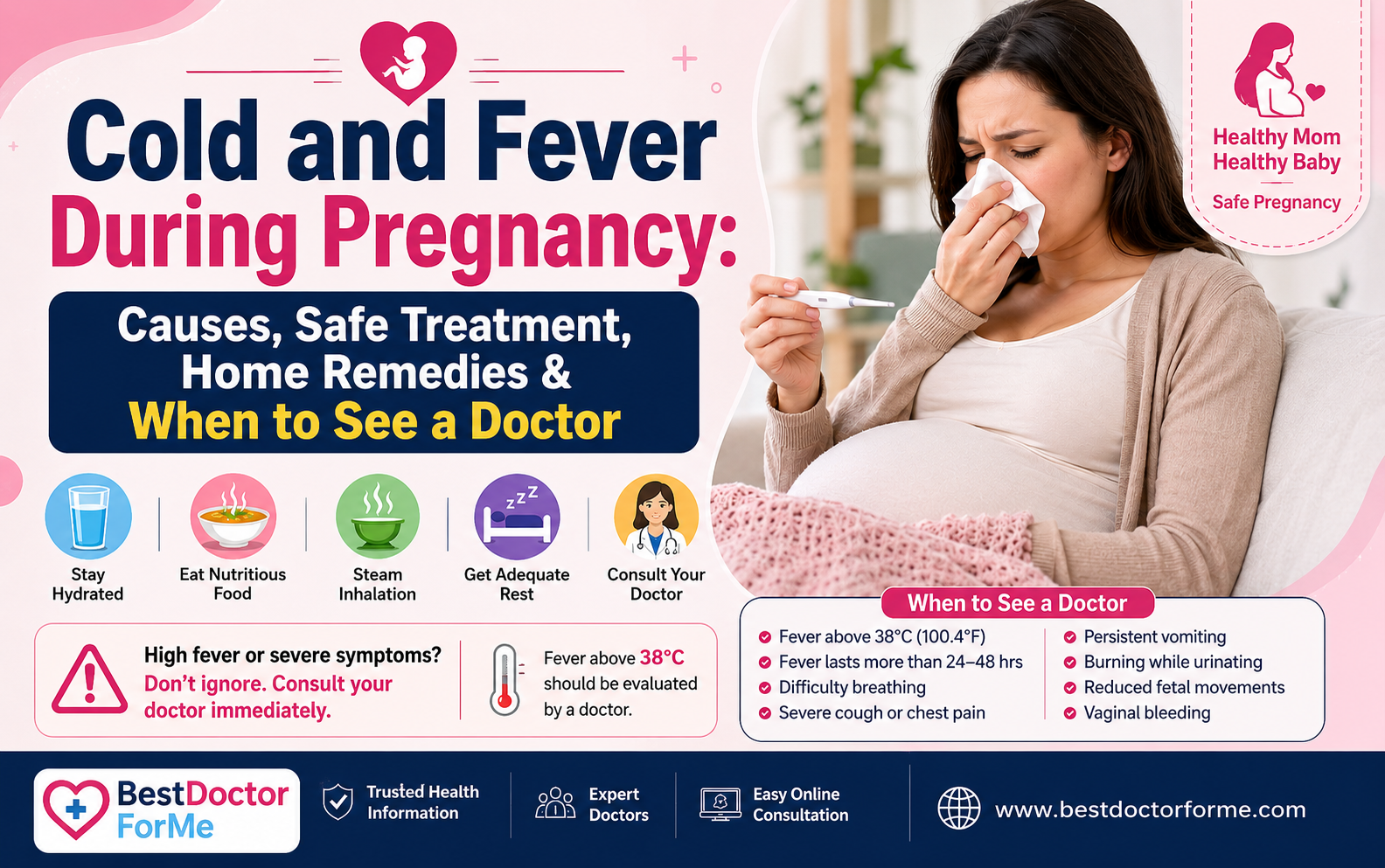
Pregnancy is a beautiful journey, but it also brings changes to your immune system that can make you more susceptible to common illnesses like the common cold and fever. While most colds are harmless and resolve within a week, fever during pregnancy requires extra attention, especially if it is high or persistent.
In this guide, we'll discuss the causes, symptoms, safe treatments, home remedies, and warning signs of cold and fever during pregnancy.
Why Are Pregnant Women More Prone to Cold?
During pregnancy, your immune system naturally changes to support your growing baby. This makes it easier for viruses that cause the common cold to infect you.
Common viruses include:
- Rhinovirus
- Coronavirus (common cold types)
- Respiratory Syncytial Virus (RSV)
- Influenza virus
Symptoms of Cold During Pregnancy
A common cold may cause:
- Runny or blocked nose
- Sneezing
- Sore throat
- Mild cough
- Headache
- Mild body aches
- Watery eyes
- Low-grade fever
- Fatigue
Most symptoms improve within 7–10 days.
Is Fever Dangerous During Pregnancy?
- A mild fever is not always harmful.
- However, a temperature above 38°C (100.4°F) should be evaluated by a healthcare provider, especially during the first trimester.
- High fever may increase the risk of pregnancy complications if left untreated.
Causes of Fever During Pregnancy
Fever may occur because of:
- Viral infection
- Flu (Influenza)
- COVID-19
- Urinary tract infection (UTI)
- Pneumonia
- Food poisoning
- Dengue or malaria (in endemic regions)
Safe Home Remedies
These natural remedies may help relieve symptoms:
1. Drink Plenty of Fluids
- Warm water
- Lemon water
- Coconut water
- Soup
- ORS if dehydrated
2. Get Adequate Rest
- Sleep helps your immune system fight infection.
3. Gargle with Warm Salt Water
4. Use Steam Inhalation
- Steam can relieve nasal congestion.
5. Eat Nutritious Foods
Include:
- Fruits
- Vegetables
- Protein-rich foods
- Vitamin C-rich foods
6. Use a Humidifier
- Keeps air moist and reduces throat irritation.
Foods That Support Recovery
Eat foods rich in nutrients:
- Oranges
- Guava
- Kiwi
- Papaya (ripe)
- Bananas
- Apples
- Yogurt
- Vegetable soup
- Dal
- Eggs (if you eat them)
- Milk
- Dry fruits (in moderation)
When Should You See a Doctor Immediately?
Contact your healthcare provider if you have:
- Fever above 38°C (100.4°F)
- Fever lasting more than 24–48 hours
- Difficulty breathing
- Severe cough
- Chest pain
- Reduced fetal movements (later pregnancy)
- Severe dehydration
- Persistent vomiting
- Burning while urinating
- Severe abdominal pain
- Vaginal bleeding
Seek emergency care if symptoms are severe or worsening.
Can Cold Harm the Baby?
A simple cold usually does not harm the baby.
The main concern is:
- High fever
- Severe infection
- Dehydration
- Infections like influenza or COVID-19 that may require medical treatment
Timely care helps reduce risks.
How to Prevent Cold During Pregnancy
- Wash hands frequently.
- Avoid close contact with sick people.
- Wear a mask in crowded places during outbreaks.
- Eat a balanced diet.
- Stay hydrated.
- Sleep 7–9 hours daily.
- Exercise as advised by your doctor.
- Stay up to date with recommended vaccinations (such as the flu vaccine, if advised).
Frequently Asked Questions (FAQs)
Can I take paracetamol during pregnancy?
Paracetamol is generally considered the preferred medicine for fever and pain during pregnancy when taken at the recommended dose and after consulting your healthcare provider.
Is steam inhalation safe?
Yes. Steam inhalation is generally safe and may help relieve nasal congestion. Be careful to avoid burns.
Can fever cause miscarriage?
A high fever, particularly early in pregnancy, may increase certain risks if not treated. If you develop a fever of 38°C (100.4°F) or higher, contact your healthcare provider promptly.
Can I drink ginger tea?
Moderate amounts of ginger are generally considered safe during pregnancy and may help soothe a sore throat or nausea, but discuss regular use with your doctor.
Cold and mild fever are common during pregnancy and usually improve with rest, hydration, and supportive care. However, persistent or high fever should never be ignored. Always consult your obstetrician before taking any medication, and seek medical attention if you experience warning signs.