
best doctor for me

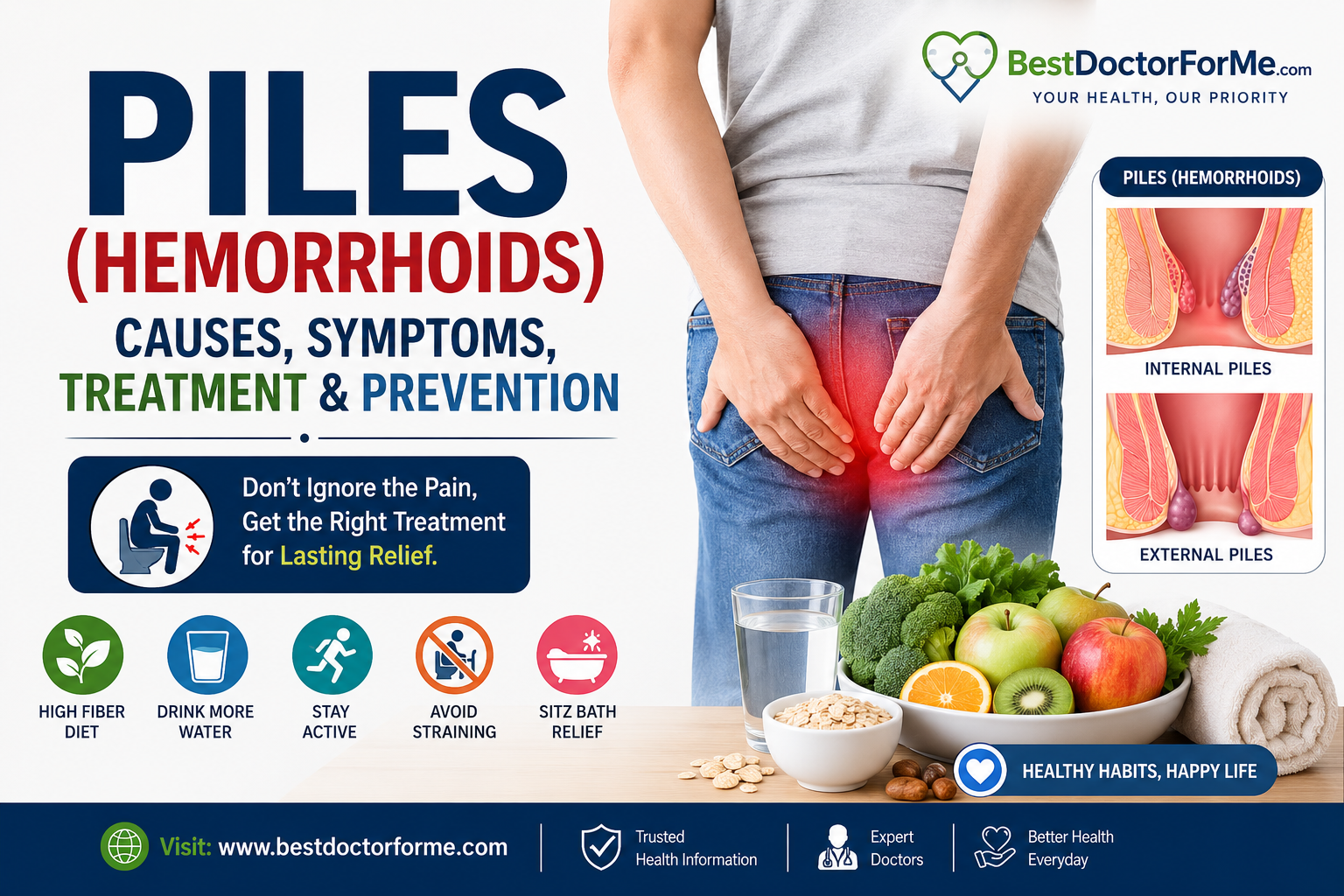
Piles (Hemorrhoids): Causes, Symptoms, Treatment & Prevention

Piles, also known as hemorrhoids, are swollen and inflamed veins in the lower rectum and anus. They are one of the most common digestive health problems, affecting millions of people worldwide. Although piles can be painful and uncomfortable, they are usually treatable with lifestyle changes, medications, and, in some cases, minor medical procedures.

Many people avoid discussing piles due to embarrassment, which often delays diagnosis and treatment. Early medical care can help relieve symptoms quickly and prevent complications.

In this article, you'll learn everything about piles, including their causes, symptoms, diagnosis, treatment options, home remedies, dietary recommendations, prevention tips, and frequently asked questions.

What Are Piles?

Piles are swollen blood vessels located inside or around the anus and rectum. Increased pressure on these veins causes them to enlarge, leading to pain, itching, bleeding, or discomfort during bowel movements.

Piles can affect people of all ages but are more common in adults over 40, pregnant women, and individuals with chronic constipation.

Types of Piles

1. Internal Piles

Internal piles develop inside the rectum and are usually painless. However, they may cause painless bleeding during bowel movements.

Symptoms

  • Bright red blood after passing stool
  • Mild discomfort
  • Prolapse (hemorrhoids protruding outside the anus)

2. External Piles

External piles occur under the skin around the anus and are often painful.

Symptoms

  • Pain while sitting
  • Swelling around the anus
  • Itching
  • Burning sensation
  • Difficulty during bowel movements

3. Thrombosed Piles

Sometimes blood collects inside an external hemorrhoid and forms a clot (thrombus), causing severe pain.

Symptoms

  • Sudden intense pain
  • Hard lump near the anus
  • Swelling
  • Inflammation

Causes of Piles

Several factors increase pressure on the veins around the rectum.

Common causes include:

  • Chronic constipation
  • Straining during bowel movements
  • Low-fiber diet
  • Sitting on the toilet for long periods
  • Pregnancy
  • Obesity
  • Heavy lifting
  • Chronic diarrhea
  • Lack of physical activity
  • Aging
  • Family history of hemorrhoids

Risk Factors

You are more likely to develop piles if you:

  • Are over 40 years old
  • Are pregnant
  • Have chronic constipation
  • Are overweight or obese
  • Eat a low-fiber diet
  • Drink insufficient water
  • Spend long hours sitting
  • Frequently lift heavy objects

Symptoms of Piles

Symptoms depend on the type and severity.

Common symptoms include:

  • Bright red bleeding during bowel movements
  • Pain around the anus
  • Itching
  • Burning sensation
  • Swelling
  • Lump near the anus
  • Mucus discharge
  • Feeling that the bowel is not completely empty

Warning Signs – When to Seek Immediate Medical Care

Consult a doctor immediately if you experience:

  • Heavy rectal bleeding
  • Black or tarry stools
  • Severe pain
  • Fever with anal swelling
  • Persistent bleeding lasting several days
  • Dizziness due to blood loss

Diagnosis

A healthcare provider may perform:

  • Physical examination
  • Digital rectal examination
  • Anoscopy
  • Sigmoidoscopy
  • Colonoscopy (especially if there is unexplained rectal bleeding or if colorectal disease needs to be ruled out)

Treatment for Piles

Treatment depends on the severity of the condition.

1. Medications

Doctors may prescribe:

Always use medications only under medical supervision.

2. Home Remedies

Mild piles often improve with self-care.

Helpful remedies include:

  • Drink 2–3 liters of water daily.
  • Eat a high-fiber diet.
  • Avoid straining during bowel movements.
  • Take warm sitz baths for 10–15 minutes.
  • Exercise regularly.
  • Do not delay bowel movements.
  • Maintain a healthy body weight.

Best Foods for Piles

Eating fiber-rich foods helps soften stools and reduces strain.

Recommended foods include:

  • Oats
  • Whole wheat
  • Brown rice
  • Lentils
  • Beans
  • Apples
  • Pears
  • Bananas
  • Papaya
  • Guava
  • Broccoli
  • Spinach
  • Carrots
  • Pumpkin
  • Yogurt
  • Buttermilk
  • Plenty of water

Foods to Avoid

Limit or avoid:

  • Spicy foods
  • Deep-fried foods
  • Fast food
  • Processed foods
  • Excess red meat
  • Alcohol
  • Smoking
  • Sugary drinks
  • Too much caffeine

Complications of Untreated Piles

If left untreated, piles may lead to:

  • Chronic bleeding
  • Iron-deficiency anemia
  • Blood clots
  • Severe pain
  • Infection (rare)
  • Prolapsed hemorrhoids

Prevention Tips

Reduce your risk of piles by:

  • Eating 25–35 grams of fiber daily
  • Drinking enough water
  • Exercising regularly
  • Avoiding prolonged sitting
  • Maintaining a healthy weight
  • Not straining during bowel movements
  • Responding promptly to the urge to pass stool
  • Limiting processed foods

When Should You See a Doctor?

Seek medical advice if:

  • Bleeding occurs repeatedly.
  • Pain becomes severe.
  • A lump does not improve.
  • Symptoms last longer than one week.
  • Home remedies fail to provide relief.
  • You notice black stools or unexplained weight loss.

Frequently Asked Questions (FAQs)

Can piles go away on their own?

Mild piles may improve with diet and lifestyle changes, but persistent symptoms require medical evaluation.

Is bleeding from piles dangerous?

Small amounts of bright red blood are common with piles, but heavy or persistent bleeding should always be evaluated by a doctor.

Can piles be cured without surgery?

Yes. Most people recover with medications, dietary changes, and minimally invasive procedures. Surgery is usually reserved for severe or recurrent cases.

Is walking good for piles?

Yes. Regular walking improves bowel movements, reduces constipation, and supports recovery.

Can piles return after treatment?

Yes. They can recur if constipation, prolonged straining, or unhealthy lifestyle habits continue.

Piles are a common and treatable condition that can significantly affect daily life if ignored. Most cases improve with a high-fiber diet, adequate hydration, regular exercise, and appropriate medical treatment. Early diagnosis and timely care help prevent complications and improve quality of life

If you experience persistent rectal bleeding, severe pain, or swelling around the anus, consult a qualified healthcare professional without delay. Prompt treatment can relieve symptoms and reduce the risk of recurrence.

Subscribe to Health Feed

Subscribe to keep yourself updated with latest articles and health news.

Disclaimer - The content on this site is for informational purposes only.

Copyright © 2024, BestDoctorForMe.com. All rights reserved.