☰

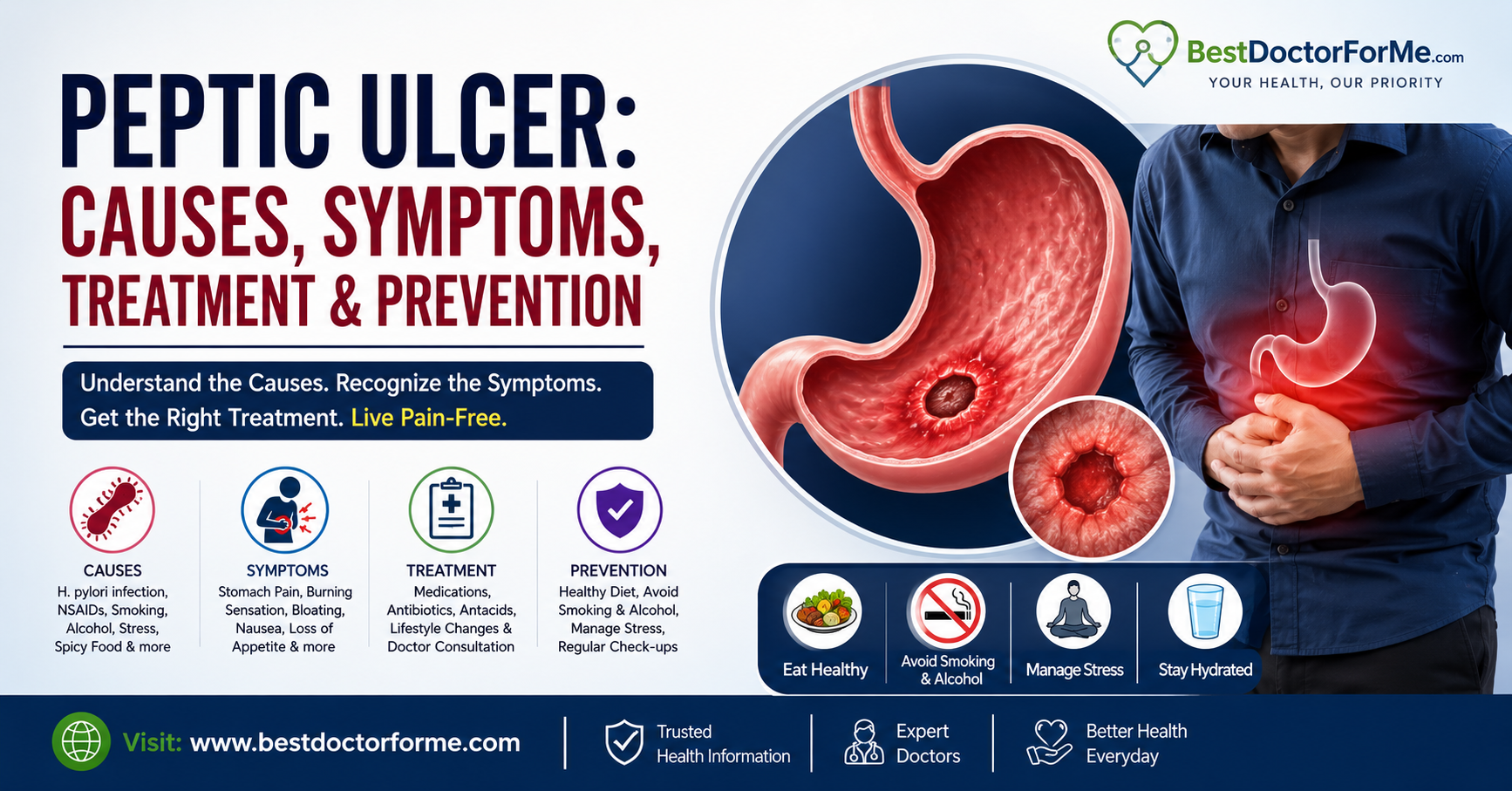
A peptic ulcer is an open sore that develops on the inner lining of the stomach or the upper part of the small intestine (duodenum). It occurs when the protective lining of the digestive tract is damaged, allowing stomach acid to injure the tissue beneath. Although peptic ulcers can cause significant discomfort, they are highly treatable with the right medical care and lifestyle changes.
Ignoring symptoms may lead to serious complications such as bleeding, perforation, or obstruction. Early diagnosis and treatment can help prevent these problems.
A peptic ulcer is a break in the protective lining of the stomach or duodenum caused by acid and digestive enzymes. The two main types are:
Gastric Ulcer: Develops inside the stomach.
Duodenal Ulcer: Develops in the upper part of the small intestine.
The most common causes include:
This bacterial infection damages the stomach lining and is one of the leading causes of peptic ulcers.
Frequent use of NSAIDs such as
can weaken the stomach's protective lining.
Conditions that increase acid production may contribute to ulcer formation.
Smoking delays healing and increases ulcer risk.
Heavy drinking can irritate and erode the stomach lining.
While stress alone usually does not cause ulcers, it may worsen symptoms.
You are more likely to develop a peptic ulcer if you:
Symptoms vary from person to person.
Go to the nearest hospital if you experience:
These may indicate serious complications.
Doctors may recommend:
A healthy diet may support healing.
Choose:
Limit or avoid:
To reduce ulcer symptoms:
Untreated ulcers may cause:
Yes. You can lower your risk by:
Yes. If left untreated, it can lead to bleeding, perforation, or other serious complications. Early treatment is important.
Yes. Most ulcers heal completely with appropriate medication and lifestyle changes.
No. The most common causes are H. pylori infection and long-term use of NSAIDs. Spicy foods may worsen symptoms in some people but are not usually the primary cause.
Most uncomplicated ulcers heal within 4–8 weeks, depending on the cause and treatment.
Stress alone is not considered the primary cause but can aggravate symptoms and slow healing.
Peptic ulcers are common digestive conditions that can significantly affect quality of life if ignored. Fortunately, with timely diagnosis, proper medications, healthy eating habits, and lifestyle modifications, most ulcers heal successfully. If you experience persistent stomach pain, black stools, or vomiting blood, seek medical attention immediately.
Stay informed. Stay healthy. Visit BestDoctorForMe.com for trusted health information and expert medical guidance.
Subscribe to keep yourself updated with latest articles and health news.
Copyright © 2024, BestDoctorForMe.com. All rights reserved.