
best doctor for me

PCOD: Causes, Symptoms, Health Risks, and Treatment

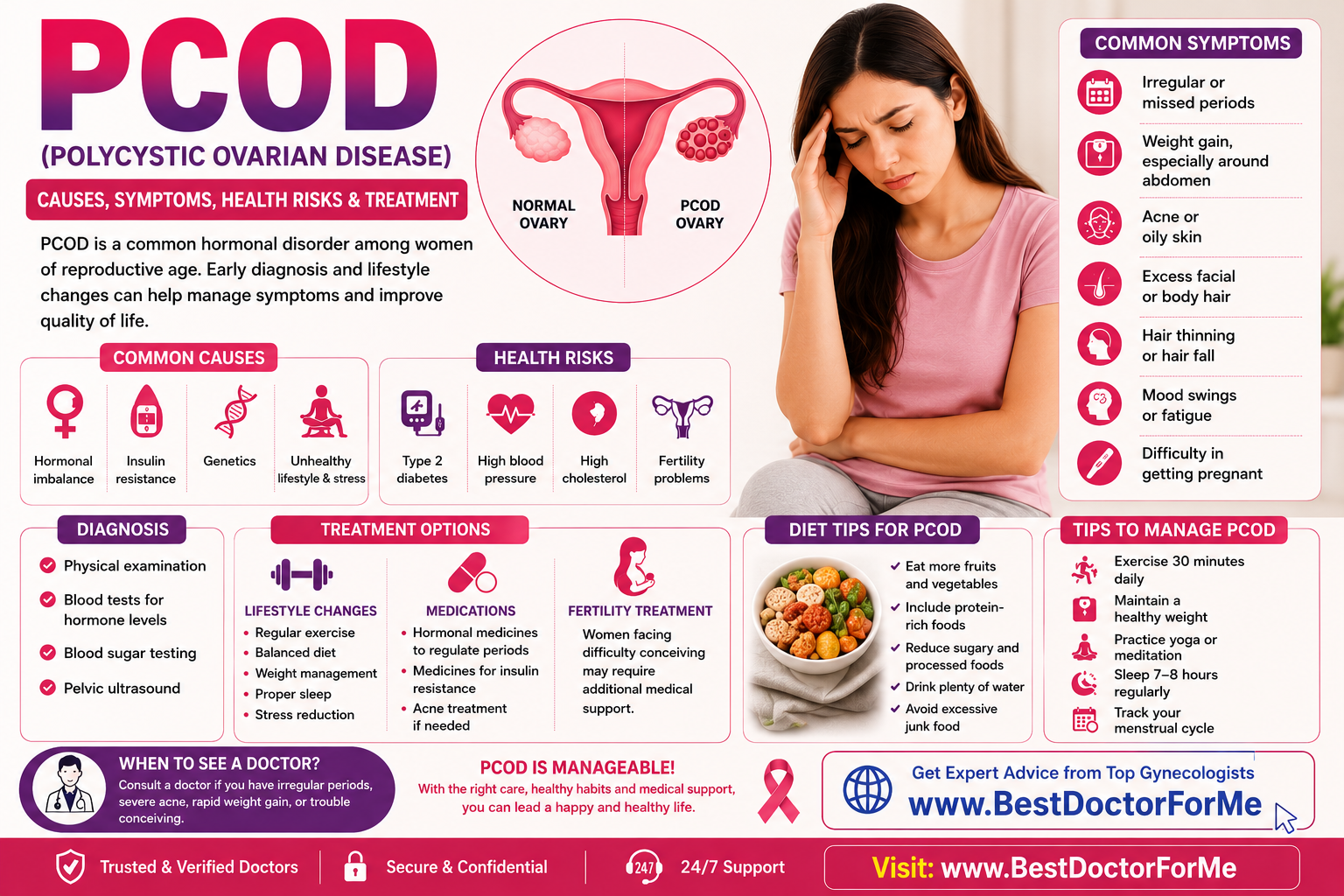
PCOD, or Polycystic Ovarian Disease, is one of the most common hormonal disorders affecting women of reproductive age. Due to hormonal imbalance, the ovaries may produce immature or partially mature eggs, which can turn into small cysts over time. This condition can affect menstrual health, weight, skin, fertility, and overall well-being.

Early diagnosis and healthy lifestyle changes can help manage PCOD effectively.

What Is PCOD?

In PCOD, the ovaries produce excess male hormones called androgens. This hormonal imbalance may interfere with ovulation and cause irregular menstrual cycles. Women with PCOD may develop multiple small cysts in the ovaries.

PCOD is manageable with proper medical care, diet, exercise, and lifestyle changes.

Common Causes of PCOD

Hormonal Imbalance

An imbalance in reproductive hormones is one of the major causes of PCOD.

Insulin Resistance

Many women with PCOD have insulin resistance, where the body cannot use insulin properly. This can increase blood sugar levels and weight gain.

Genetics

PCOD can sometimes run in families.

Unhealthy Lifestyle

Lack of physical activity, unhealthy eating habits, stress, and poor sleep may increase the risk of PCOD.

Common Symptoms of PCOD

  • Women with PCOD may experience:
  • Irregular or missed periods
  • Weight gain, especially around the abdomen
  • Acne or oily skin
  • Excess facial or body hair
  • Hair thinning or hair fall
  • Difficulty getting pregnant
  • Mood swings or fatigue

Symptoms may vary from person to person.

Health Risks Associated With PCOD

If not managed properly, PCOD may increase the risk of:

  • Obesity
  • Type 2 diabetes
  • High cholesterol
  • High blood pressure
  • Fertility problems
  • Anxiety or depression

How Is PCOD Diagnosed?

Doctors may recommend:

  • Physical examination
  • Blood tests for hormone levels
  • Blood sugar testing
  • Pelvic ultrasound

Treatment Options for PCOD

  • Treatment depends on symptoms and individual health needs.
  • Lifestyle Changes
  • Healthy habits play a major role in managing PCOD:
  • Regular exercise
  • Balanced diet
  • Weight management
  • Proper sleep
  • Stress reduction

Medications

  • Doctors may prescribe:
  • Hormonal medicines to regulate periods
  • Medicines for insulin resistance
  • Acne treatment if needed

Fertility Treatment- Women facing difficulty conceiving may require additional medical support.

Best Diet Tips for PCOD

  • Eat more fruits and vegetables
  • Include protein-rich foods
  • Reduce processed and sugary foods
  • Drink plenty of water
  • Avoid excessive junk food

Tips for Managing PCOD Naturally

  • Exercise at least 30 minutes daily
  • Maintain a healthy weight
  • Practice yoga or meditation for stress management
  • Sleep for 7–8 hours regularly
  • Track your menstrual cycle

When Should You See a Doctor?

Consult a healthcare provider if:

  • Your periods are frequently irregular
  • You experience rapid weight gain
  • Acne or hair growth becomes severe
  • You have difficulty getting pregnant
  • Symptoms interfere with daily life


Subscribe to Health Feed

Subscribe to keep yourself updated with latest articles and health news.

Disclaimer - The content on this site is for informational purposes only.

Copyright © 2024, BestDoctorForMe.com. All rights reserved.