☰

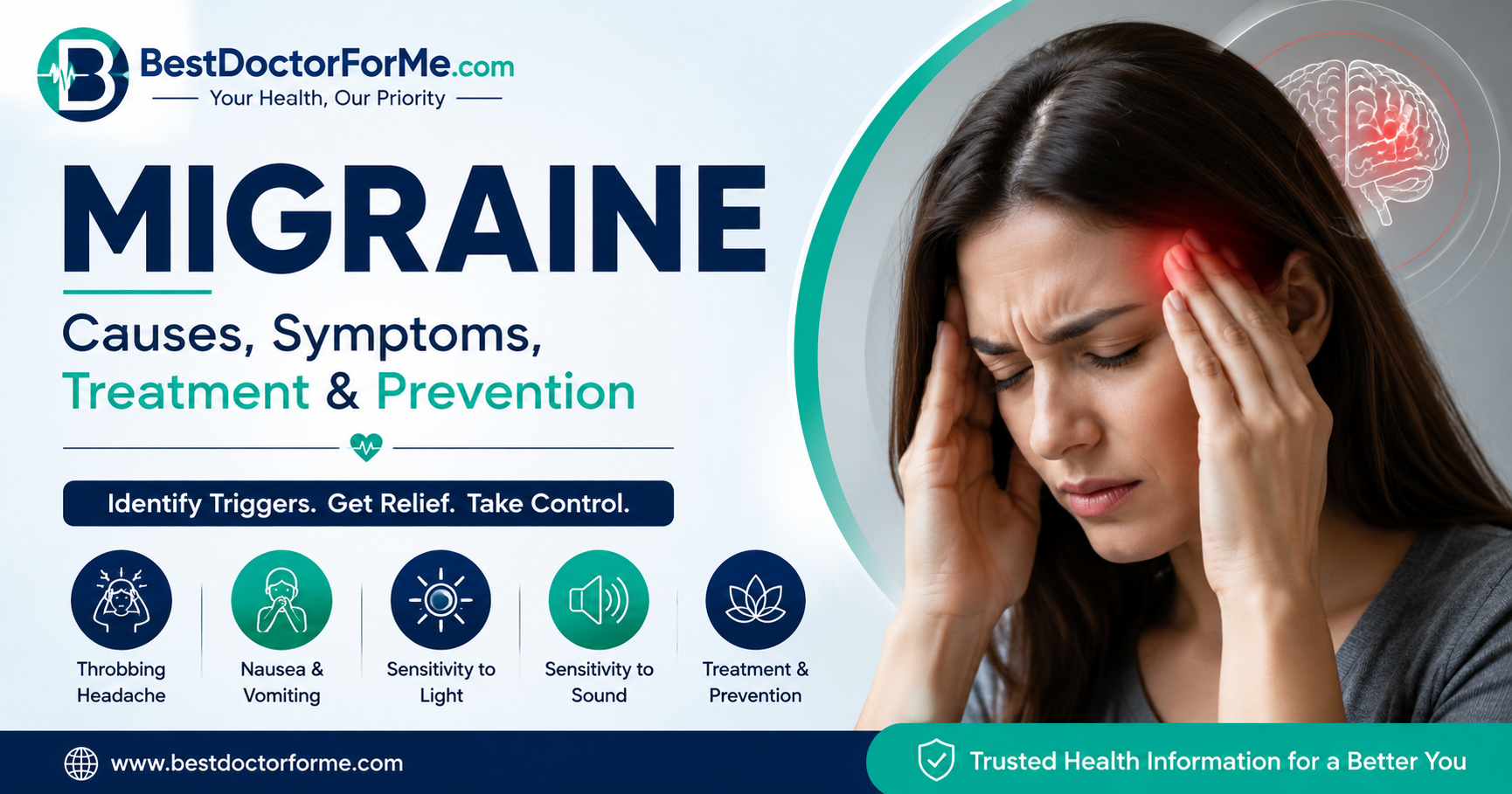
Migraines are more than just headaches. They are a neurological condition that can cause intense, throbbing pain, often on one side of the head, along with nausea, vomiting, and sensitivity to light and sound. Migraine attacks can last anywhere from a few hours to several days, making it difficult to carry out daily activities.
Millions of people worldwide suffer from migraines, but with proper understanding, treatment, and lifestyle changes, the frequency and severity of attacks can often be reduced.
A migraine is a neurological disorder characterized by recurrent episodes of moderate to severe headaches. Unlike ordinary headaches, migraines are often accompanied by additional symptoms such as visual disturbances, nausea, dizziness, and extreme sensitivity to environmental stimuli.
Some people experience warning signs known as aura, which may include flashing lights, blind spots, tingling sensations, or difficulty speaking before the headache begins.
The most common type, causing severe headache without warning signs.
Occurs with temporary visual or sensory symptoms before the headache starts.
Headaches occur on 15 or more days per month for at least three months.
Primarily causes dizziness, balance problems, and vertigo.
A rare type that causes temporary weakness on one side of the body.
Several factors may trigger migraines, including:
Symptoms vary from person to person but commonly include:
Some people experience symptoms before the headache starts:
Aura usually lasts between 5 and 60 minutes.
Keeping track of triggers can help prevent attacks.
Common triggers include:
Doctors diagnose migraine based on:
In some cases, imaging tests may be recommended:
These tests help rule out other neurological conditions.
Avoid self-medication, especially frequent painkiller use, as it may lead to medication-overuse headaches.
Many people find relief with simple lifestyle measures:
Including these foods in your diet may support overall health:
Magnesium-rich foods may be beneficial for some individuals.
Seek medical attention if:
Emergency medical care is needed if the headache is sudden and severe ("thunderclap" headache) or is accompanied by persistent neurological symptoms.
Untreated or poorly managed migraines may lead to:
Migraine itself is usually not life-threatening, but severe or unusual headaches should always be evaluated by a healthcare professional.
There is no permanent cure, but treatment and lifestyle changes can significantly reduce attacks.
Common trigger foods include processed meats, aged cheese, alcohol, foods containing MSG, and excessive caffeine. Triggers vary from person to person.
Yes. Genetics play an important role, and migraines often run in families.
Yes. Stress is one of the most common migraine triggers.
Migraine is a common but often disabling neurological condition that affects people of all ages. Recognizing triggers, following a healthy lifestyle, staying hydrated, and seeking timely medical advice can greatly improve quality of life. If migraine attacks become frequent or severe, consult a neurologist for proper diagnosis and personalized treatment.
Subscribe to keep yourself updated with latest articles and health news.
Copyright © 2024, BestDoctorForMe.com. All rights reserved.