☰
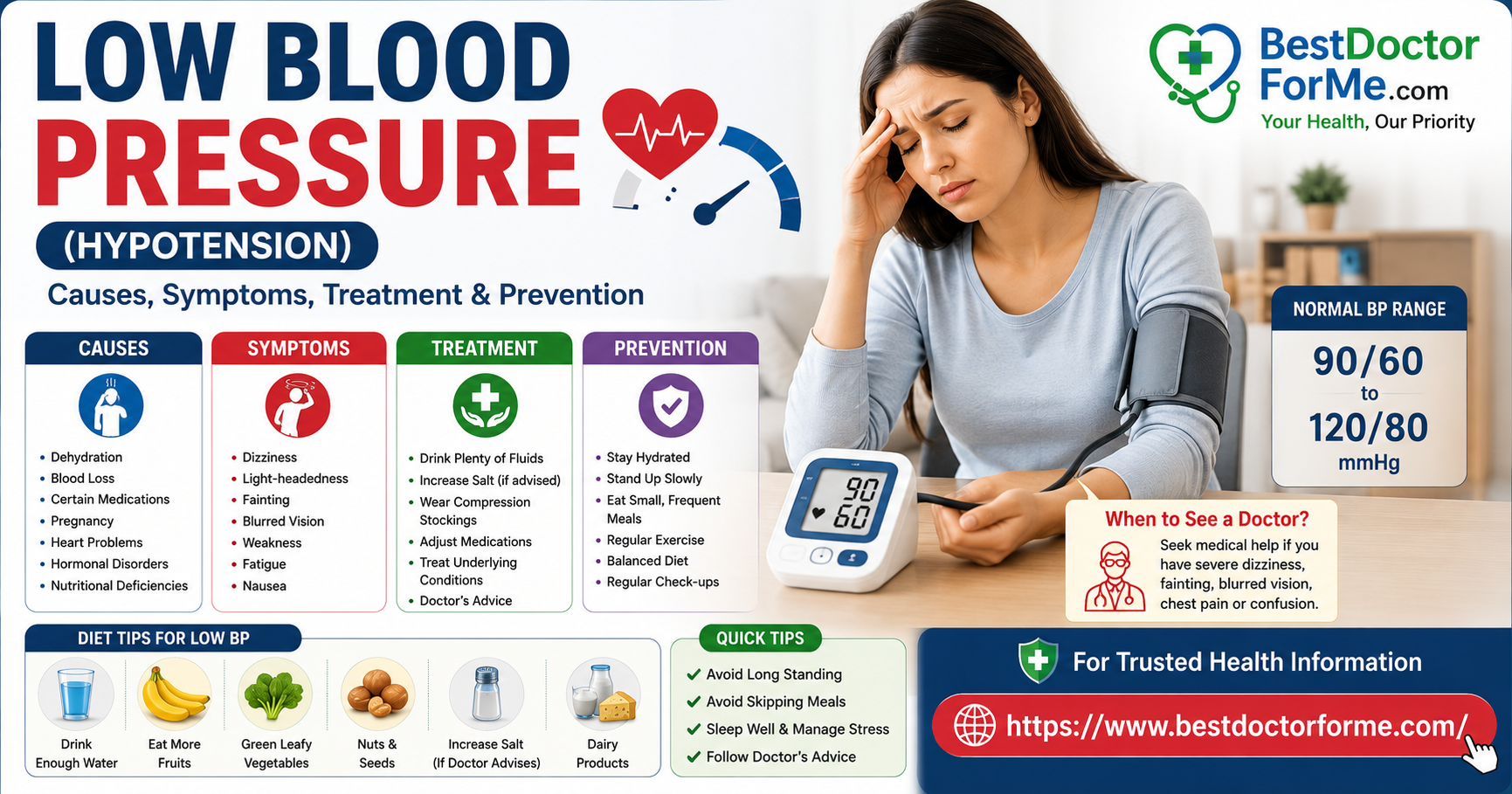
Low blood pressure, medically known as hypotension, occurs when blood pressure falls below the normal range and may not supply enough blood to vital organs. While some people naturally have lower blood pressure without any health problems, others may experience symptoms such as dizziness, weakness, fainting, or blurred vision.
In some situations, a sudden drop in blood pressure can become a medical emergency, especially if it is associated with severe bleeding, infection, dehydration, or an allergic reaction.
Blood pressure is the force of blood pushing against the walls of the arteries.
A blood pressure reading is expressed as:
Systolic Pressure: Pressure when the heart contracts.
Diastolic Pressure: Pressure when the heart relaxes.
In general, a blood pressure reading below 90/60 mmHg is often considered low blood pressure. However, what is "too low" varies between individuals and depends on symptoms and overall health.
A drop in blood pressure when standing up from sitting or lying down, which may cause dizziness or fainting.
A fall in blood pressure after eating, more common in older adults.
Occurs due to abnormal communication between the heart and brain, often after prolonged standing.
A life-threatening condition where blood pressure falls dangerously low because of severe illness, major blood loss, infection, or allergic reactions. This requires emergency medical treatment.
Low blood pressure can occur due to various reasons, including:
Symptoms may include:
Seek urgent medical attention if low blood pressure is accompanied by confusion, chest pain, severe shortness of breath, or signs of shock.
You may have a higher risk if you:
If untreated, severe low blood pressure may lead to:
Your doctor may recommend:
Treatment depends on the underlying cause.
Your doctor may recommend:
Some people may require prescription medication, but this should only be taken under medical supervision.
A balanced diet may help some people with low blood pressure, depending on the cause.
Include:
Some people may benefit from increasing salt intake, but only if advised by their doctor, as too much salt can be harmful.
Consult a healthcare provider if you:
Seek emergency medical care immediately if you have signs of shock, severe chest pain, difficulty breathing, or loss of consciousness.
Not always. Many healthy people naturally have low blood pressure. It becomes concerning when it causes symptoms or results from a serious medical condition.
Yes. Dehydration reduces blood volume and can lower blood pressure.
A balanced diet with adequate fluids and nutrients is important. Your doctor may provide individualized dietary advice depending on the cause.
Yes. Blood pressure often decreases during the first and second trimesters of pregnancy.
Treatment depends on the underlying cause. Many cases improve once the cause is identified and managed.
Low blood pressure is often harmless, but when it causes symptoms such as dizziness, fainting, or weakness, it should not be ignored. Early diagnosis, proper hydration, a healthy diet, and treatment of the underlying cause can help most people manage hypotension effectively. If symptoms are severe or sudden, seek immediate medical care.
Need expert advice? Visit https://www.bestdoctorforme.com/ to find experienced doctors and access trusted health information.
Subscribe to keep yourself updated with latest articles and health news.
Copyright © 2024, BestDoctorForMe.com. All rights reserved.