☰

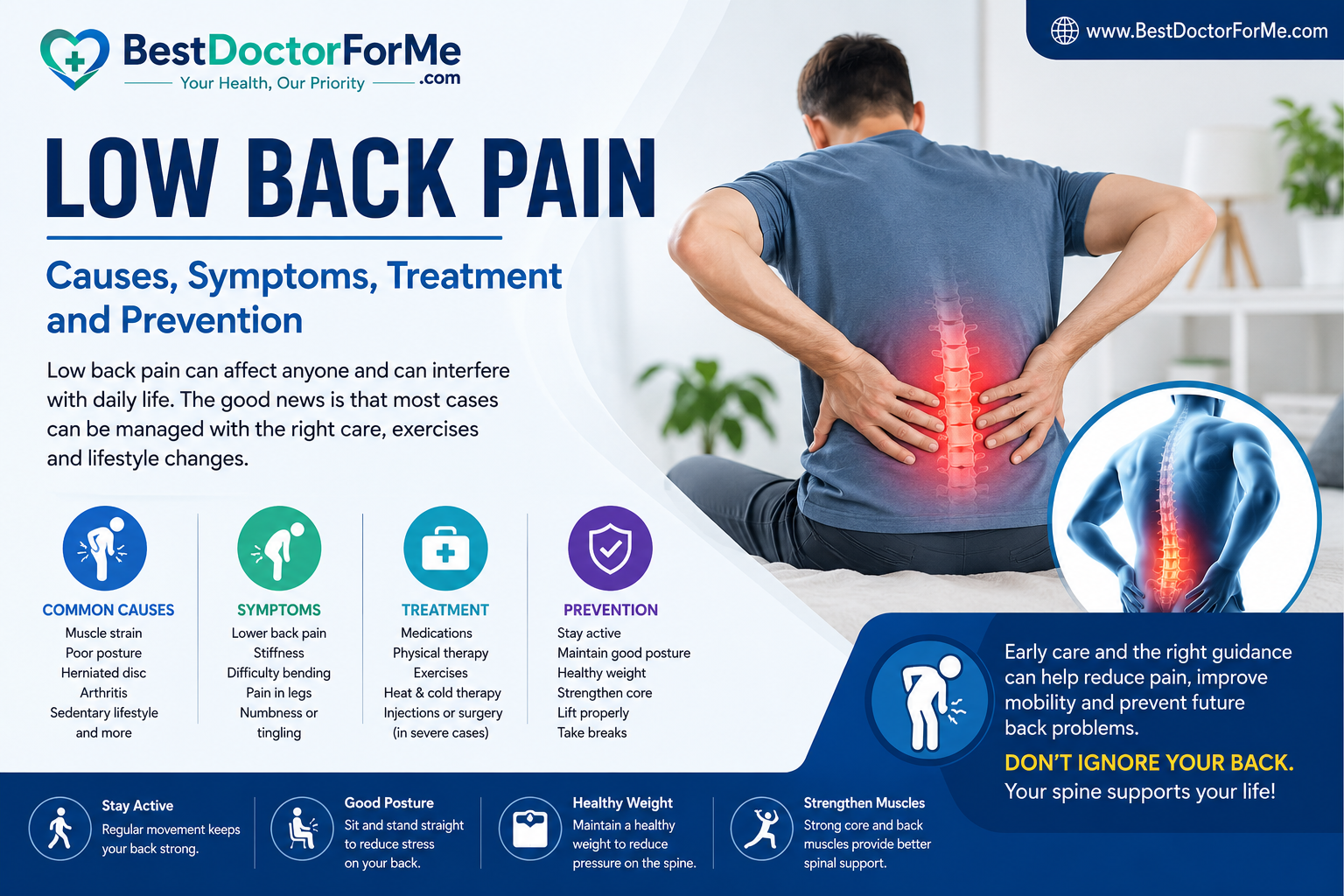
Low back pain is one of the most common health problems affecting people of all ages. It can range from a mild, dull ache to severe pain that interferes with daily activities. Most cases improve with proper care, but persistent or severe back pain should be evaluated by a healthcare professional.
Low back pain refers to pain or discomfort in the lower part of the spine, between the rib cage and the hips. It may develop suddenly after an injury (acute pain) or gradually over time (chronic pain). The pain may stay in the lower back or radiate to the buttocks and legs.
1. Muscle or Ligament Strain
Lifting heavy objects incorrectly, sudden movements, or overuse can strain the muscles and ligaments of the lower back.
2. Poor Posture
Sitting for long hours, slouching, or using an improper workstation can place extra stress on the spine.
3. Herniated (Slipped) Disc
A damaged spinal disc can press on nearby nerves, causing back pain that may radiate down one leg (commonly known as sciatica).
4. Arthritis
Osteoarthritis can affect the joints of the spine, leading to pain, stiffness, and reduced mobility.
5. Osteoporosis
Weak and brittle bones increase the risk of compression fractures in the spine, especially in older adults.
6. Obesity
Excess body weight puts additional pressure on the lower back and spinal structures.
7. Sedentary Lifestyle
Lack of physical activity weakens the muscles that support the spine, increasing the risk of back pain.
8. Other Medical Conditions
Kidney stones, spinal infections, fractures, or certain cancers may also cause lower back pain and require prompt medical evaluation.
Symptoms of Low Back Pain
Common symptoms include:
Treatment Options
Treatment depends on the cause and severity of the pain.
In severe cases involving nerve compression or structural abnormalities, injections or surgery may be recommended after careful evaluation.
Home Care Tips
Seek immediate medical attention if you experience:
You can reduce your risk by:
No. Prolonged bed rest can delay recovery. Light activity is usually more beneficial unless advised otherwise by your doctor.
Many cases improve within a few weeks with rest, activity modification, and simple home care. However, persistent or severe pain should be medically evaluated.
Low back pain is a common condition that can significantly affect daily life, but most cases improve with early treatment and healthy lifestyle changes. Paying attention to posture, staying physically active, maintaining a healthy weight, and seeking timely medical care can help relieve pain and prevent future episodes.
If your low back pain is severe, persistent, or associated with numbness, weakness, or bladder and bowel problems, consult an orthopedic specialist, spine specialist, or physiotherapist as soon as possible for proper diagnosis and treatment.
For more health-related information and to connect with healthcare professionals, visit www.bestDesForMe.com.
Subscribe to keep yourself updated with latest articles and health news.
Copyright © 2024, BestDoctorForMe.com. All rights reserved.