☰

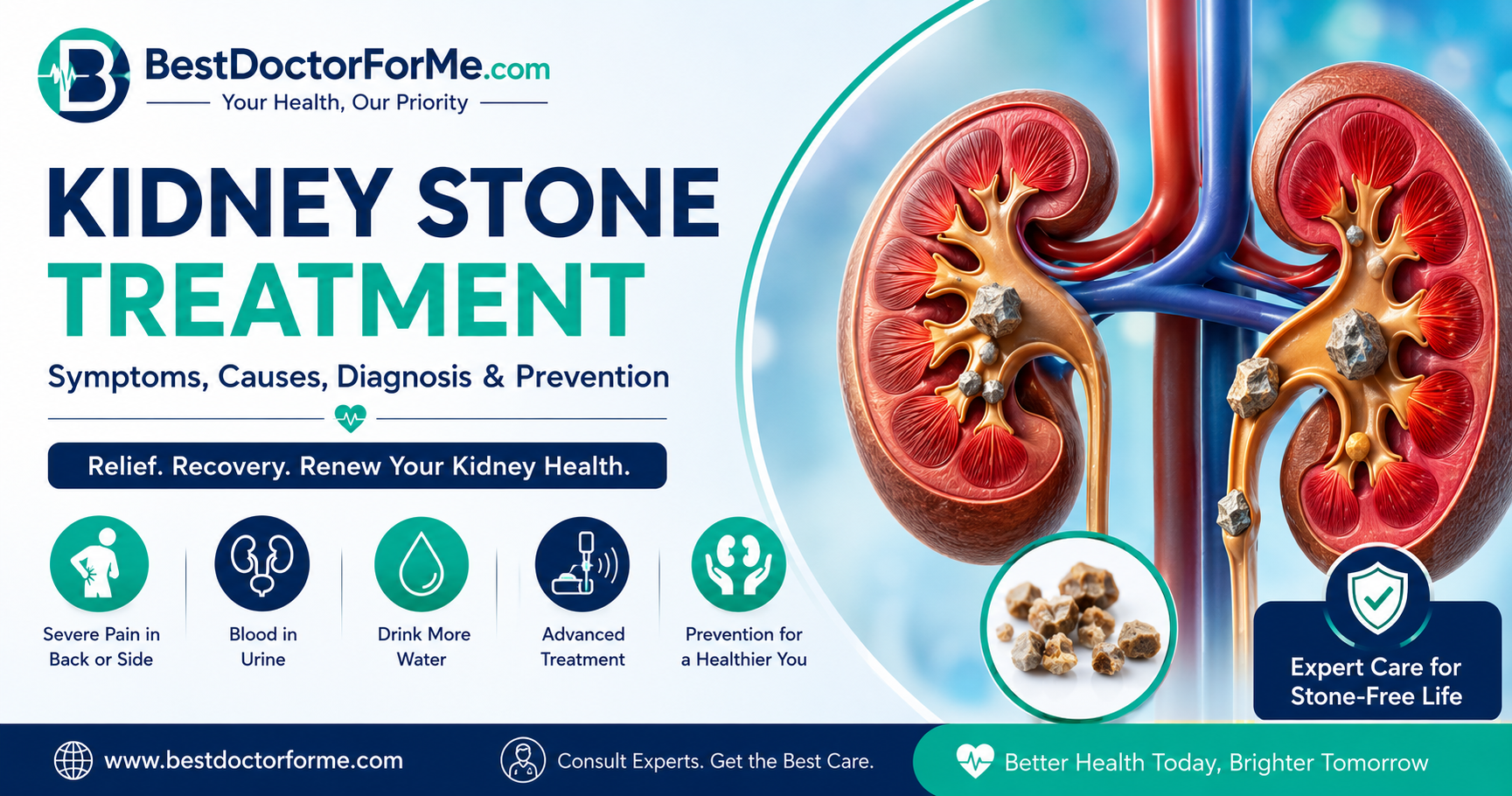
Kidney stones are one of the most common urinary tract problems affecting millions of people worldwide. These hard mineral deposits form inside the kidneys and can cause severe pain when they move through the urinary tract. While small kidney stones may pass naturally, larger stones often require medical treatment.
Understanding the symptoms, causes, treatment options, and preventive measures can help protect your kidney health and reduce the risk of future stones.
Kidney stones (renal calculi) are hard deposits made of minerals and salts that form inside the kidneys. They develop when urine becomes concentrated, allowing minerals such as calcium, oxalate, and uric acid to crystallize and stick together.
Kidney stones can vary in size—from tiny grains of sand to stones several centimeters wide.
The most common type, usually made of calcium oxalate or calcium phosphate.
Often develop in people who eat a high-protein diet or have gout.
Usually caused by urinary tract infections (UTIs).
A rare type caused by an inherited genetic disorder.
Several factors increase the risk of developing kidney stones, including:
Symptoms depend on the size and location of the stone.
Common signs include:
Seek immediate medical care if you experience:
Doctors may recommend:
Large stones usually require medical procedures
These measures may support recovery but should not replace medical treatment:
Note: Home remedies cannot dissolve all kidney stones, especially large ones.
A balanced diet can reduce the risk of future stones.
Choose:
To reduce the risk of kidney stones:
If left untreated, kidney stones can cause:
Yes. Small stones (typically less than 5 mm) often pass on their own with adequateydration and medical guidance.
No. Many kidney stones can be managed with medicines or minimally invasive procedures.
Recovery depends on the treatent. Many patients return to normal activities within a few days after minimally invasive procedures.
Does drinking more water prevent kidney stones?
g well hydrated is one of the most effective ways to reduce the risk of future stones.
Kidney stones are a common but treatable condition. Early diagnosis, timely treatment, and healthy lifestyle habits can help prevent complications and reduce the chance of recurrence. If you experience severe flank pain, blood in the urine, fever, or difficulty urinating, consult a urologist promptly for evaluation and appropriate treatment.
Subscribe to keep yourself updated with latest articles and health news.
Copyright © 2024, BestDoctorForMe.com. All rights reserved.