☰

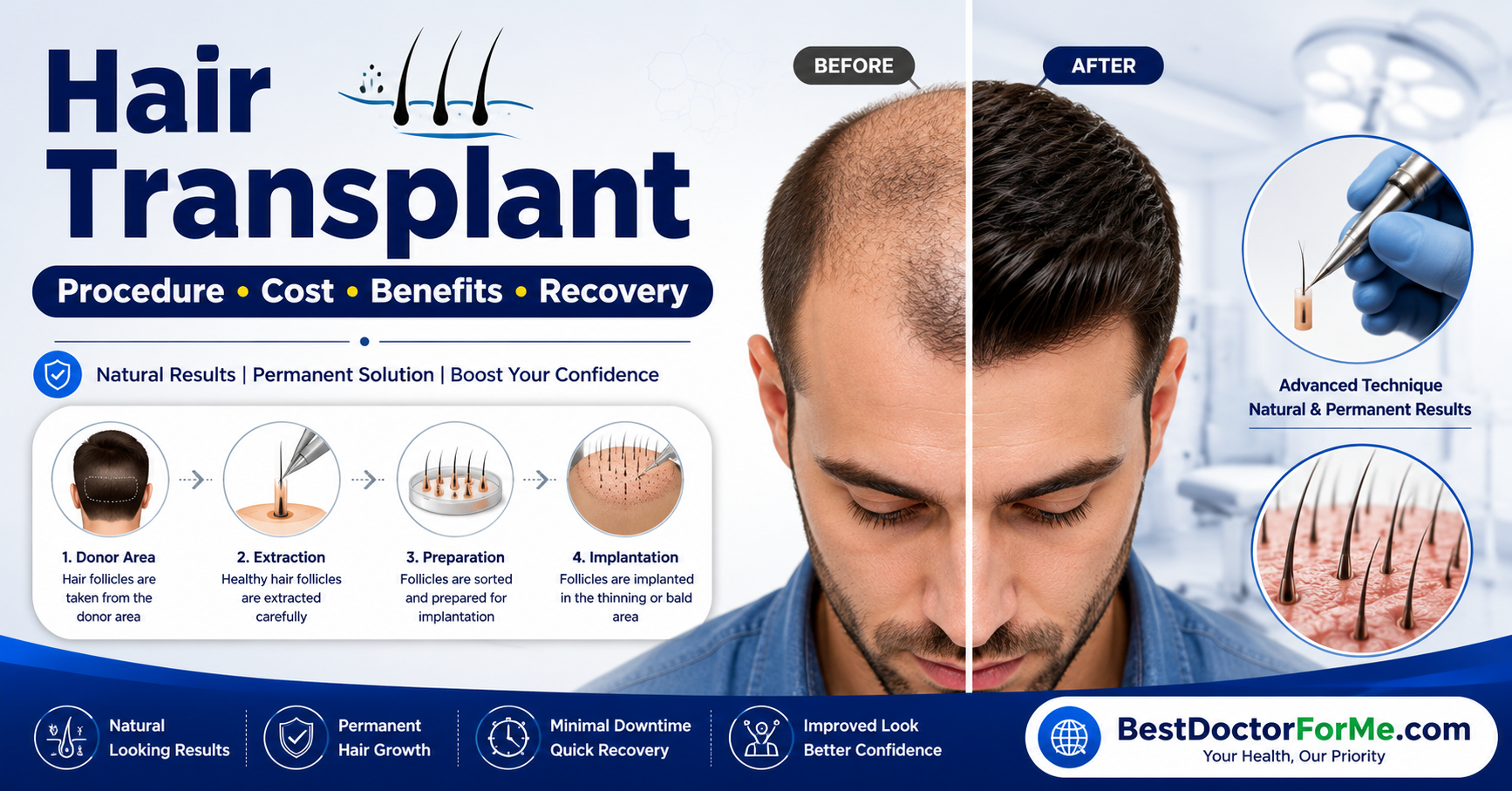
Hair loss can affect confidence and self-esteem for both men and women. If medications and lifestyle changes are not giving satisfactory results, a hair transplant may be an effective long-term solution. Modern hair transplant techniques provide natural-looking, permanent results when performed by an experienced surgeon.
In this blog, you'll learn everything about hair transplant surgery, including its procedure, benefits, cost, recovery, risks, and who is an ideal candidate.
A hair transplant is a cosmetic surgical procedure in which healthy hair follicles are removed from one part of the scalp (called the donor area) and transplanted to areas with thinning hair or baldness (recipient area).
The transplanted hair usually continues to grow naturally for a lifetime because it is resistant to hair loss.
Hair transplantation may be suitable for people with:
In this technique, individual hair follicles are extracted one by one from the donor area.
A strip of scalp is removed from the donor area, and hair follicles are separated under a microscope.
The procedure generally involves the following steps:
The doctor evaluates:
The donor and recipient areas are numbed using local anesthesia.
Hair follicles are collected using FUE or FUT technique.
Healthy follicles are sorted and prepared carefully.
Tiny incisions are made, and hair follicles are implanted according to the natural direction of hair growth.
The procedure usually takes 4–8 hours, depending on the number of grafts.
Mild swelling
Tiny scabs
Avoid scratching
Temporary shedding of transplanted hair (Shock Loss)
New hair starts growing
Noticeable improvement
Final results become visible
Although generally safe, some risks include:
Choosing a qualified and experienced surgeon significantly reduces these risks.
You may be a good candidate if you:
It may not be suitable for:
Consult a dermatologist or hair transplant surgeon before making a decision.
Hair Transplant Cost in India
The cost depends on:
Initially, the transplanted hair usually sheds within a few weeks (shock loss), which is a normal part of the healing process. New hair begins to grow after about 3–4 months and is generally permanent because it comes from areas resistant to hair loss.
Frequently Asked Questions (FAQs)
Is hair transplant painful?
No. The procedure is performed under local anesthesia, so most patients experience minimal discomfort.
Typically 4–8 hours, depending on the number of grafts.
Yes, in most cases the transplanted hair is permanent.
Visible growth usually starts after 3–4 months, with final results appearing within 9–12 months.
Yes. Women with suitable hair loss patterns and adequate donor hair may also benefit from hair transplantation.
Hair transplantation is one of the most effective and permanent treatments for hair loss. With modern techniques such as FUE and FUT, patients can achieve natural-looking results with minimal downtime. A proper evaluation by a qualified hair transplant surgeon, realistic expectations, and good post-operative care are essential for the best outcome.
Subscribe to keep yourself updated with latest articles and health news.
Copyright © 2024, BestDoctorForMe.com. All rights reserved.