☰

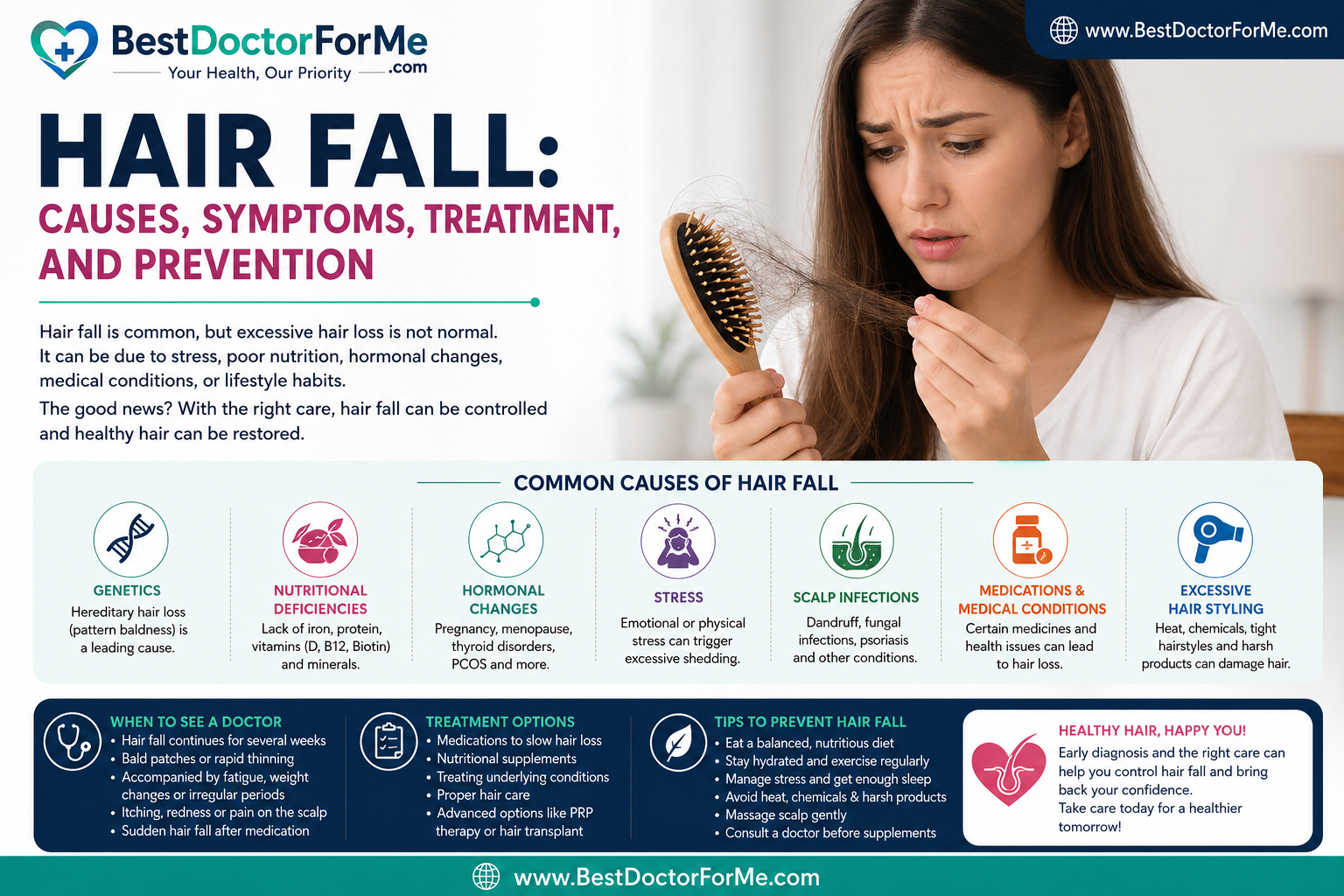
Hair fall is one of the most common concerns affecting both men and women. While losing 50–100 hairs per day is considered normal, excessive hair shedding can indicate an underlying health issue. Stress, poor nutrition, hormonal changes, genetics, and certain medical conditions are among the most common causes of hair loss. The good news is that in many cases, hair fall can be controlled with the right diagnosis, proper treatment, and healthy lifestyle changes.
Hair fall refers to excessive shedding of hair from the scalp. It may occur gradually over time or suddenly due to illness, stress, hormonal imbalance, or nutritional deficiencies. If left untreated, persistent hair fall may lead to noticeable thinning or bald patches.
1. Genetic Factors
Hereditary hair loss (male or female pattern baldness) is one of the leading causes of hair thinning. It usually develops gradually with age.
2. Nutritional Deficiencies
A lack of essential nutrients such as:
can weaken hair roots and increase hair shedding.
3. Hormonal Changes
Hormonal imbalances caused by pregnancy, menopause, thyroid disorders, or conditions such as PCOS can contribute to excessive hair loss.
4. Stres
Physical or emotional stress may trigger temporary hair shedding, often becoming noticeable a few months after the stressful event.
5. Scalp Infections
Dandruff, fungal infections, psoriasis, and other scalp conditions can damage hair follicles and lead to increased hair fall.
6. Medical Conditions
Health problems such as anemia, thyroid disease, autoimmune disorders, and chronic illnesses may contribute to hair loss.
7. Medications
Certain medicines used for high blood pressure, depression, cancer treatment, arthritis, or hormonal disorders may have hair loss as a side effect.
8. Excessive Hair Styling
Frequent use of heat styling tools, chemical treatments, tight hairstyles, and harsh hair products can weaken hair and cause breakage.
Common signs include:
A healthcare provider or dermatologist may recommend:
Treatment depends on the underlying cause and may include:
Medications
Doctors may prescribe medications that help slow hair loss and promote new hair growth.
Nutritional Supplements
If hair fall is caused by nutrient deficiencies, supplements containing iron, vitamin D, zinc, or vitamin B12 may be recommended after proper evaluation.
Treating Underlying Conditions
Managing thyroid disorders, anemia, PCOS, or scalp infections often helps reduce hair loss.
Hair Care
Using a mild shampoo, avoiding excessive heat, and minimizing chemical treatments can improve hair health.
For advanced hair loss, treatments such as platelet-rich plasma (PRP) therapy or hair transplantation may be suitable for selected individuals.
Seek medical advice if:
In many cases, yes. If the underlying cause is identified and treated early, hair growth often improves.
1. Does oiling stop hair fall?
Hair oil helps moisturize the scalp and reduce hair breakage, but it cannot treat medical causes of hair loss such as hormonal disorders or nutritional deficiencies.
2. Which foods are good for healthy hair?
Protein-rich foods, eggs, fish, dairy products, spinach, nuts, seeds, lentils, and fruits rich in vitamin C support healthy hair growth.
Hair fall is a common concern, but it should not be ignored if it becomes excessive or persistent. Understanding the underlying cause is the first step toward effective treatment. A healthy diet, proper hair care, stress management, and timely medical consultation can help maintain strong, healthy hair and reduce unnecessary hair loss.
If you are experiencing continuous hair fall, consult a qualified dermatologist to determine the cause and receive the most appropriate treatment.
Subscribe to keep yourself updated with latest articles and health news.
Copyright © 2024, BestDoctorForMe.com. All rights reserved.