☰

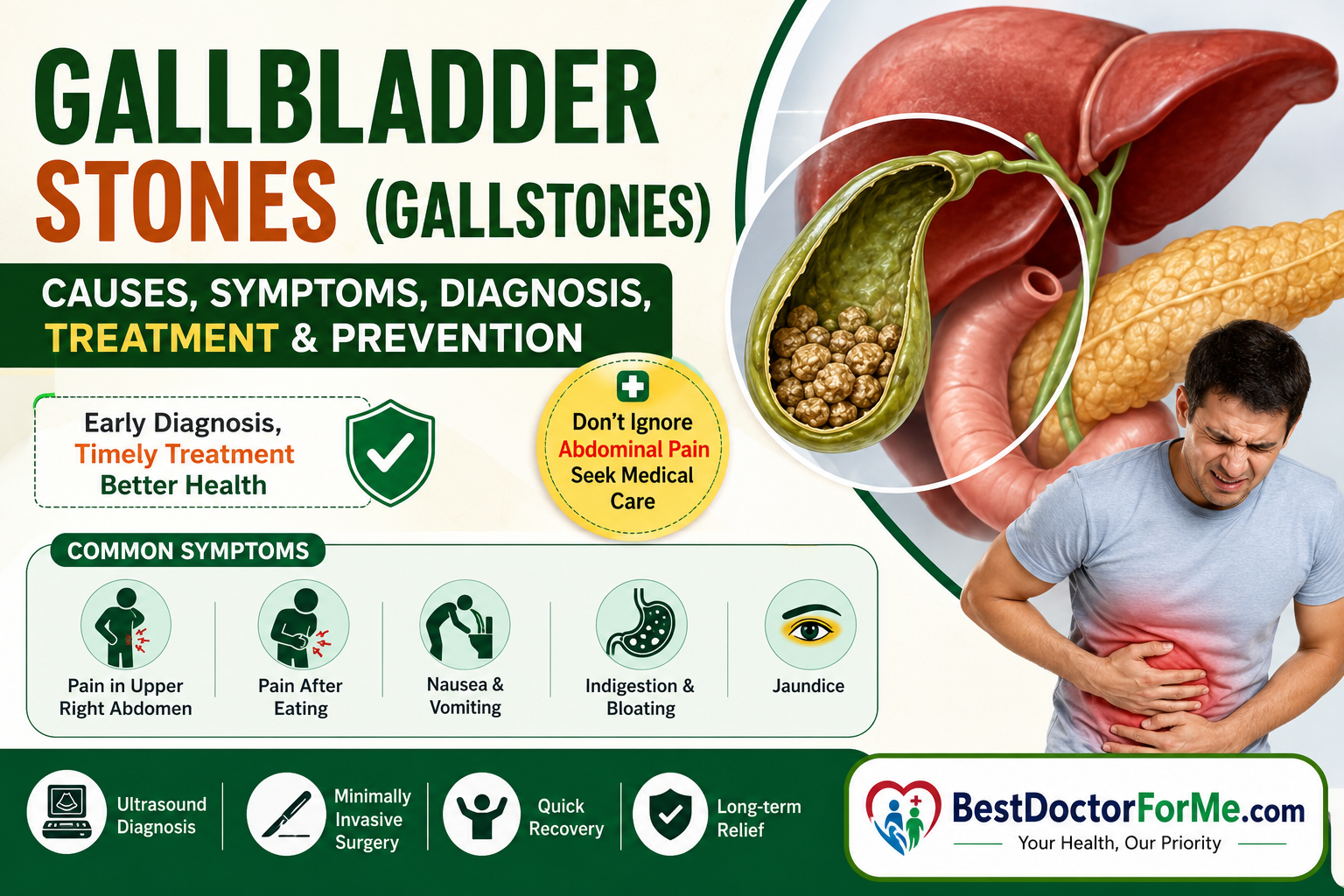
Gallbladder stones, also known as gallstones, are hardened deposits that form inside the gallbladder—a small organ located beneath the liver. The gallbladder stores bile, a digestive fluid that helps break down fats. Gallstones can vary in size from tiny grains of sand to as large as a golf ball.
Some people with gallstones experience no symptoms, while others may develop severe pain and complications that require medical treatment or surgery.
Gallstones are solid particles that develop when substances in bile, such as cholesterol or bilirubin, become imbalanced and crystallize.
Gallstones may develop due to several factors, including:
You are more likely to develop gallstones if you:
Many gallstones do not cause symptoms. When they block the bile ducts, symptoms may include:
Seek immediate medical attention if you experience:
These symptoms may indicate complications such as bile duct blockage or infection.
Your doctor may recommend:
Physical Examination
Checking for tenderness and signs of infection.
Blood Tests
To assess liver function and detect infection.
Ultrasound
The most common and accurate test for detecting gallstones.
CT Scan
Useful for identifying complications.
MRI (MRCP)
Provides detailed images of the bile ducts.
HIDA Scan
Evaluates gallbladder function if needed.
Treatment depends on whether the stones are causing symptoms.
If gallstones are not causing symptoms, treatment may not be necessary. Your doctor may simply monitor the condition.
2. Medications
Certain medicines can dissolve cholesterol gallstones, but they:
This is the most common treatment for symptomatic gallstones.
Benefits
Most people can live a normal life without a gallbladder because bile flows directly from the liver into the small intestine.
If stones become lodged in the common bile duct, an endoscopic procedure may be used to remove them before or after gallbladder surgery.
Although home remedies cannot remove gallstones, these habits may help reduce symptoms and support overall gallbladder health:
Always consult your doctor before trying herbal or alternative remedies.
You can lower your risk by:
If left untreated, gallstones may lead to:
Small stones may occasionally pass, but most do not disappear without treatment.
No. Surgery is generally recommended only if gallstones cause symptoms or complications.
Yes. Most people live a healthy, normal life after gallbladder removal.
An abdominal ultrasound is the first-line imaging test for diagnosing gallstones.
They can be if they block the bile ducts or cause infection, inflammation, or pancreatitis.
Gallbladder stones are a common condition that may not always cause symptoms. However, when they lead to pain or complications, prompt diagnosis and appropriate treatment are important. A healthy diet, regular exercise, and maintaining a healthy weight can reduce the risk of developing gallstones. If you experience severe abdominal pain, jaundice, or fever, seek medical attention without delay.
Subscribe to keep yourself updated with latest articles and health news.
Copyright © 2024, BestDoctorForMe.com. All rights reserved.