☰

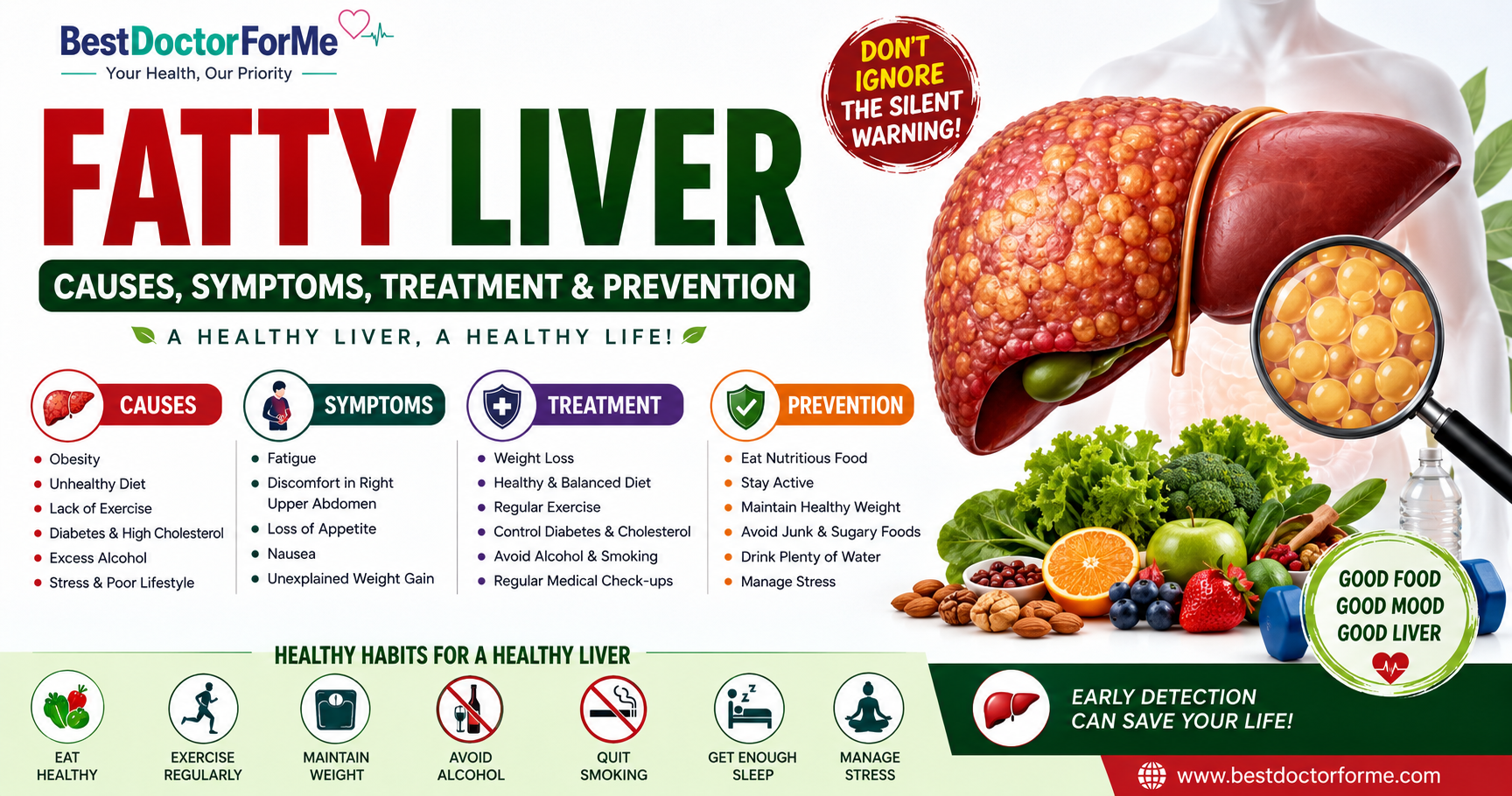
Fatty liver disease is becoming increasingly common due to unhealthy eating habits, lack of physical activity, obesity, and diabetes. It occurs when excess fat accumulates in the liver. In the early stages, fatty liver often causes no symptoms, making regular health check-ups essential.
The good news is that fatty liver can often be reversed through healthy lifestyle changes if detected early.
Fatty liver, also known as hepatic steatosis, is a condition in which excess fat builds up in liver cells. A healthy liver contains a small amount of fat, but when fat exceeds 5–10% of the liver's weight, it is considered fatty liver disease.
This is the most common type and occurs in people who drink little or no alcohol. It is closely linked to obesity, diabetes, and metabolic syndrome.
This develops due to excessive alcohol consumption and can progress to serious liver damage if drinking continues.
Several factors can increase the risk of fatty liver, including:
In many cases, fatty liver causes no symptoms. As the condition progresses, a person may experience:
In advanced stages, liver damage may lead to jaundice, swelling in the legs, abdominal fluid accumulation, and liver failure.
You may be at higher risk if you:
Doctors may recommend:
There is no single medicine that cures fatty liver. Treatment mainly focuses on lifestyle changes.
Losing 7–10% of body weight can significantly reduce liver fat.
Aim for at least 150 minutes of moderate exercise every week.
Choose foods rich in fiber, lean protein, healthy fats, fruits, and vegetables.
Proper diabetes management reduces liver damage.
Maintain healthy cholesterol and triglyceride levels.
People with fatty liver should avoid or strictly limit alcohol consumption.
Include:
Drink plenty of water throughout the day.
Avoid or limit:
Yes. In many people, especially in the early stages, fatty liver can be reversed with:
Fatty liver disease is common but often preventable and reversible when detected early. Adopting a healthy lifestyle, maintaining a balanced diet, exercising regularly, and avoiding alcohol are the most effective ways to protect your liver. If you experience persistent symptoms or have risk factors such as obesity or diabetes, consult a healthcare professional for evaluation and timely treatment.
A healthy liver is essential for a healthy life—start taking care of it today.
For more trusted health information, visit: https://www.bestdoctorforme.com
Subscribe to keep yourself updated with latest articles and health news.
Copyright © 2024, BestDoctorForMe.com. All rights reserved.