☰

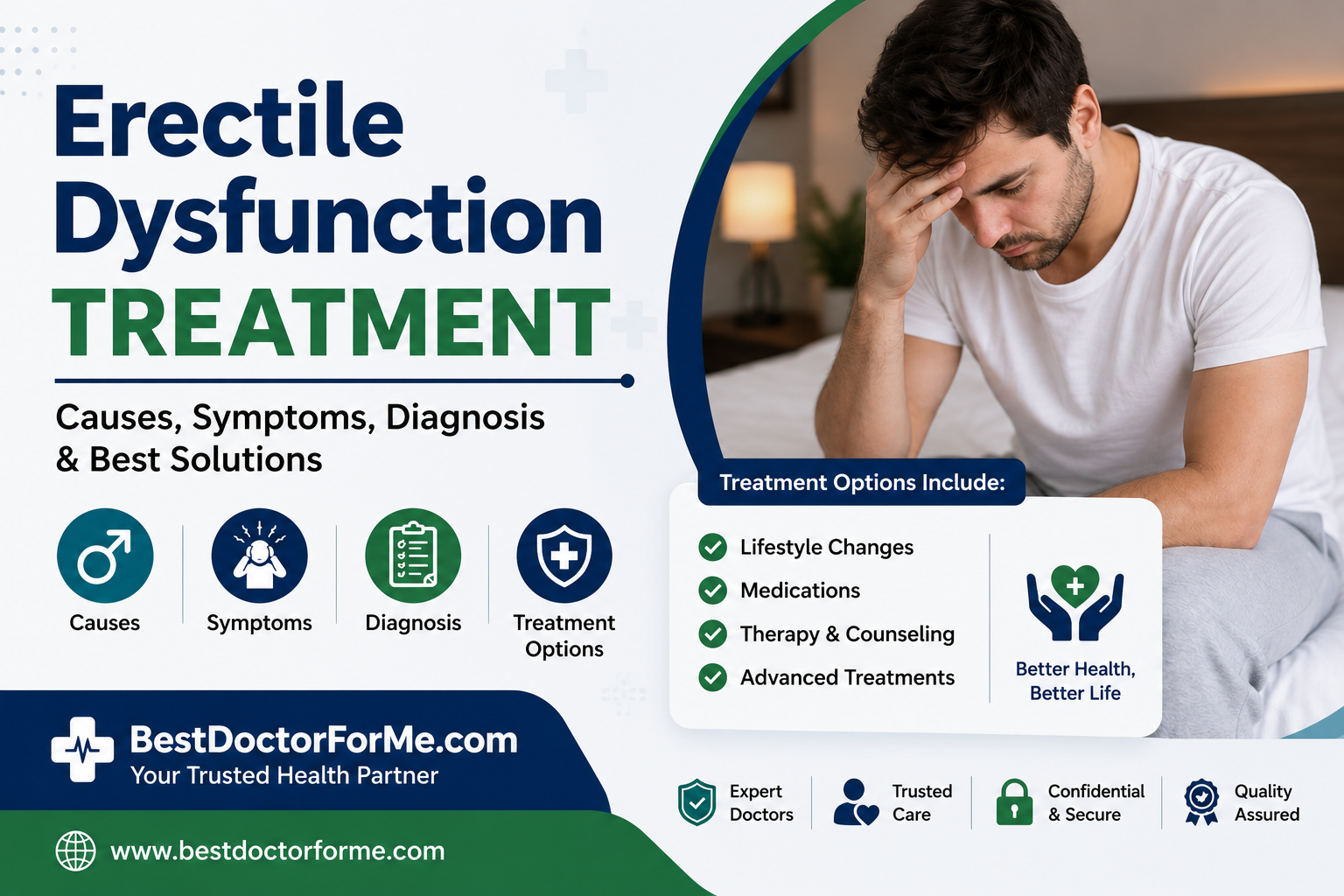
Erectile Dysfunction (ED), commonly known as impotence, is a condition in which a man has difficulty achieving or maintaining an erection firm enough for satisfactory sexual intercourse. While occasional erection problems are common and usually not a cause for concern, persistent ED can affect self-confidence, relationships, and overall quality of life.
The good news is that erectile dysfunction is treatable, and many men can regain a healthy sex life with proper medical care and lifestyle changes.
Erectile Dysfunction is the inability to get or maintain an erection sufficient for sexual activity. It becomes a medical concern when the problem occurs frequently or lasts for several weeks or months.
ED can affect men of all ages, although it becomes more common after the age of 40.
Symptoms may include:
Several physical and psychological factors can contribute to ED.
Often, ED results from a combination of physical and psychological factors.
You may have a higher risk if you:
A doctor may recommend:
Understanding symptoms, lifestyle, and medical conditions.
Checking blood pressure, genital health, and signs of hormonal imbalance.
To evaluate:
To detect diabetes and kidney disease.
Assesses blood flow to the penis.
If emotional factors are suspected.
Treatment depends on the underlying cause.
Simple lifestyle improvements can significantly improve erectile function.
If anxiety, depression, or relationship issues contribute to ED, counseling or therapy can be highly beneficial.
Men with confirmed low testosterone levels may benefit from testosterone replacement therapy if recommended by a healthcare professional.
A vacuum pump helps draw blood into the penis, creating an erection.
Some medications can be injected directly into the penis when oral medications are ineffective. These should only be used under the guidance of a qualified healthcare provider.
For severe ED that does not respond to other treatments, surgically implanted devices may provide a long-term solution.
Healthy habits can support sexual health:
These measures can improve overall health and may help reduce ED, especially when combined with appropriate medical care.
A balanced det supports heart health, which is closely linked to erectile function.
Yes, many cases can be prevented by:
Consult a healthcare professional if:
Early evaluation can help identify and treat underlying health conditions.
Many cases are treatable, especially when the underlying cause is identified and managed. Treatment success depends on the individual's health and the cause of ED.
Yes. Stress, anxiety, unhealthy lifestyle, obesity, and certain medical conditions can contribute to ED in younger men.
Does diabetes cause erectile dysfunction?
Yes. Long-term diabetes can damage blood vessels and nerves involved in achieving an erection.
Is ED a sign of heart disease?
Sometimes. Because ED can be related to reduced blood flow, it may be an early sign of cardiovascular disease. Medical evaluation is important.
Regular physical activity improves circulation, heart health, and weight management, all of which can contribute to better erectile function.
Erectile Dysfunction is a common and treatable condition. Seeking timely medical advice, addressing underlying health issues, adopting a healthy lifestyle, and following evidence-based treatment recommendations can significantly improve sexual health and overall well-being. If you experience persistent erection problems, consult a qualified healthcare professional rather than relying on unproven remedies.
Subscribe to keep yourself updated with latest articles and health news.
Copyright © 2024, BestDoctorForMe.com. All rights reserved.