☰

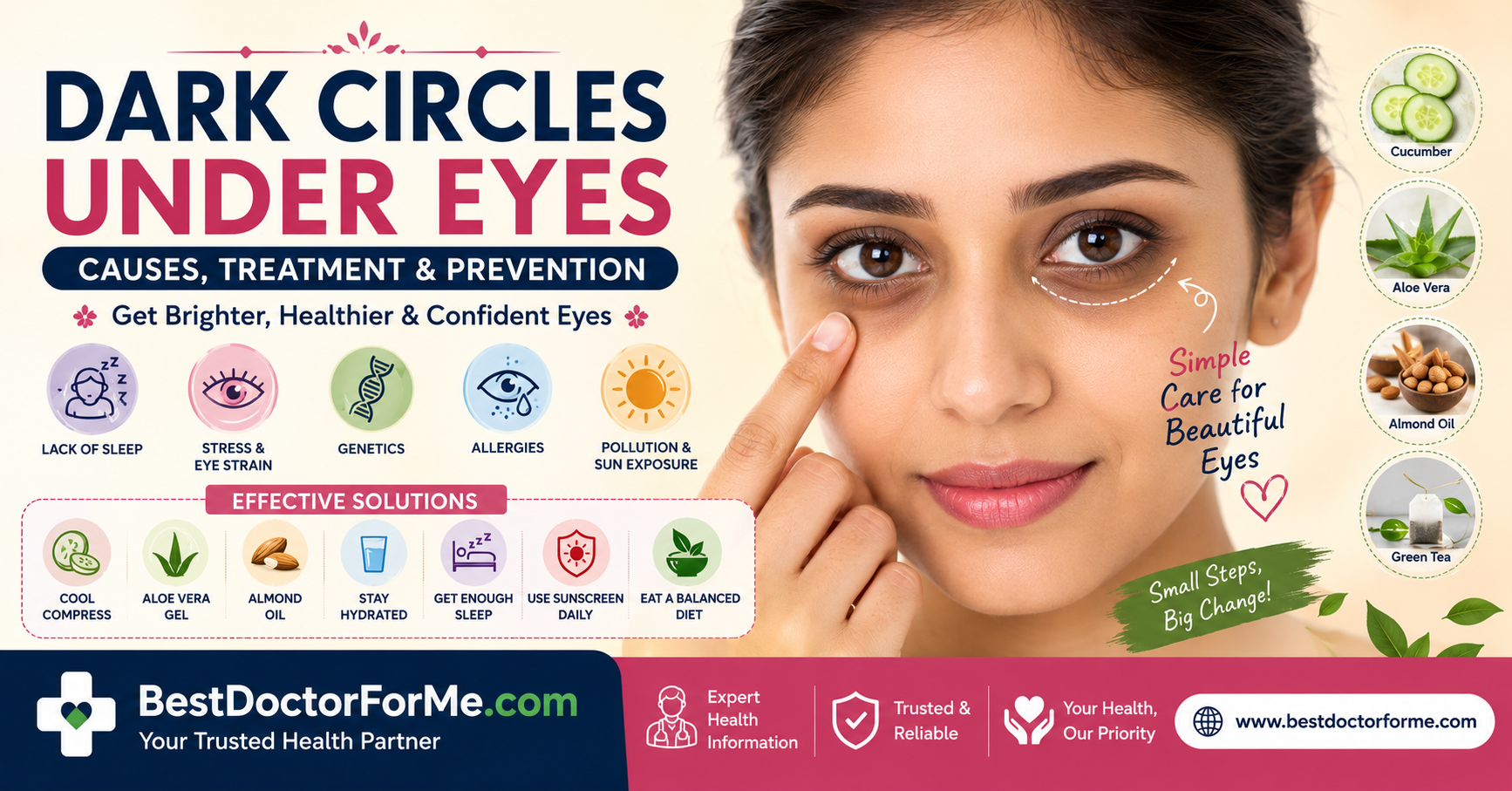
Dark circles under the eyes are a common cosmetic concern that can affect people of all ages. They may make you look tired, older, or stressed, even when you feel healthy. While dark circles are usually not a serious medical condition, they can sometimes indicate lifestyle issues, allergies, or underlying health problems.
The good news is that many cases of dark circles can improve with healthy habits, proper skincare, and appropriate treatment.
Dark circles are areas of darker skin beneath the lower eyelids. They can appear brown, blue, purple, or black depending on your skin tone and the underlying cause. Sometimes they are accompanied by puffiness or eye bags.
Common symptoms include:
Several factors can contribute to dark circles.
Not getting enough sleep is one of the most common causes. Poor sleep can make the skin look pale, making blood vessels under the eyes more visible.
As we age, the skin becomes thinner and loses collagen, making the blood vessels beneath the eyes more noticeable.
Dark circles often run in families. If your parents have them, you may be more likely to develop them.
Spending long hours on computers, mobile phones, or other digital devices can strain the eyes and make under-eye blood vessels appear more prominent.
Allergic reactions can trigger inflammation and rubbing of the eyes, contributing to dark circles.
Not drinking enough water can make the under-eye area appear dull and sunken.
Excessive sun exposure can increase melanin production, causing pigmentation around the eyes.
Low levels of certain nutrients, such as iron or vitamin B12, may contribute to dark circles in some individuals.
Smoking and excessive alcohol intake can affect blood circulation and skin health, worsening the appearance of dark circles.
You may be more likely to develop dark circles if you:
A healthcare professional or dermatologist may:
Treatment depends on the underlying cause.
Use these products as directed, especially around the delicate eye area.
Some simple home measures may help improve the appearance of dark circles:
Home remedies may help some people, but results vary.
Include these foods in your diet:
A balanced diet supports overall skin health.
You can reduce the risk of dark circles by:
Consult a healthcare professional if:
Not always. Many cases improve with lifestyle changes, skincare, and treatment of the underlying cause.
Yes. Poor sleep can make dark circles more noticeable by affecting skin appearance and blood vessel visibility.
Staying hydrated supports healthy skin and may help if dehydration contributes to the problem, but it is not a guaranteed cure.
A dermatologist is the best specialist to evaluate persistent or severe dark circles.
Dark circles are common and often result from factors such as lack of sleep, aging, genetics, eye strain, allergies, or dehydration. While they are usually harmless, improving your sleep, protecting your skin, staying hydrated, eating a balanced diet, and consulting a dermatologist when necessary can help improve their appearance and support healthy skin.
Subscribe to keep yourself updated with latest articles and health news.
Copyright © 2024, BestDoctorForMe.com. All rights reserved.