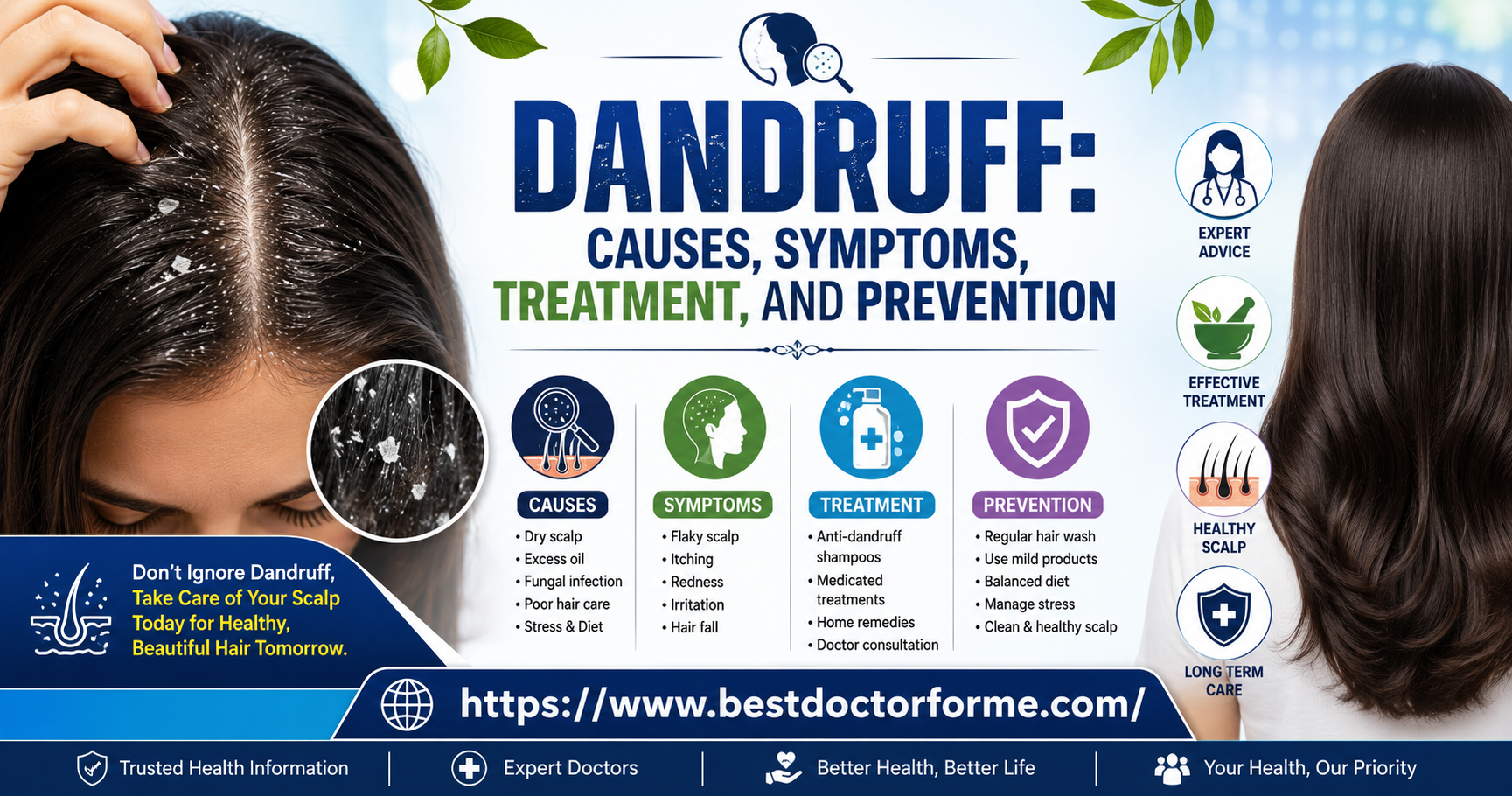
Dandruff is one of the most common scalp problems affecting people of all ages. It causes white or yellowish flakes on the scalp and shoulders and is often accompanied by itching. While dandruff is usually not a serious medical condition, it can be embarrassing and uncomfortable if left untreated. The good news is that dandruff can often be controlled with proper scalp care and appropriate treatment.
What is Dandruff?
Dandruff is a scalp condition in which dead skin cells shed excessively from the scalp. It may occur due to dry skin, excess oil production, fungal overgrowth, or certain skin conditions. Mild dandruff can often be managed with regular shampooing, while persistent cases may require medicated shampoos or consultation with a dermatologist.
Common Causes of Dandruff
Several factors can contribute to dandruff, including:
- Dry scalp
- Excessive oil (sebum) production
- Overgrowth of Malassezia, a naturally occurring scalp fungus
- Poor hair hygiene
- Sensitivity to hair care products (contact dermatitis)
- Seborrheic dermatitis
- Psoriasis or eczema affecting the scalp
- Stress and lack of sleep
- Cold and dry weather
- Nutritional deficiencies, especially zinc, vitamin B, and omega-3 fatty acids
Symptoms of Dandruff
Common signs and symptoms include:
- White or yellow flakes on the scalp
- Flakes falling onto the shoulders
- Persistent scalp itching
- Dry or oily scalp
- Redness or mild inflammation
- Irritation and discomfort
- Greasy patches on the scalp (in severe cases)
Who is at Risk?
Dandruff is more common in:
- Teenagers and young adults
- People with oily skin
- Individuals experiencing stress
- People with weakened immunity
- Those with a family history of dandruff or seborrheic dermatitis
- People who do not wash their hair regularly
Diagnosis
A doctor or dermatologist usually diagnoses dandruff by examining the scalp. In persistent or severe cases, further evaluation may be needed to rule out psoriasis, eczema, fungal infections, or other scalp disorders.
Treatment Options
1. Anti-Dandruff Shampoos
Look for shampoos containing:
- Ketoconazole
- Zinc pyrithione
- Selenium sulfide
- Coal tar
- Salicylic acid
Use the shampoo 2–3 times a week or as directed by your healthcare provider.
2. Medications
If dandruff is severe, a dermatologist may prescribe:
- Antifungal lotions
- Topical corticosteroids
- Prescription-strength medicated shampoos
3. Home Care Tips
- Wash your hair regularly.
- Avoid scratching your scalp.
- Use mild hair care products.
- Rinse shampoo thoroughly.
- Manage stress through exercise or meditation.
- Eat a balanced diet rich in vitamins and minerals.
Foods That May Help
A healthy diet supports scalp health. Include:
- Eggs
- Fish rich in omega-3 fatty acids
- Nuts and seeds
- Green leafy vegetables
- Fruits
- Whole grains
- Yogurt
- Zinc-rich foods like pumpkin seeds and beans
- Drink plenty of water to keep your skin hydrated.
Can Dandruff Be Prevented?
Yes. You can reduce the risk by:
- Maintaining good scalp hygiene
- Washing hair according to your scalp type
- Avoiding excessive use of styling products
- Managing stress
- Eating a nutritious diet
- Keeping the scalp clean and dry
When Should You See a Doctor?
Consult a dermatologist if:
- Dandruff persists despite using medicated shampoo for several weeks.
- The scalp becomes red, swollen, or painful.
- There is severe itching or bleeding.
- Hair loss increases significantly.