☰

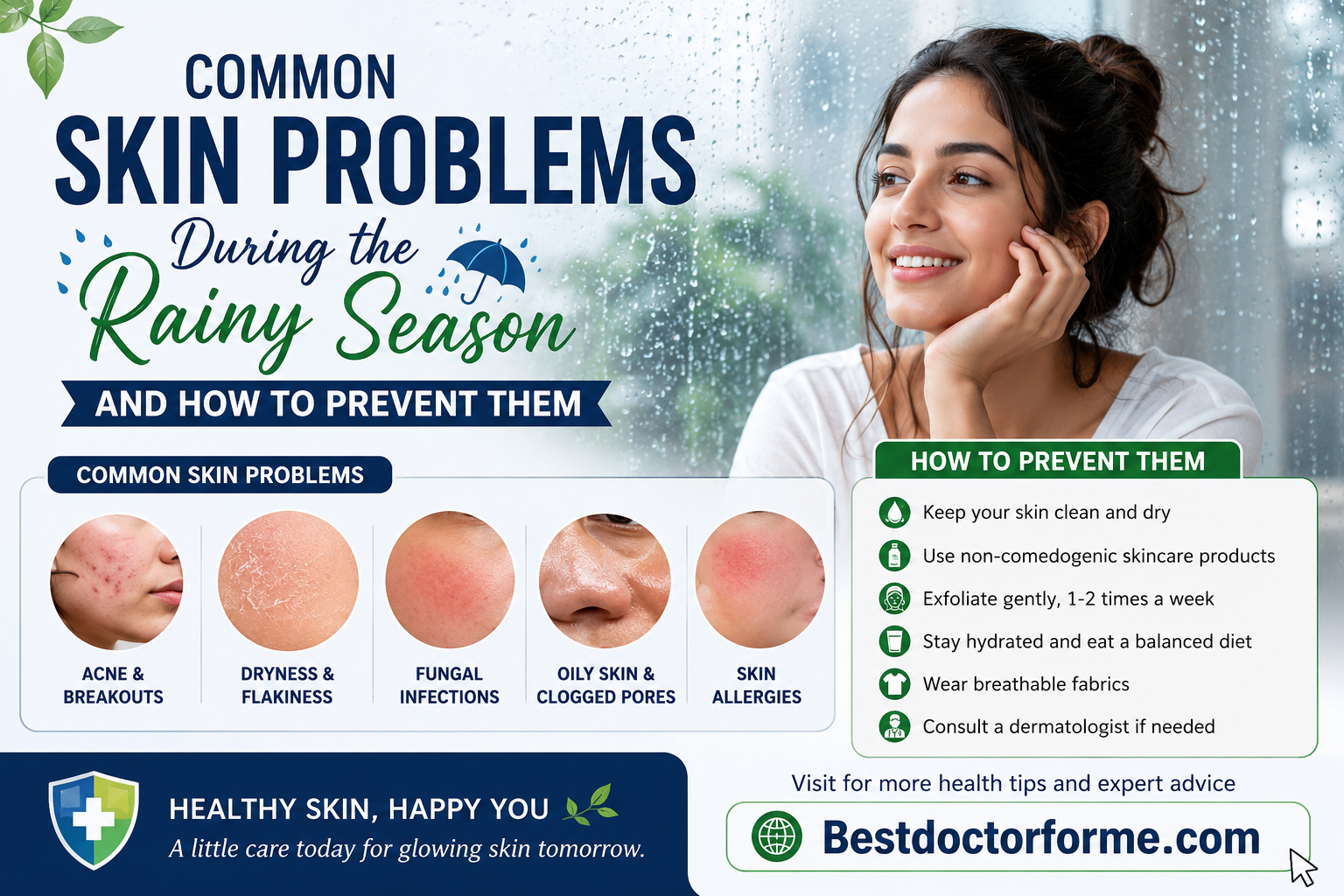
The rainy season brings much-needed relief from the summer heat, but it also creates the perfect environment for many skin problems. High humidity, damp clothing, and increased exposure to bacteria and fungi can affect people of all ages. Taking proper care of your skin during this season can help you stay healthy and comfortable.
The combination of moisture, sweat, and humidity makes it easier for germs to grow on the skin. At the same time, clogged pores and prolonged dampness can lead to irritation, infections, and breakouts.
Common Skin Problems During the Rainy Season
1. Fungal Infections
Fungal infections are one of the most common skin issues during the rainy season. They often appear in warm, moist areas of the body, such as the feet, underarms, and groin. Symptoms include itching, redness, and circular rashes.
2. Acne and Pimples
Excess humidity increases oil production, which can clog pores and cause acne. Dirt and sweat trapped on the skin may make breakouts worse.
3. Skin Allergies
Rainwater, pollution, and allergens can trigger skin irritation, leading to redness, itching, or rashes, especially in people with sensitive skin.
4. Athlete's Foot
Walking in wet shoes or socks for long periods can cause fungal infections between the toes. This condition often causes itching, peeling skin, and an unpleasant odor.
5. Dry or Irritated Skin
Although the weather is humid, frequent washing, exposure to polluted rainwater, or harsh soaps can strip the skin of its natural moisture, causing dryness and irritation.
Keep your skin clean by washing your face twice a day with a gentle cleanser.
Dry your body thoroughly after getting wet, paying special attention to skin folds.
Wear clean, breathable cotton clothes and change out of wet clothing as soon as possible.
Use a lightweight, non-comedogenic moisturizer to maintain your skin's moisture balance.
Apply sunscreen even on cloudy days, as UV rays can still affect your skin.
Drink plenty of water and eat a balanced diet rich in fruits and vegetables.
Avoid sharing towels, footwear, or personal hygiene items to reduce the risk of infections.
When Should You See a Doctor?
If a rash, itching, or infection lasts for more than a few days, spreads quickly, becomes painful, or is accompanied by fever, consult a dermatologist. Early treatment can prevent complications and speed up recovery.
Subscribe to keep yourself updated with latest articles and health news.
Copyright © 2024, BestDoctorForMe.com. All rights reserved.