☰

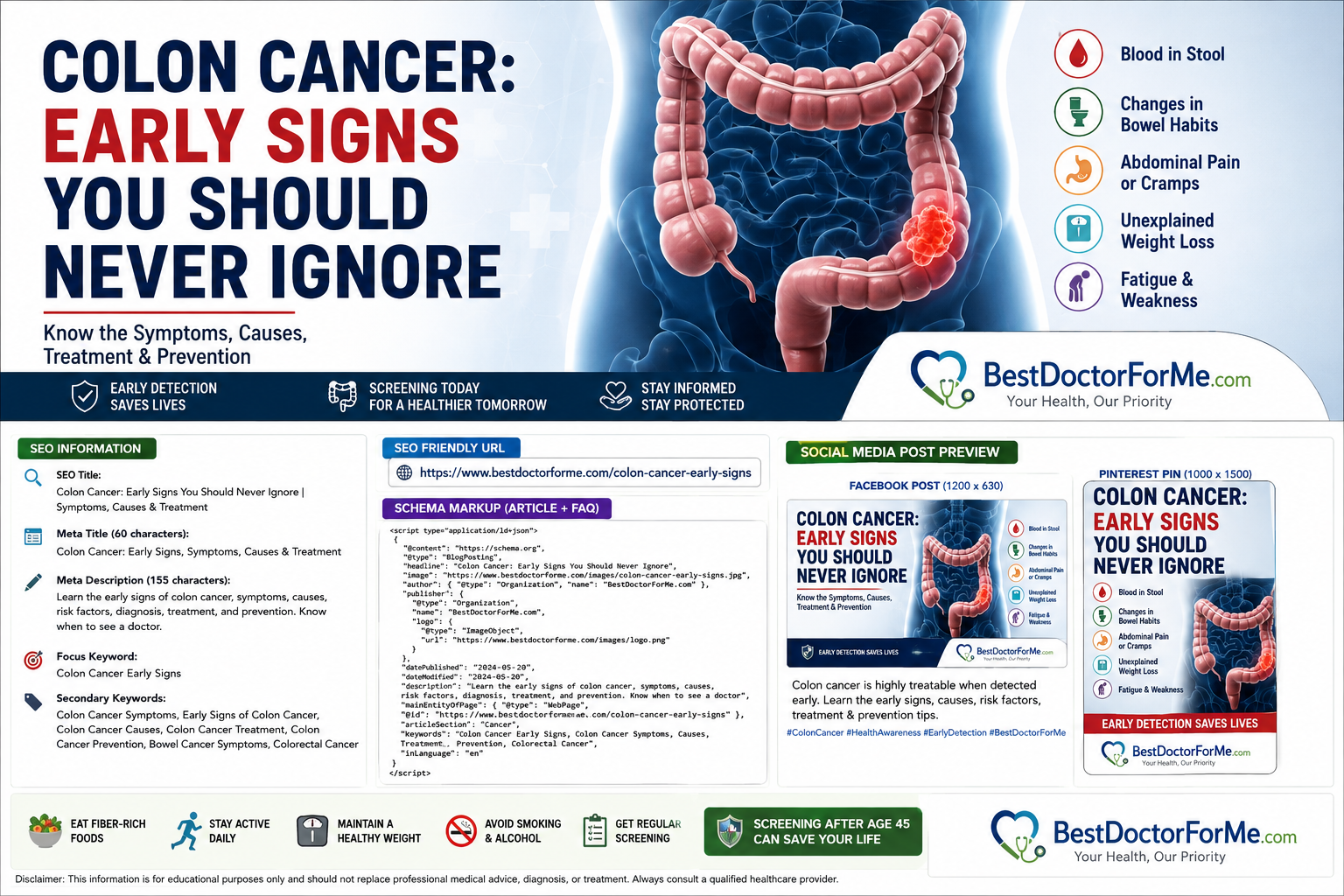
Colon cancer is one of the most common cancers worldwide. The good news is that it is often preventable and highly treatable when detected early. Unfortunately, many people ignore the warning signs because they seem similar to common digestive problems such as constipation, gas, or piles.
In this article, you'll learn the early signs of colon cancer, its causes, risk factors, diagnosis, treatment options, and ways to reduce your risk.
Colon cancer is a type of cancer that begins in the large intestine (colon), which is the final part of the digestive system. It usually starts as small, non-cancerous growths called polyps. Over several years, some polyps can develop into cancer if they are not removed.
When cancer develops in the colon or rectum, it is known as colorectal cancer.
Early Signs of Colon Cancer You Should Never Ignore
Many people experience no symptoms during the early stages. However, the following warning signs should never be ignored:
Bright red or dark-colored blood in the stool is one of the most important warning signs. Even if bleeding happens only once, consult a doctor.
Persistent abdominal discomfort, bloating, or cramps without a clear reason may indicate a problem in the colon.
A constant urge to pass stool even after using the toilet may be an early symptom.
Losing weight without dieting or exercising should always be medically evaluated.
Slow bleeding from the colon may cause iron-deficiency anemia, leading to tiredness, weakness, and dizziness.
A persistent decrease in appetite, especially when combined with other symptoms, requires medical attention.
The exact cause is not always known, but several factors increase the risk:
You may have a higher risk if you:
Are over 45 years old
Have a family history of colorectal cancer
Have inherited genetic conditions
Smoke or drink alcohol regularly
Eat a low-fiber diet
Are overweight
Have diabetes or inflammatory bowel disease
Doctors may recommend:
Early screening can detect precancerous polyps before they become cancer.
Treatment depends on the stage of cancer and overall health.
The primary treatment for most early-stage colon cancers.
Used after surgery or for advanced disease.
More commonly used for rectal cancer.
Targets specific cancer cells while reducing damage to normal cells.
Suitable for certain advanced cancers with specific genetic features.
Although not every case can be prevented, you can lower your risk by:
Yes. When detected early, colon cancer is often highly treatable, and many patients are cured with surgery.
Yes. Although the risk increases with age, cases among younger adults have been rising in recent years.
No. Blood in the stool can result from hemorrhoids, anal fissures, infections, or inflammatory bowel disease. However, it should always be evaluated by a healthcare professional.
A diet rich in fiber, fruits, vegetables, legumes, and whole grains may help lower the risk of colon cancer.
Colon cancer often develops silently, but recognizing the warning signs early can make a life-saving difference. Never ignore blood in your stool, persistent bowel changes, unexplained weight loss, or ongoing abdominal pain. Regular screening and a healthy lifestyle remain the most effective ways to prevent and detect colon cancer early.
Subscribe to keep yourself updated with latest articles and health news.
Copyright © 2024, BestDoctorForMe.com. All rights reserved.