☰
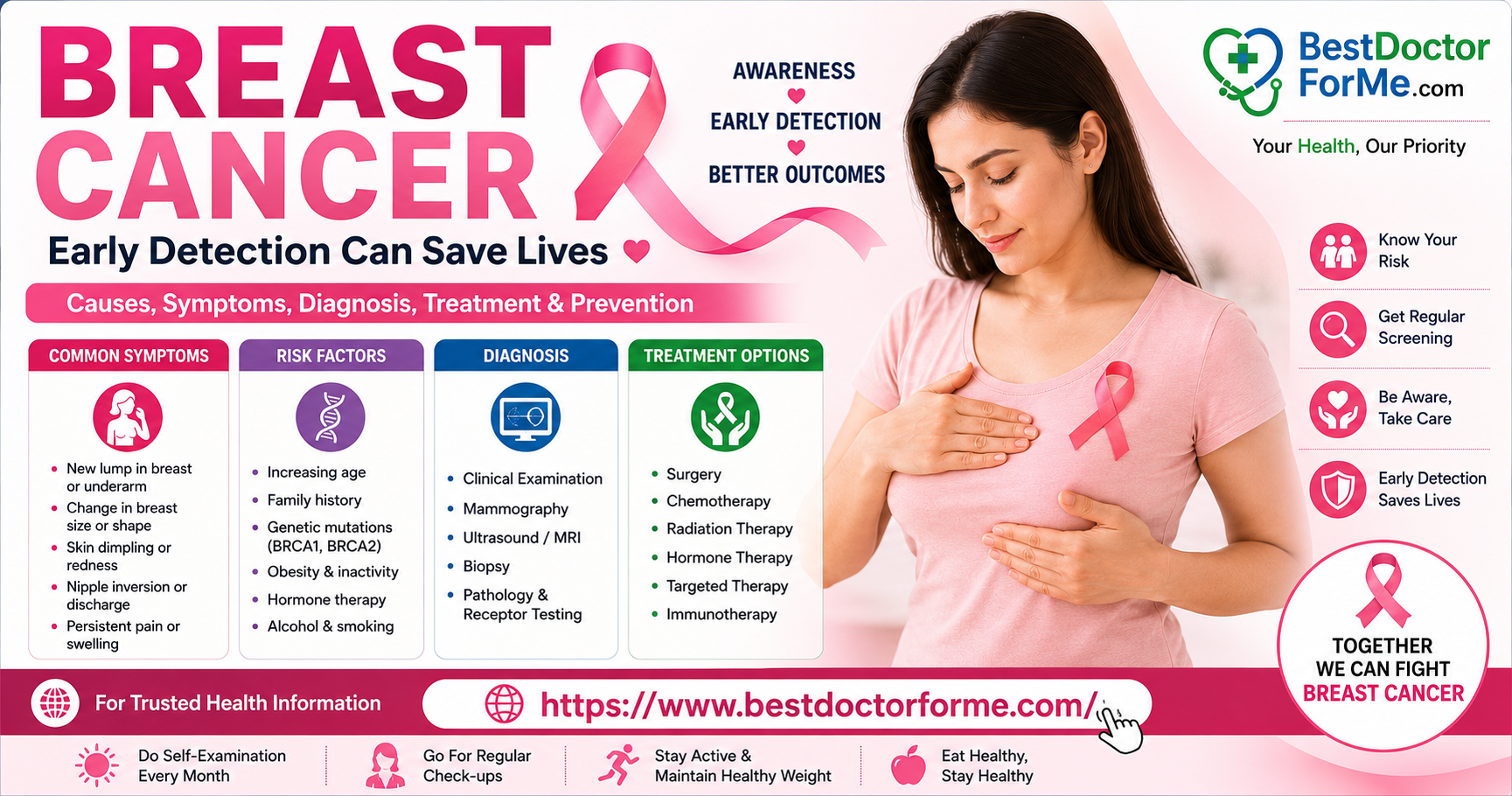
Breast cancer is a disease in which abnormal cells in the breast grow uncontrollably and form a tumor. It is one of the most common cancers affecting women worldwide, although men can also develop breast cancer. When detected early, treatment is often more effective and outcomes are generally better.
Common types include:
The treatment approach depends on the type and stage of the cancer.
The exact cause of breast cancer is not always known, but several factors may increase the risk.
Having one or more risk factors does not mean that a person will definitely develop breast cancer.
Early breast cancer may not cause any symptoms. As the disease progresses, symptoms may include:
Many breast lumps are not cancer. However, any new breast lump or unusual change should be evaluated by a healthcare professional.
Consult a doctor promptly if you notice:
Early evaluation can help identify the cause and, if needed, start treatment as soon as possible.
Doctors may recommend one or more of the following:
A biopsy is the only way to confirm whether a breast lump is cancerous.
Doctors classify breast cancer into stages to determine how far it has spread and to plan the most appropriate treatment.
Cancer cells are confined to the milk ducts and have not spread to nearby tissue (commonly called DCIS).
The tumor is small, and cancer has not spread or has spread only minimally to nearby lymph nodes.
The tumor is larger or has spread to a few nearby lymph nodes.
Cancer has spread to several nearby lymph nodes or surrounding tissues but not to distant organs.
Cancer has spread to distant organs such as the bones, lungs, liver, or brain (metastatic breast cancer).
Treatment depends on the type and stage of breast cancer, hormone receptor status, HER2 status, overall health, and the patient's preferences.
Surgery aims to remove the cancer.
Lumpectomy (breast-conserving surgery)
Mastectomy (removal of the breast)
Sentinel lymph node biopsy
Axillary lymph node dissection
Radiation therapy uses high-energy rays to destroy remaining cancer cells after surgery or in selected situations.
Possible side effects may include fatigue and skin irritation in the treated area.
Chemotherapy uses medicines to destroy cancer cells.
It may be given:
Common side effects vary but may include hair loss, nausea, fatigue, and increased risk of infections.
If the cancer is hormone receptor-positive, medicines that block or reduce hormones may help reduce the risk of recurrence.
Targeted medicines attack specific proteins such as HER2 in cancers that test positive for these markers.
Some people with certain types of breast cancer, such as selected cases of triple-negative breast cancer, may benefit from immunotherapy.
Breast self-awareness helps people become familiar with the normal appearance and feel of their breasts.
Seek medical advice if you notice:
A breast self-exam does not replace regular screening or medical evaluation.
Early detection improves the chances of successful treatment.
Screening recommendations depend on age and individual risk factors.
Your doctor may recommend:
Discuss the right screening schedule with your healthcare provider.
Not all cases can be prevented, but healthy lifestyle choices may help reduce risk.
A nutritious diet can help support overall health during treatment.
Include:
Always follow the dietary advice of your oncology team or dietitian during treatment.
Many people continue to work, care for their families, and enjoy meaningful activities during and after treatment.
Support from family, healthcare professionals, counseling services, and support groups can be valuable.
Follow-up appointments are important to monitor recovery and detect any recurrence early.
Yes. Although uncommon, men can develop breast cancer.
No. Many breast lumps are benign (non-cancerous), but every new lump should be assessed by a healthcare professional.
When detected early and treated appropriately, many people with breast cancer have very good outcomes.
No. Breast pain has many possible causes, and breast cancer often does not cause pain in its early stages.
Yes. Although it is more common with increasing age, breast cancer can occur in younger women.
Contact your healthcare provider promptly if you notice:
A new breast lump
Bloody nipple discharge
Persistent breast skin changes
Rapid swelling or redness of the breast
Enlarged lymph nodes in the armpit
Breast cancer is one of the most common cancers worldwide, but advances in screening, diagnosis, and treatment have significantly improved outcomes. Knowing the warning signs, attending recommended screening, and seeking medical evaluation for any breast changes can make a meaningful difference.
A healthy lifestyle, regular check-ups, and awareness of your own breast health are important steps in reducing risk and supporting early detection.
Looking for experienced cancer specialists or breast screening services? Visit BestDoctorForMe.com to find trusted doctors and reliable health information.
Subscribe to keep yourself updated with latest articles and health news.
Copyright © 2024, BestDoctorForMe.com. All rights reserved.