☰

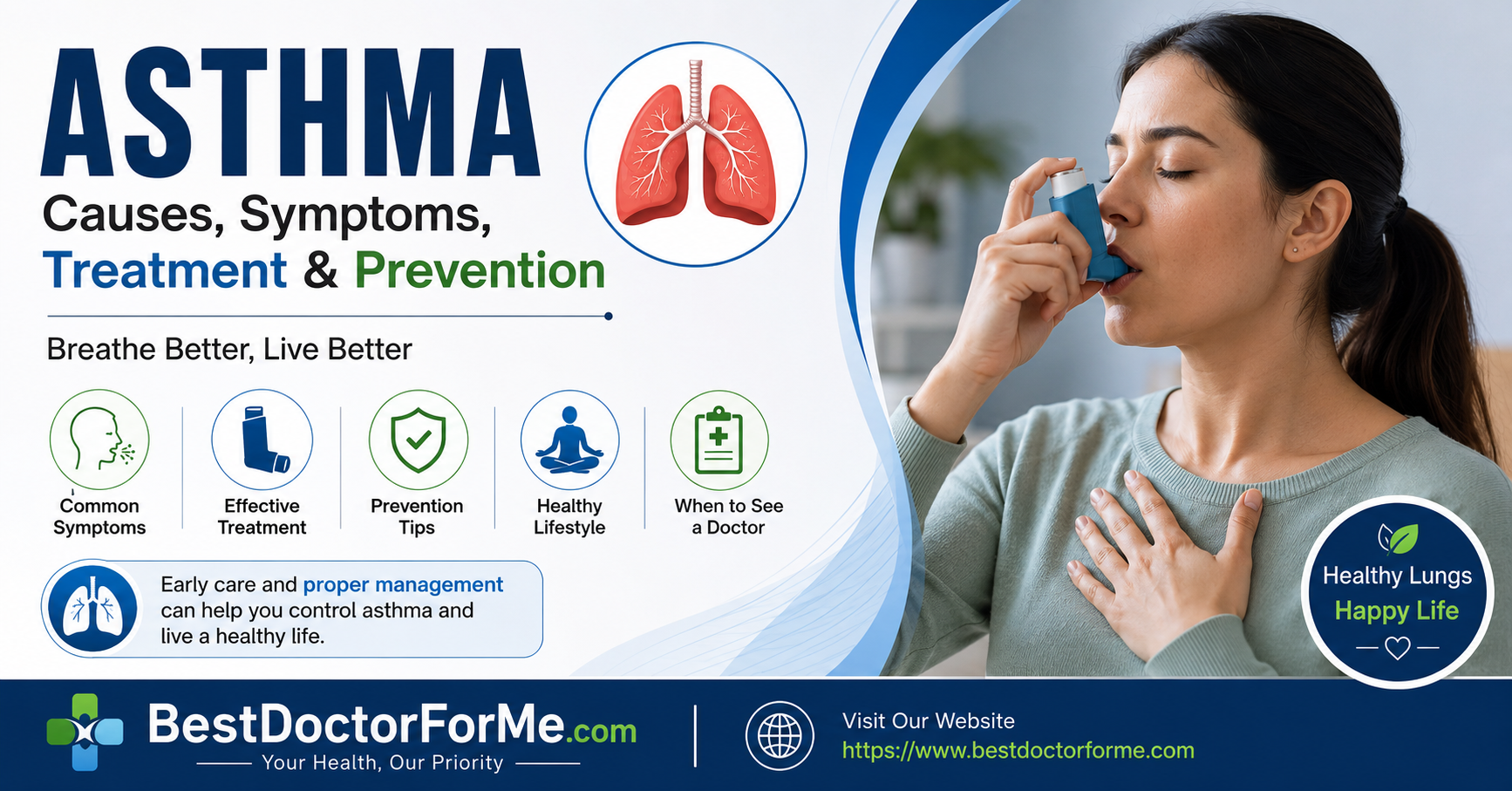
Asthma is a chronic respiratory disease that affects millions of people worldwide. It causes inflammation and narrowing of the airways, making it difficult to breathe. While asthma cannot be completely cured, it can be effectively managed with proper medication, lifestyle changes, and avoiding triggers.
Understanding asthma and recognizing its symptoms early can help prevent severe attacks and improve quality of life.
Asthma is a long-term condition in which the airways become swollen and sensitive. During an asthma attack, the muscles around the airways tighten, the lining becomes inflamed, and excess mucus is produced. This makes breathing difficult.
Asthma can affect people of all ages, but it often begins during childhood.
Several factors can trigger or worsen asthma symptoms, including:
Symptoms vary from person to person and may range from mild to severe.
Triggered by allergens such as pollen, dust, or pet hair.
Caused by stress, infections, smoke, or weather changes.
Occurs during or after physical activity.
Triggered by exposure to workplace chemicals or dust.
Develops in children and may improve with age.
Requires specialized treatment and regular medical care.
Common asthma triggers include:
Identifying personal triggers is one of the best ways to prevent asthma attacks.
Doctors may recommend:
Although asthma has no permanent cure, treatment helps control symptoms and prevent attacks.
Used during sudden asthma attacks.
Examples include:
Used daily to reduce airway inflammation.
These include:
Always take medications exactly as prescribed by your doctor.
You can reduce asthma symptoms by:
A healthy diet supports lung health.
Include:
While asthma cannot always be prevented, attacks can often be reduced by:
Seek medical attention immediately if:
These may indicate a severe asthma attack that requires emergency treatment.
No. Asthma cannot be permanently cured, but it can be effectively controlled with proper treatment.
Yes. A family history of asthma increases the risk.
Yes. With proper medical guidance, regular exercise can improve lung function and overall health.
Some children experience fewer symptoms as they grow older, but asthma may persist into adulthood.
A prescribed rescue inhaler (bronchodilator) is usually the fastest treatment. Seek emergency medical care if symptoms do not improve.
Asthma is a manageable chronic condition when diagnosed early and treated appropriately. Recognizing triggers, following your treatment plan, maintaining a healthy lifestyle, and attending regular medical checkups can significantly reduce asthma attacks and improve quality of life. If you experience persistent wheezing, coughing, or shortness of breath, consult a healthcare professional for proper evaluation and treatment.
Subscribe to keep yourself updated with latest articles and health news.
Copyright © 2024, BestDoctorForMe.com. All rights reserved.