☰
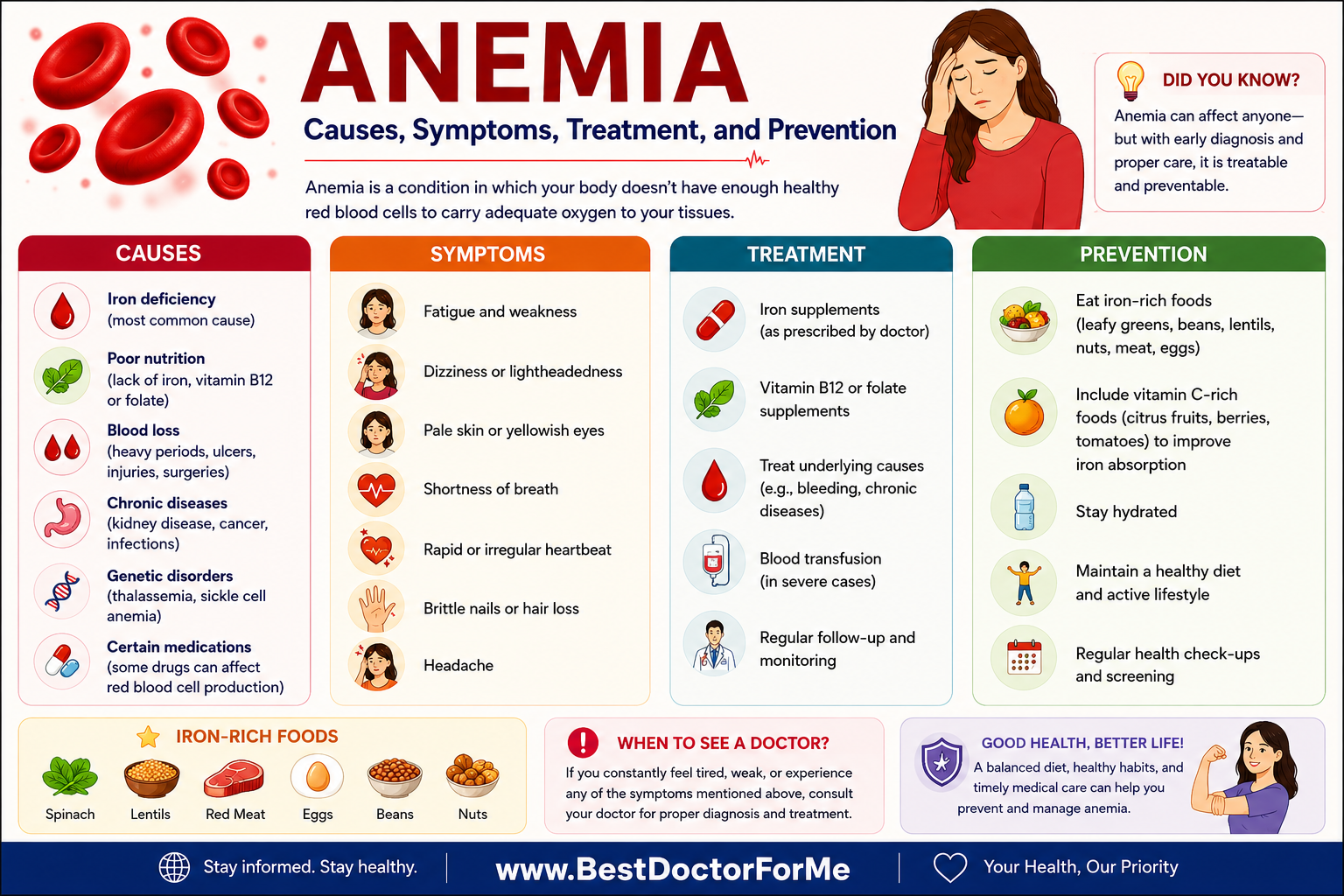
Anemia is one of the most common health conditions affecting people worldwide, especially women and children. It occurs when the body does not have enough healthy red blood cells or hemoglobin to carry adequate oxygen to the body’s tissues. This can lead to weakness, fatigue, and several other health problems if left untreated.
Anemia is a condition in which the hemoglobin level in the blood becomes lower than normal. Hemoglobin is an important protein in red blood cells that carries oxygen throughout the body.
When the body does not receive enough oxygen, a person may feel tired, weak, or short of breath.
The symptoms of anemia can vary depending on its severity. Common symptoms include:
Constant tiredness and weakness
Pale or yellowish skin
Dizziness or lightheadedness
Shortness of breath
Headaches
Cold hands and feet
Rapid heartbeat
Hair fall and brittle nails
In severe cases, anemia may affect daily activities and overall quality of life.
Causes of Anemia
There are several possible causes of anemia, including:
1. Iron Deficiency
The most common cause of anemia is lack of iron in the body. Iron is essential for making hemoglobin.
2. Poor Diet
Not eating enough iron-rich foods, vitamin B12, or folic acid can lead to anemia.
3. Heavy Menstrual Bleeding
Women with heavy periods are at higher risk of developing anemia due to blood loss.
4. Pregnancy
During pregnancy, the body needs more iron and nutrients, increasing the risk of anemia.
5. Chronic Diseases
Conditions like kidney disease, infections, or digestive disorders may contribute to anemia.
Who is at Higher Risk?
People more likely to develop anemia include:
Women and teenage girls
Pregnant women
Children
Elderly individuals
People with poor nutrition
Individuals with chronic illnesses
Diagnosis of Anemia
Doctors may recommend the following tests to diagnose anemia:
Complete Blood Count (CBC)
Hemoglobin test
Iron profile test
Vitamin B12 and folic acid tests
Proper diagnosis helps identify the exact cause and best treatment plan.
Treatment for Anemia
Treatment depends on the type and severity of anemia. Common treatment methods include:
Iron supplements
Vitamin B12 or folic acid supplements
Dietary improvements
Treatment of underlying health conditions
Doctors may also suggest lifestyle and dietary changes to improve hemoglobin levels naturally.
Foods That Help Increase Hemoglobin
Eating nutritious foods can help prevent and manage anemia. Some iron-rich foods include:
Spinach and green leafy vegetables
Beetroot
Pomegranate
Dates and raisins
Jaggery
Lentils and beans
Eggs and meat
Nuts and seeds
Vitamin C-rich foods like oranges and lemons also help the body absorb iron better.
Tips to Prevent Anemia
You can reduce the risk of anemia by following these healthy habits:
Eat a balanced diet rich in iron and vitamins
Do not skip meals
Stay hydrated
Get regular health checkups
Treat heavy periods or health problems on time
When Should You Consult a Doctor?
You should seek medical advice if you experience:
Extreme weakness
Frequent dizziness
Breathlessness
Heavy menstrual bleeding
Persistent fatigue despite proper rest
Early diagnosis and treatment can prevent serious complications.
Final Thoughts
Anemia is a common but manageable condition. Proper nutrition, timely diagnosis, and healthy lifestyle habits can help maintain good hemoglobin levels and overall health. If symptoms persist, consult a healthcare professional for proper evaluation and treatment.
For more health-related information and expert guidance, visit
www.BestDoctorForMe.com
Subscribe to keep yourself updated with latest articles and health news.
Copyright © 2024, BestDoctorForMe.com. All rights reserved.