☰
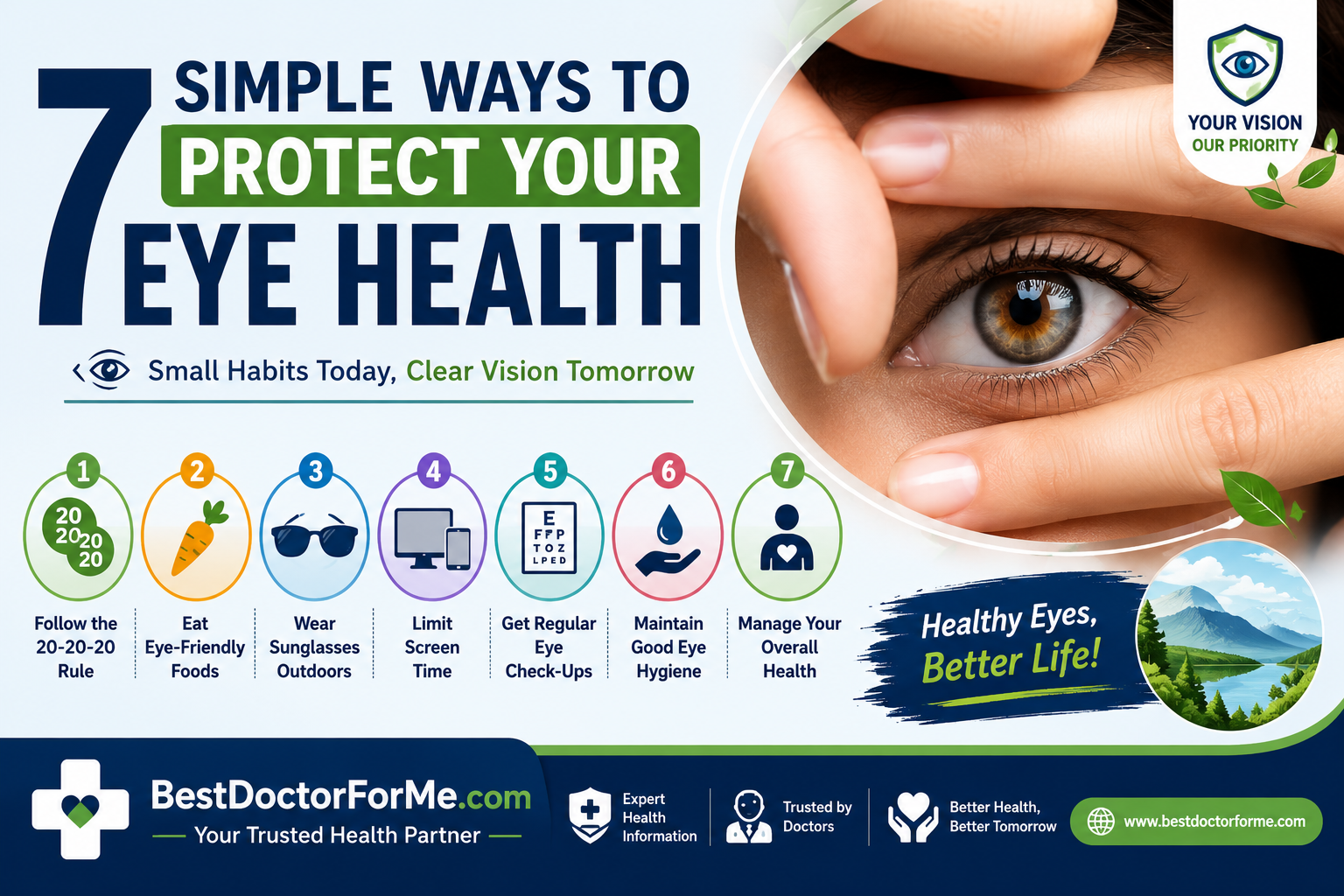
Your eyes are one of the most valuable organs in your body, allowing you to experience the world around you. However, long hours of screen time, poor nutrition, pollution, and unhealthy habits can increase the risk of eye problems. Fortunately, a few simple lifestyle changes can help keep your eyes healthy and your vision clear.
Here are seven practical ways to protect your eye health.
If you spend long hours using a computer, smartphone, or tablet, your eyes can become tired and strained.
Follow the 20-20-20 rule:
This simple habit helps reduce digital eye strain and gives your eyes a chance to relax.
A healthy diet plays a vital role in maintaining good vision.
Include foods rich in:
Ultraviolet (UV) rays from the sun can damage your eyes over time.
Choose sunglasses that block 99–100% UVA and UVB rays whenever you're outdoors, even on cloudy days.
Excessive screen use may lead to:
Take regular breaks, blink often, and keep your screen at a comfortable distance and brightness.
Routine eye examinations can detect problems early, even before symptoms appear.
Adults should have regular eye exams based on their age, risk factors, and advice from their eye care professional. People with diabetes or a family history of eye disease may need more frequent check-ups.
Many medical conditions affect eye health.
Control:
Also:
Seek medical attention if you experience:
Early diagnosis can help protect your vision.
Healthy adults should follow the schedule recommended by their eye care professional. Those with diabetes, glaucoma, or other risk factors may need more frequent examinations.
Carrots are rich in vitamin A, which supports normal vision. However, a balanced diet with a variety of nutrients is important for overall eye health.
Long screen use commonly causes digital eye strain and dry eyes. Following healthy screen habits can help reduce discomfort.
Yes. Smoking increases the risk of several serious eye diseases, including cataracts and age-related macular degeneration.
Protecting your eyes doesn't require major changes—small daily habits can make a big difference. Eating a healthy diet, limiting screen time, wearing UV-protective sunglasses, maintaining good hygiene, and scheduling regular eye check-ups are all important steps toward lifelong healthy vision.
Take care of your eyes today so they can continue taking care of you tomorrow.
Subscribe to keep yourself updated with latest articles and health news.
Copyright © 2024, BestDoctorForMe.com. All rights reserved.