☰
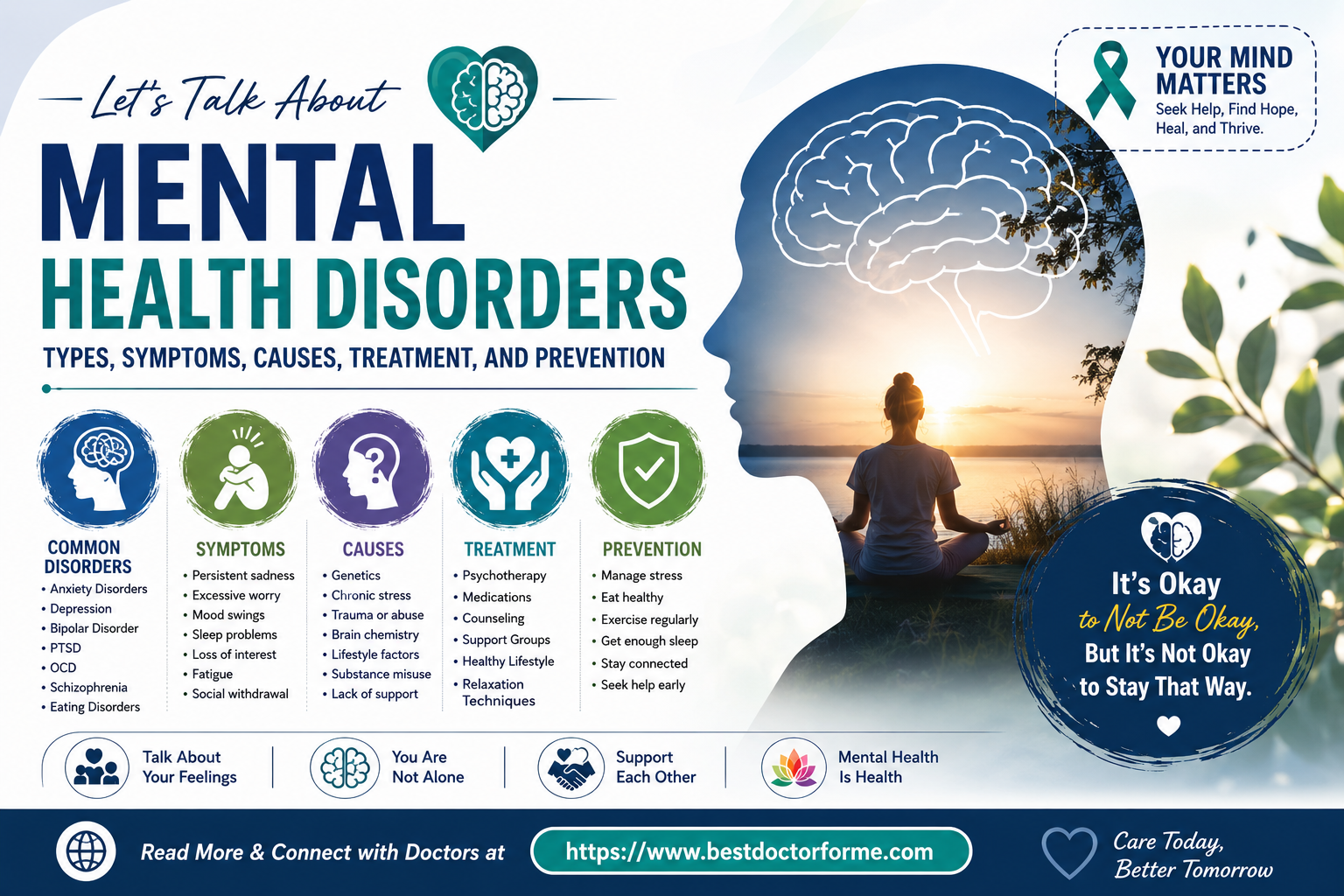
Mental health is just as important as physical health. It influences how we think, feel, behave, and cope with life's challenges. Mental health disorders are common and can affect people of all ages, genders, and backgrounds. With early diagnosis, proper treatment, and support, many individuals with mental health disorders can lead healthy and fulfilling lives.
Mental health disorders are conditions that affect a person's emotions, thoughts, behavior, or mood. These conditions can interfere with daily activities, relationships, work, or school. Mental health disorders are medical conditions—not a sign of weakness or personal failure.
These are among the most common mental health conditions and include:
Depression causes persistent sadness, loss of interest in activities, fatigue, and changes in sleep or appetite.
This condition involves episodes of depression alternating with periods of unusually elevated mood, increased energy, or irritability
People with OCD experience unwanted thoughts (obsessions) and repetitive behaviors (compulsions).
PTSD may develop after experiencing or witnessing a traumatic event, leading to flashbacks, nightmares, and severe anxiety.
A serious mental illness that affects thinking, emotions, and perception, sometimes causing hallucinations or delusions.
Conditions such as anorexia nervosa, bulimia nervosa, and binge-eating disorder affect eating habits and overall health.
Symptoms vary depending on the condition but may include:
Mental health disorders usually result from a combination of factors:
A mental health professional may diagnose a mental health disorder through:
Treatment depends on the type and severity of the condition and may include:
Also called talk therapy, it helps individuals understand their thoughts, emotions, and behaviors. Cognitive Behavioral Therapy (CBT) is one of the most effective approaches for many conditions.
Doctors may prescribe medications such as:
Medications should always be taken under medical supervision.
While not all mental health disorders can be prevented, the risk may be reduced by:
Consult a qualified mental health professional if:
Early treatment often leads to better outcomes and improved quality of life.
Mental health disorders are common, treatable medical conditions. Recognizing the symptoms early and seeking professional care can significantly improve recovery and overall well-being. Mental health deserves the same attention and care as physical health. If you or someone you know is struggling, reaching out to a healthcare professional is an important first step toward recovery.
Read more trusted health articles and connect with experienced doctors at:
Subscribe to keep yourself updated with latest articles and health news.
Copyright © 2024, BestDoctorForMe.com. All rights reserved.